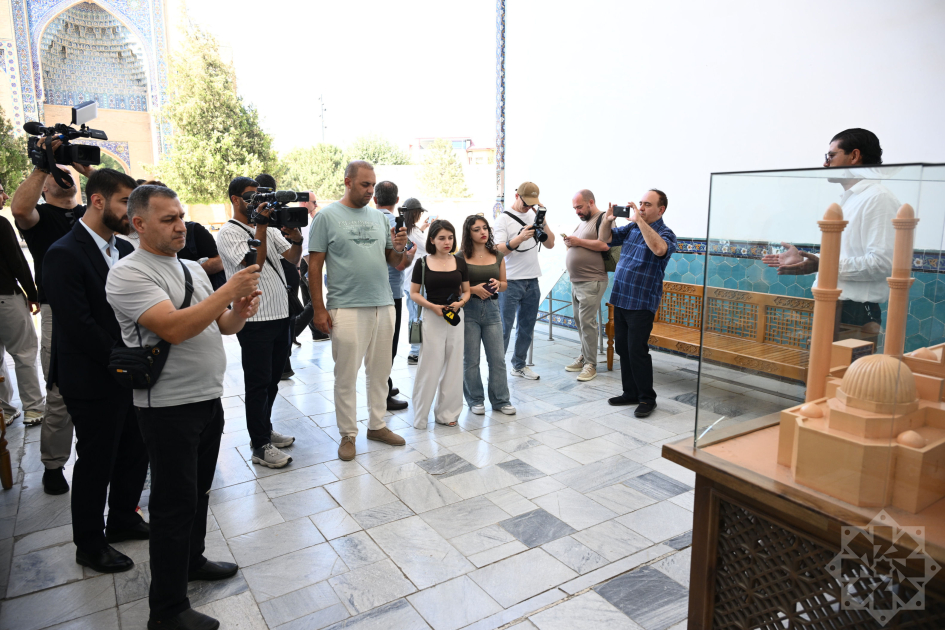
Səmərqənddəki Qur-e-Amir məqbərəsi şəhərin ən məşhur memarlıq abidələrindən biridir. Burada Əmir Teymurun (Tamerlan) və Teymurilər sülaləsi üzvlərinin məzarı yerləşir. Press-tur çərçivəsində məqbərəni ziyarət edən azərbaycanlı jurnalistlərə bildirilib ki, Qur-e-Amir adı fars dilindən tərcümədə “Əmirin türbəsi” kimi tərcümə olunur. Press-turda Azərbaycanın aparıcı KİV-lərinin 20 nümayəndəsi iştirak edir.
İştirakçılar arasında Trend Beynəlxalq İnformasiya Agentliyinin baş redaktoru Emin Əliyev də var. Memarlıq kompleksi Əmir Teymurun nəvəsi Məhəmməd Sultanın təşəbbüsü ilə XV əsrin əvvəllərində formalaşmağa başlayıb. Əvvəlcə mədrəsə və xanəgah (təsəvvüflərin ruhani sığınacağı — red.) bu məkana daxil idi, lakin 1403-cü ildə Məhəmməd Sultanın qəfil ölümündən sonra kompleks yeni məqsəd qazandı.
Əmir Teymur sevimli nəvəsinin xatirəsinə məqbərə tikilməsi barədə göstəriş verdi. Lakin Teymur 1405-ci ildə Çinə gedərkən vəfat etdiyi üçün onun başa çatmasına qədər yaşamadı. Tikinti onun digər nəvəsi Mirzo Uluqbekin rəhbərliyi altında tamamlandı.
Gur-e-Amir sonralar Teymurilərin ailə məqbərəsi oldu. Əmir Teymur, oğulları Şahrux və Miran şah, nəvələri Məhəmməd Sultan və Uluqbəy, həmçinin Teymurun ruhani müəllimi Mir Seyid Barakə burada dəfn olunub. Məqbərənin ən çox tanınan xüsusiyyətlərindən biri Əmir Teymurun tünd yaşıl rəngli yeşim daşının tək parçasından oyulmuş qəbir daşıdır.
Bununla belə, faktiki dəfn yerləri məqbərənin əsas zalının birbaşa altındakı yeraltı məbəddə yerləşir. 1941-ci ildə Teymuri qəbirlərinin açılış tarixi xüsusi maraq doğuran mövzu olaraq qalır. Arxeoloji qazıntılar antropoloq Mixail Gerasimovun rəhbərlik etdiyi sovet ekspedisiyası tərəfindən aparılmışdır.
Qalıqlar əsasında alimlər sülalənin bir neçə üzvünün xarici görünüşünü bərpa ediblər. Bu hadisələr daha sonra məşhur "Tamerlanın lənəti" əfsanəsi ilə əlaqələndirildi. Gur-e-Amir Teymurilər dövrü memarlığının şah əsəri hesab olunur. Onun interyeri mozaika, şirli kərpic, zərli və ornamental rəsmlərlə bəzədilib.
Xülasə — davamını mənbədə oxuyun.