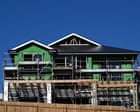
Abolishing energy efficiency standards for new homes would shift costs on to households and deepen inequality, advocates say. Photograph: Darren England/AAPView image in fullscreenAbolishing energy efficiency standards for new homes would shift costs on to households and deepen inequality, advocates say. Photograph: Darren England/AAPEnergyCoalition plan to scrap energy rules for new houses condemned as ‘cost-of-living timebomb’Proposal to cut building costs by scrapping the construction code would increase bills for the poorest households, critics say Get our breaking news email, free app or daily news podcast Adam Morton Climate and environment editorWed 12 Aug 2026 17.00 CESTLast modified on Wed 12 Aug 2026 17.01 CESTSharePrefer the Guardian on GoogleA Coalition plan to abolish compulsory energy standards for new homes that help reduce people’s exposure to heat and cold has been criticised by advocates as a “cost-of-living timebomb” that would deepen inequality.The opposition’s housing and environment spokesperson, Andrew Bragg, said a Coalition government would cut the National Construction Code from more than 2,000 pages to 80, and strip away all requirements for new homes beyond demanding they were “basic and safe”. Longstanding compulsory energy and accessibility measures would become “optional extras”.Speaking at the National Press Club, Bragg said house construction regulation was a “nightmare” and accused the Albanese government of making it “illegal to build a cheap house in Australia”.“We will cut building costs,” he said.Andrew Bragg stands by proposed migration limits – even as Liberal colleagues decline to back him inRead moreAsked about the policy on ABC Radio National, the Liberal treasury spokesperson, Tim Wilson, said in some cases people could put “a jumper on in winter rather than spending huge amounts of money” on improving housing quality.The Energy Efficiency Council said minimum standards were “not some extraneous bauble”, but made sure homes were safe, comfortable and affordable to run.“Australians deserve to live in decent housing, not leaky shacks with paper thin walls,” the council’s chief executive, Luke Menzel, said. “This proposal is a cost-of-living timebomb … I never thought I’d see an Australian politician out and about advocating for higher energy bills, but here we are.Sign up for the Breaking News Australia email“If you’re a renter living in western Sydney you had better hope you don’t land in a home that has been built without energy efficiency measures. You’re going to need to run your air-conditioners like the clappers to try to keep yourself cool in summer and your energy bills are going to be through the roof.”The chief executive of the Australian Council of Social Service, Cassandra Goldie, said governments should remove unnecessary regulation but needed to strengthen energy performance and accessibility rules that were “fundamental to health, safety and wellbeing”.“Stripping out energy efficiency and accessibility standards would shift costs on to households, deepen inequality and leave future generations with homes that are expensive to run and difficult to live in,” she said.Industry groups argued at a recent Senate inquiry that a range of changes to the construction code over the past seven years had added significantly to the cost of a new home, estimated between $3,600 and $33,000.Government analysis found increasing the minimum residential energy rating from six to seven stars – the current standard – would increase the average capital cost of building a home by less than 1%. The Reserve Bank and CSIRO separately found constructions costs barely changed, and in some cases decreased, after previous increases in energy efficiency requirements.skip past newsletter promotionFree newsletter | When neededSign up to Breaking News AustraliaGet the most important news as it breaksEnter your email Sign upafter newsletter promotionAsked to respond to Goldie’s comments, Bragg said “I love energy efficiency” and that he was “really passionate” about electrification. But he said “we should be for choice” and “people just want to get access to a roof over their head”.“Why do we have to make it compulsory for everyone? I just think it’s punitive for people on lower incomes,” Bragg said.He said under the Coalition’s proposal, the states would enact their own building codes, given “it’s very different to live in Tasmania compared to Western Australia, so the conditions are different”.Menzel said states and territories already had their own rules. He said the standardised national approach helped lower industry compliance costs, made homes cheaper for buyers, and the national code was already designed to take account of regional differences, incorporating eight different climate zones.“[Bragg’s] comments suggest a pretty fundamental misunderstanding of how the code works,” he said.The treasurer, Jim Chalmers, told the ABC the government had already paused changes to the code as it was too hard to navigate and too costly, and was working with the states to streamline it.Explore more on these topicsEnergyHousingCoalitionAustralian politicsnewsShareReuse this content