
Are earthquakes becoming more common? Here's what the numbers say
Whenever there's a series of destructive or notable earthquakes, scientists get asked the same question: Are earthquakes becoming more frequent?
Science
phys.org
26.08.2026

The 2025 Kamchatka tsunami kept the Pacific ringing for more than ten hours. Its rhythm could help tsunami warnings
On July 29, 2025, at 23:24 Universal Time, a long stretch of seafloor off Russia's Kamchatka Peninsula was thrust upward. The magnitude 8.8 earthquake was the largest on Earth since the Tohoku earthqu
Science
phys.org
01.10.2026

North Korea's nuclear testing may have triggered hundreds of earthquakes over several years
Between 2006 and 2017, North Korea conducted six underground nuclear tests at its vast testing site at Mount Mantap in North Hamgyong province. Typically, underground explosions trigger an intense bur
Science
phys.org
18.09.2026

New method predicts where massive earthquakes will strike
UC Riverside scientists have developed a way to identify where Earth's biggest earthquakes are most likely to occur, offering a powerful new tool for improving disaster preparation in some of the most
Science
phys.org
05.09.2026

When panic freezes people: Virtual quake tests capture real-time fear and injury risk
Growing up, many of us were taught to drop, cover and hold on during an earthquake. The guidance is straightforward, but how people actually respond when the ground starts shaking can be far more comp
Science
phys.org
03.09.2026

Los Angeles Basin map shows deep sediments that could amplify earthquake shaking
In computer simulations of the Big One—a large-magnitude earthquake that may occur along the San Andreas Fault in California—seismic waves ripple from the epicenter of a magnitude 7.8 earthquake near
Science
phys.org
01.09.2026

Magnitude 7.7 earthquake strikes off coast of Indonesia and tsunami warning issued
A powerful magnitude 7.7 earthquake struck off the coast of Indonesia early Saturday, damaging buildings and homes, and triggering a tsunami warning. Authorities urged people on affected coastlines to
Science
phys.org
15.08.2026

Nearly 600 California earthquakes help validate models that forecast next-day seismic risk
The University of Bristol–led study, published in Nature Communications, could help millions of people living in earthquake-prone countries make better-informed decisions about seismic risk, particula
Science
phys.org
15.10.2026

Tsunami alert after major earthquake rocks Panama
A magnitude 7.7 earthquake jolted Panama on Friday, setting off panic in the capital city and warnings of dangerous tsunami waves.
Science
phys.org
10.10.2026

Shooting light pulses down a 3-kilometer borehole could illuminate seismic hazards
A better understanding of how earthquakes occur and what happens during a rupture is important for assessing seismic risk. Small earthquakes, which are more frequent than large ones, are a tempting da
Science
phys.org
06.10.2026
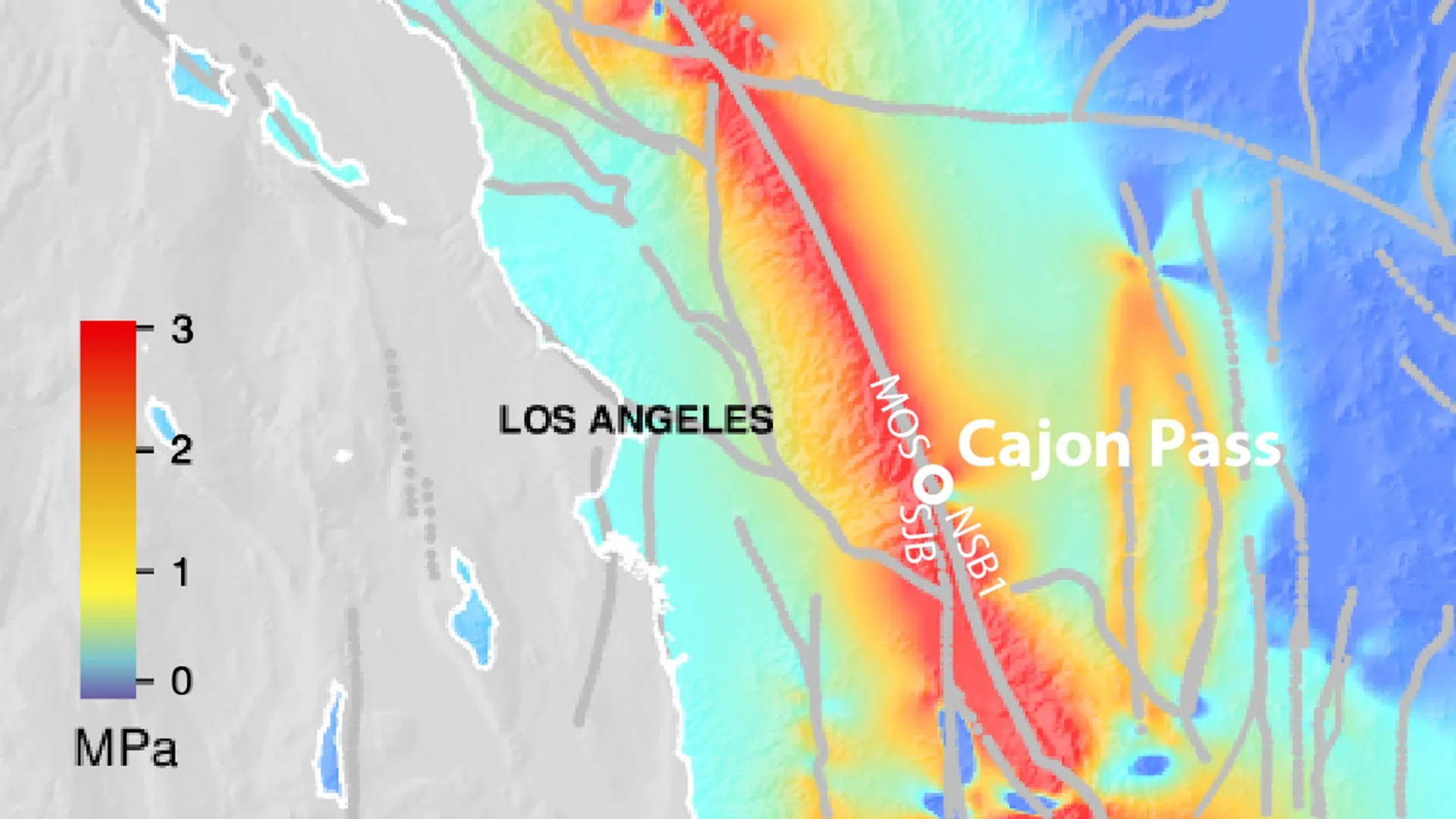
Scientists find an “earthquake gate” as California fault stress hits a 1,000-year high
Researchers say stress on Southern California’s San Andreas and San Jacinto faults has reached some of the highest levels seen in a 1,000-year simulation. Because both faults are highly stressed at th
Science
sciencedaily.com
02.10.2026

Why Kamchatka's giant earthquake sent a smaller tsunami across the Pacific
In 2025, along parts of Kamchatka's coast in Russia, a magnitude 8.8 earthquake caused a tsunami to surge nearly 20 meters (65 feet) above sea level. Yet across the Pacific, its waves were much smalle
Science
phys.org
30.09.2026

How the moon and sun may trigger slow earthquakes on Earth
While not quite a fatal attraction, the gravitational pull of the moon and sun creates tiny stresses on Earth that can trigger events known as slow earthquakes. These are movements along fault lines (
Science
phys.org
29.09.2026

US-India satellite captures time-lapse video of volcanic eruption
Like tendrils on a vine, lava spreads out from the northern crater of Krasheninnikov, a volcano pair on the Pacific coast of Russia's Kamchatka Peninsula. On July 30, 2025, an 8.8-magnitude earthquake
Science
phys.org
25.09.2026
Musculoskeletal simulation of load placement and speed effects on gait dynamics and energetics
Science
nature.com
24.09.2026

The end of humanity? What would happen if the Yellowstone supervolcano erupted now
A Yellowstone super-eruption would begin not with a sudden surprise, but with weeks of increasingly alarming warning signs such as migrating earthquake swarms, rapid ground uplift, changing geysers, a
Science
sciencedaily.com
22.09.2026

Scientists to probe the source behind a massive 1946 tsunami
Eighty years ago, a massive tsunami devastated parts of Hawaii, Alaska, Washington and Oregon following an earthquake off the coast of Alaska. A Michigan State University team is launching a project t
Science
phys.org
15.09.2026

How can countries prevent shocks and disasters from turning into food crises? Analysis points to resilience measures
Floods, wildfires, conflicts, earthquakes, economic shocks, hurricanes or epidemics: These unexpected and often dramatic events affect people's lives and jobs, destroy crops, wipe out livestock and st
Science
phys.org
14.09.2026

How diaspora groups in the US are responding to disasters in Nepal, Colombia, Venezuela and other homelands
A string of major disasters in 2026 have had devastating consequences. Earthquakes in Venezuela and Colombia and floods and mudslides in Nepal have killed tens of thousands of people and injured many
Science
phys.org
11.09.2026

How climate change may amplify the impact of earthquakes in the Arctic
Permafrost refers to permanently frozen ground. The rock is held together by ice, much like cement binds concrete. However, when the ice thaws, the ground becomes weak and unstable. During an earthqua
Science
phys.org
07.09.2026