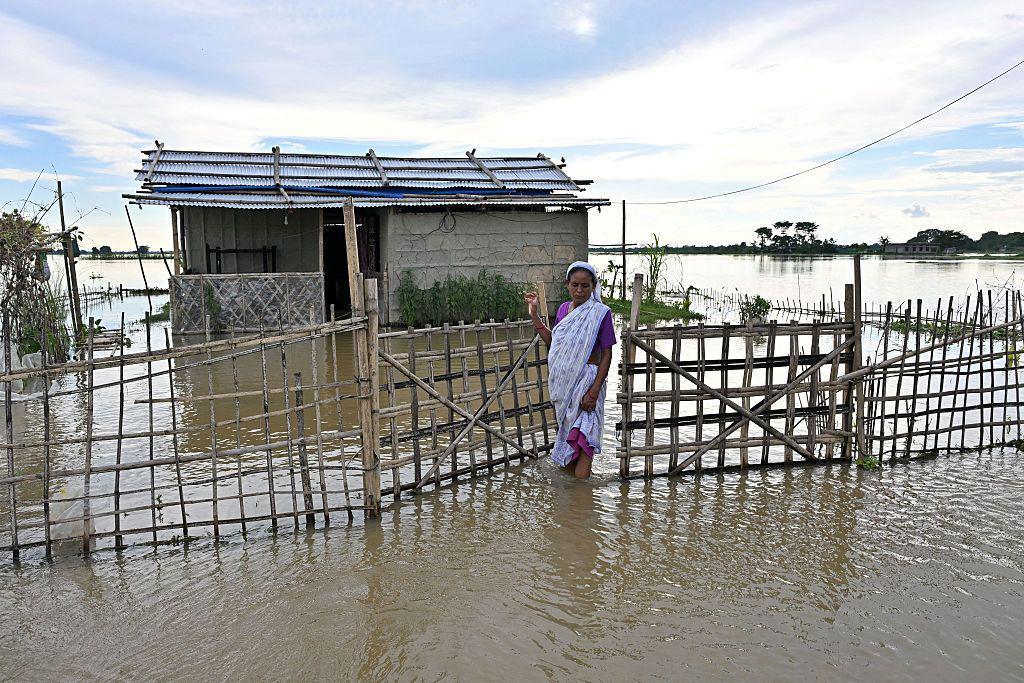
97 yaşlı Hindistanda ölümcül daşqınlardan banan salında necə xilas oldu və Assamın Sivasaqar kəndindəki evinin qarşısındakı sel suları arasından keçərək sel suları ilə necə xilas oldu 97 yaşlı anası. Demək olar ki, yataq xəstəsi olan Lokada Duarah yeriyə bilmirdi. Nə qayıq, nə xilasetmə qrupu, nə də kömək etmək üçün heç bir qonşu yox idi. Ona görə də onu banan gövdələrindən hazırlanmış müvəqqəti salın üzərinə qaldırdılar və onu axan su ilə təhlükəsiz tərəfə apardılar. "Hər kəs özünü xilas etməyə çalışırdı" Baruah deyir. Bir saat sonra, o deyir ki, onların üçü Sivasagar rayonunun Çarinq kəndindəki evlərindən bir qədər aralıda, milli magistral yolda yerləşən sığınacaq düşərgəsinə çatdılar. güclü idi ki, onlar yavaş-yavaş hərəkət etməli, bir-birlərinin əllərindən tutaraq və özlərini sabitləşdirmək üçün çubuqlardan istifadə etməli idilər.
Su onun içində təxminən beş fut qədər yüksələcəkdi. Baruah diqqətini heyvandarlıq üzərində cəmləşdirmək üçün jurnalistikadan ayrıldı Charingdəki səhnə Assamda baş verən daha geniş fəlakətin bir hissəsi idi. Son rəqəmlər daşqınlar nəticəsində ölənlərin sayının 100-ə çatdığını, 10 rayon və 456 kəndin təsirləndiyini və təxminən 140,000 insanın təsirini göstərdi. Əlli iki yardım düşərgəsi yaradılmışdır.
Ümumilikdə, daşqınlar 25 rayonda təxminən 1,2 milyon insana təsir göstərib, 19 000-dən çox evə ziyan vurub və 252 yardım düşərgəsində 75 000-dən çox insanı tərk edib. Daşqınlar xüsusilə Yuxarı Assamın bəzi bölgələrində şiddətli olub. Bu, həyatımızda bu ərazidə yaşadığımız ilk daşqındır”, - o deyir. O, 1950-ci ildə, hələ doğulmamışdan çox əvvəl böyük bir daşqın haqqında eşitdiyini xatırlayır, lakin həyatı boyu belə bir şey baş verməmişdi. Onun evi çayların kəsişdiyi mənzərədə oturur, baxmayaraq ki, heç biri dərhal yanından keçmir. Birmərtəbəli, səkkiz otaqlı ev Sivasagar şəhərindən təxminən 25 km (15 mil) məsafədədir; Brahmaputra təxminən 20 km, Dikhow 12 km, Jhanji 10 km və Mitong cəmi 5 km məsafədədir.
97 yaşlı Lokada Duaranı banan ağacının gövdəsinə daşıdılar və evinin ətrafında sel suları qalxdıqdan sonra təhlükəsiz yerə aparıldı. O, Assamda sel sularında naviqasiya etmək üçün müvəqqəti banan salından istifadə edir. Lakin bu baş verəndə daşqın təkcə onun evini deyil, illərlə tikintiyə sərf etdiyi dolanışıq vasitələrini də təhlükə altına qoydu. Baruah bir vaxtlar tam ştatlı jurnalist idi. 2016-cı ildə o, heyvandarlıqla məşğul olmaq üçün peşəsini tərk etdi və üç il sonra Assamın "Ən yaxşı heyvandarlıq fermeri" seçildi. Onun fermasında balıqla yanaşı, 300 keçi, 500 ördək və 1000 toyuq böyüdü.
Daşqın onun böyük hissəsini məhv edib. O, keçilərinin çoxunu, 300 ördək, 300 toyuq və xeyli miqdarda balığı, həmçinin heyvan yemi hazırlamaq üçün istifadə etdiyi maşını itirdiyini deyir. Ailənin mebelləri, noutbukları, nəqliyyat vasitələri və kitab kolleksiyası da məhv edilib. Onun mal-qarası sığortalanmayıb. "Burada mal-qara, xüsusən də keçilər üçün sığorta sistemi yoxdur" deyir. İlk xəbərdarlıq iyulun 17-də Chanji çayının səviyyəsi qalxmağa başlayanda gəldi.
İki gün sonra Brahmaputra və onun qolları sürətlə qabardıqca Dikhow və Mitonq ətraf ərazilərə töküldü. Baruah deyir ki, bir neçə çay onların sahillərini aşdı və şəhər və kəndlərə güclü axınlar göndərdi. Suyun qalxmasından təxminən bir gün sonra o, ailəsi ilə birlikdə evlərini tərk etdi. O vaxta qədər evin içindəki suyun dərinliyi dörd fut idi. Sonrakı 10 günü onlar yardım düşərgəsində keçirdilər.
Xülasə — davamını mənbədə oxuyun.