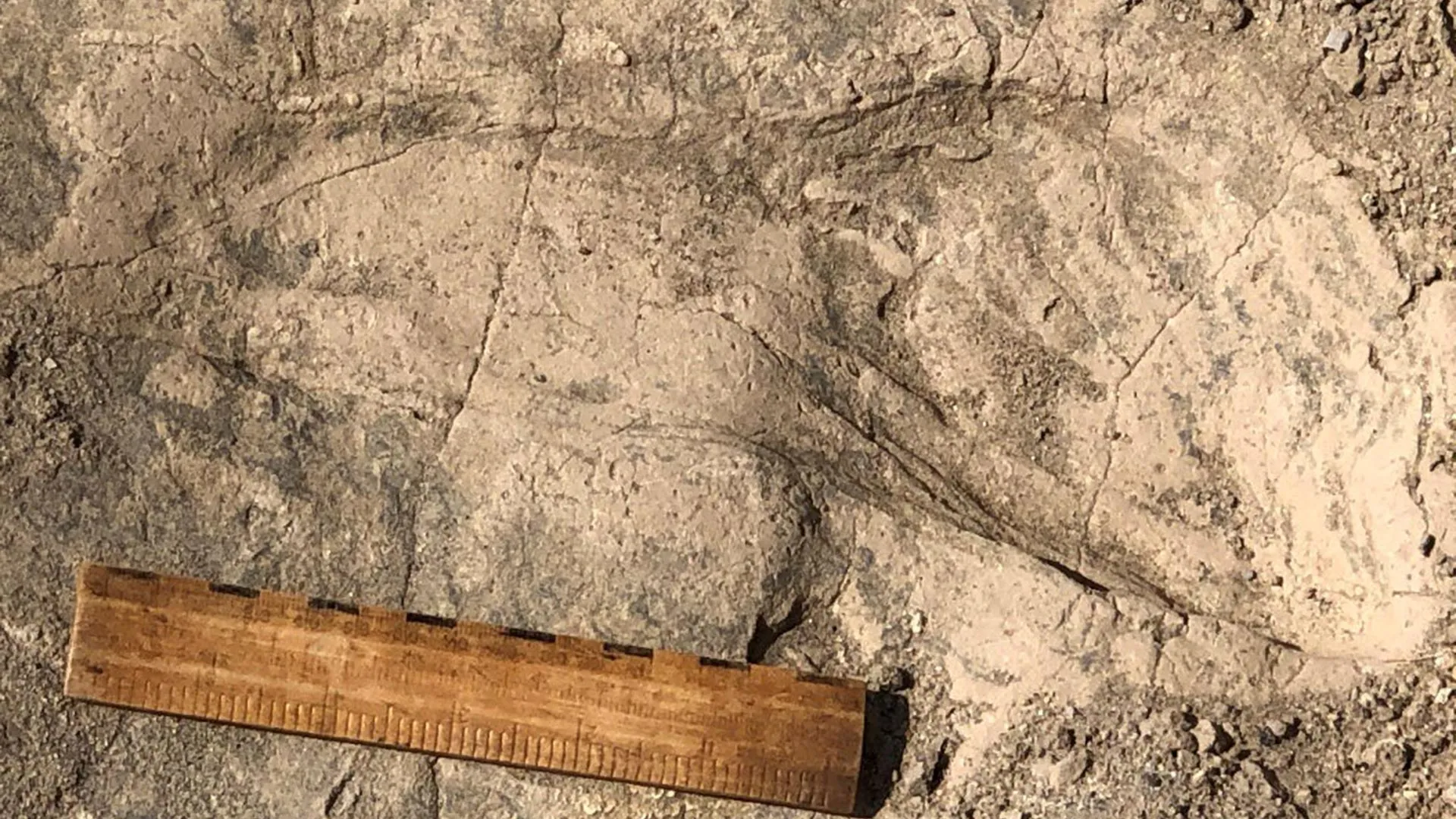
A remarkable set of fossil footprints from northern Kenya is offering scientists a rare glimpse of how an extinct human relative may have moved and interacted about 1.4 million years ago. The tracks, preserved near an ancient lakeshore, appear to record eight Paranthropus boisei individuals occupying the same place at roughly the same time. Researchers describe the discovery as a snapshot of "fossil behavior" because, unlike bones that can accumulate over long periods, footprints can capture a brief moment in the lives of individuals.
The international team, made up of researchers from the US and Kenya, concluded that all eight trackmakers were likely adults. Several also appear to have been considerably larger than earlier estimates of Paranthropus boisei body size based on the limited skeletal remains available. Ancient Footprints Reveal Unexpected Body Size The researchers used analytical techniques first developed by their team in 2024 to identify the footprints as belonging to Paranthropus boisei.
The classification was based on clues in foot anatomy as well as the way the individuals appear to have moved. The size of the tracks came as a surprise. "The sizes of the footprints indicate human-like body sizes - up to 1.8 meters tall and around 75 kilograms," says lead author Kevin Hatala, of Chatham University and an associated researcher of the Department of Human Origins at the Max Planck Institute for Evolutionary Anthropology in Leipzig.
For decades, most known fossils of Paranthropus boisei consisted of skulls, including specimens with exceptionally large jaws and teeth. Much less has been known about what the species looked like below the neck because fossils from the rest of the skeleton are far rarer. The new tracks now challenge earlier research suggesting that Paranthropus boisei was substantially smaller than Homo erectus, another hominin that lived during the same general period and is considered a possible direct ancestor of modern humans.
A Rare Glimpse of Ancient Social Behavior Footprints can reveal more than anatomy. Because a walking surface may be formed and preserved over a very short span of time, fossil tracks can provide direct evidence about movement, group size, and possible social interactions. In this case, the eight individuals appear to have been traveling together.
Most were likely adult males, with no obvious evidence of females or children among them. "The fact that eight, mostly adult male, Paranthropus boisei individuals seemingly traveled together as a group, without females or children, hints at a complex social structure in this species," says co-author Neil Roach of Harvard University. "They may have lived in large groups, where males competed for mates, but also tolerated each other at times for safety in a dangerous environment." That possibility adds a new dimension to what scientists know about Paranthropus boisei.
Extract — continue reading at the source.


