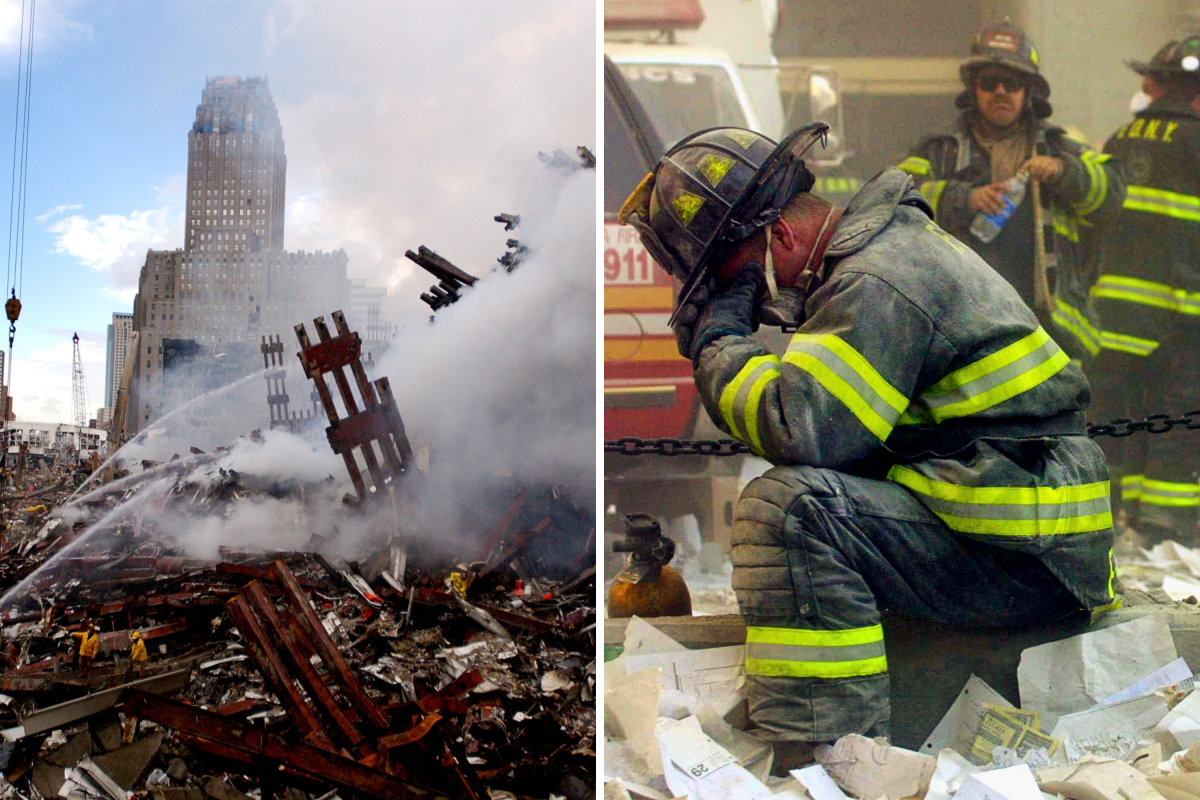
With the 25th anniversary of 9/11 approaching, one professor is investigating the neurological impact the terrorist attack had on the first responders who rushed to help victims stuck in the World Trade Center. New research suggests their brains may be aging faster than their bodies. "We are concerned that, ultimately, the complexity of the exposure years later can trigger cognitive decline," Florida International University's Environmental Health Sciences professor, Dr.
Roberto Lucchini, said in a statement. "That means losing memory and the ability to concentrate. "The sights, smells and other sensory memories can stay with responders for a very long time, those are the same memories I have heard repeatedly from 9/11 responders and volunteers.
They can cause long-lasting psychological trauma, even among people who are trained for disaster response," he added. In late 2025, a study found that post-traumatic stress disorder, or PTSD, may be linked to accelerated brain aging among World Trade Center responders who took part in rescue and recovery operations after the Sept. 11 attacks. The research, published in a psychiatric journal, was the first to apply a deep learning-based brain age model to this group of responders, offering fresh evidence that the effects of the attacks are still unfolding a quarter-century later.
Researchers from the Icahn School of Medicine at Mount Sinai had analyzed MRI scans from 99 World Trade Center responders, all in their mid-50s. Of that group, 47 had chronic PTSD and 52 did not. To estimate each participant's biological brain age, the team used BrainAgeNeXt, an artificial intelligence model trained on more than 11,000 MRI scans.
The tool is designed to detect patterns in brain structure and estimate how old a brain appears, regardless of a person's actual age. Responders with PTSD had brains that appeared, on average, about three years older than their chronological age. Responders without PTSD showed brain ages that were slightly younger than expected.
Researchers also found that the longer a responder had worked at Ground Zero, the stronger the link between PTSD and accelerated brain aging. About 23 percent of the men and women who took part in rescue and recovery work at the World Trade Center site experience "persistent, clinically significant PTSD." Lucchini co-authored the study, having spent years studying the long-term health of 9/11 responders. He now leads research involving first responders who relocated to Florida, examining the long-term effects of toxic exposures and the psychological trauma experienced.
Extract — continue reading at the source.