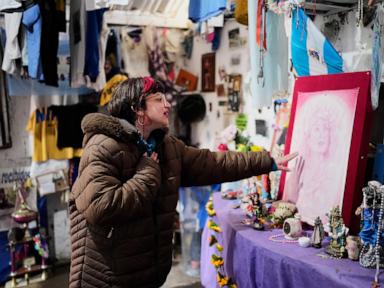
Thirty years after Argentine cumbia star Gilda died in a tour bus crash, the beloved singer has become something more to many fans: a miracle-working folk saint CEIBAS, Argentina -- Thirty years ago this Monday, Argentina was left stunned when a tour bus carrying a beloved cumbia singer, known by her stage name Gilda, collided with a truck. Miriam Alejandra Bianchi died at age 34, but she lives on in legend as a miracle-working folk saint. At a chapel near the site of the accident, some fans knelt in prayer, emotion welling in their eyes.
Others sang and danced raucously to her greatest hits. During her life, Gilda was a nationally beloved singer of cumbia, a fusion of Latin pop and dance music that's hugely popular in Argentina. Her fame only grew after her death.
A posthumous album went double platinum as her propulsive songs reverberated beyond the heaving dance halls where she first captivated crowds, becoming national anthems of heartbreak and desire. Her fans, dressed in T-shirts that showed her in a shimmering blue dress and flower crown, began making pilgrimages to the crash site every year, sharing stories of Gilda appearing in their dreams and answering their prayers. Like other Argentine folk saints, Gilda isn't formally recognized by the Catholic Church.
But devotees ask her to carry their prayers to God much as Catholics invoke the church’s recognized saints, seeking healing, protection and help overcoming hardships. On Monday, scores of Gilda’s devotees flocked to pay homage to her at the rusted wreckage of the tour bus, now preserved as a memorial off the national highway that skirts Argentina’s muddy Paranacito River. The bus overflows with flowers, stuffed animals, votive candles and handwritten appeals for help.
A nearby chapel is crammed with the wedding gowns of women whose wish to marry was fulfilled after a visit, trophies and jerseys offered by champions whose athletic dreams became a reality, crutches discarded by those who could walk again, and police uniforms left by officers who earned promotions after praying to her. Today, I sing thanks to her.” The shrine, about a two-hour drive into the grasslands north of the capital, Buenos Aires, offered a glimpse of a centuries-old tradition of folk saints that runs deep in Argentina even as the influence of the Catholic Church wanes. That erosion is one of the biggest challenges facing Pope Leo XIV as he plans his first tour as pontiff of South America — home to more than a quarter of the world’s Catholics.
He's set to visit Argentina, Uruguay and Peru in November. Travel the roads of Argentina and shrines to a growing pantheon of unofficial saints are everywhere: Red flags mark altars to Gauchito Gil, a 19th-century outlaw revered as an Argentine Robin Hood. Plastic water bottles pile up at shrines to Difunta Correa, who legend says miraculously nursed her infant son after dying of thirst in the desert.
Extract — continue reading at the source.