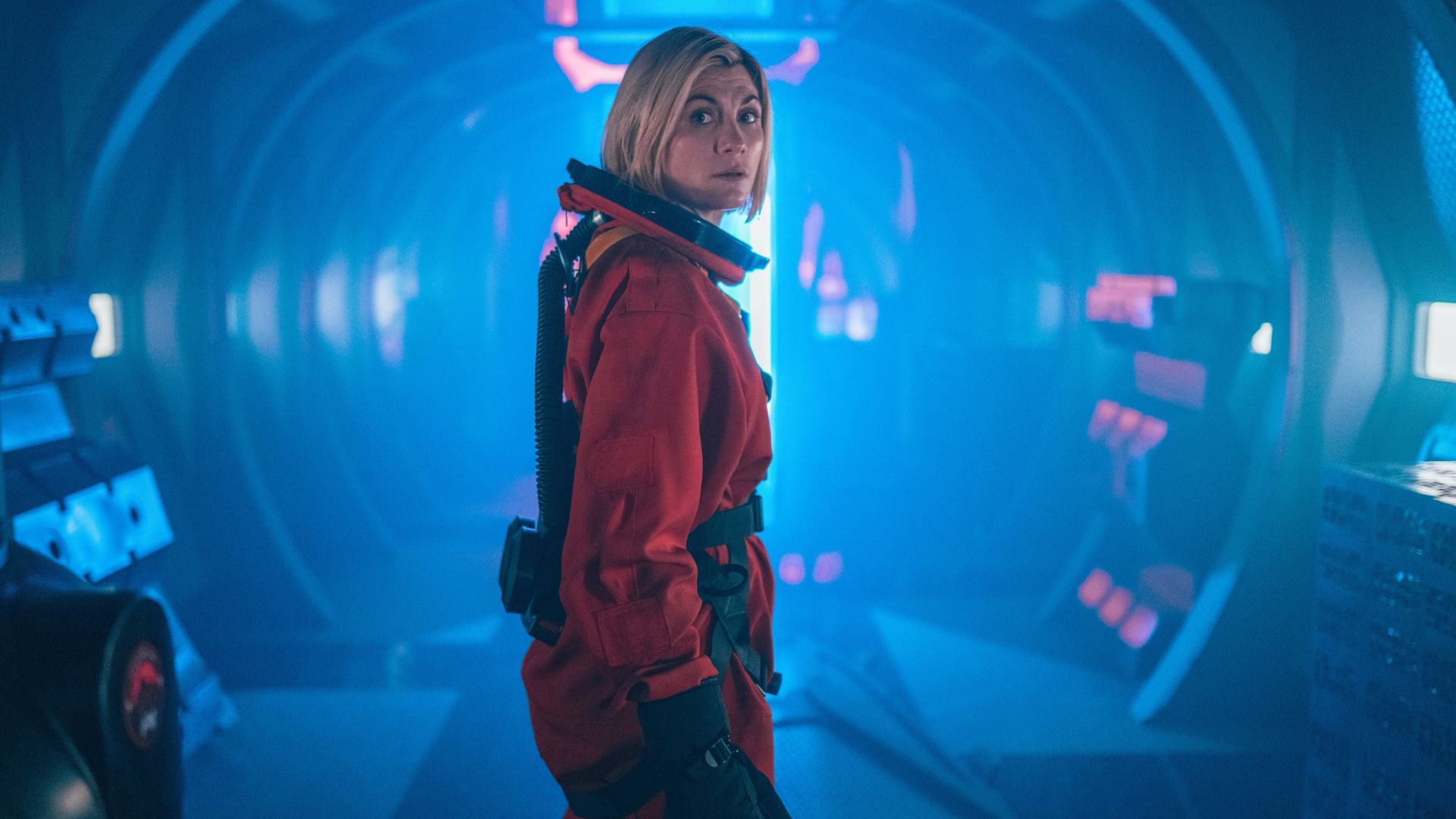
As the longest-running sci-fi show in history, Doctor Who has always placed a tremendous responsibility on whoever takes on the role of the Doctor. For Jodie Whittaker, who debuted as the Thirteenth Doctor in 2017, that responsibility carried extra weight: she was the first woman to play the Doctor, a milestone that immediately stirred up the internet’s worst grifters. With so much at stake for Doctor Who’s creatives, including showrunner Chris Chibnall, the pressure to deliver makes Whittaker’s final episode feel like an even greater betrayal — not just of the show’s future, but of Whittaker herself and her time as the Time Lord.
The Master disguises himself as the historical Russian figure Rasputin and places himself in Russia in 1916. From there, the Master plots with the Daleks and the CyberMasters (a new race of Cybermen who constantly regenerates) to trigger volcanic eruptions worldwide. However, the Master has a clever twist: he plans a body-swapping regeneration to forcibly turn himself into the Doctor.
As expected, the Doctor foils the Master, Daleks, and Cybermen — but not before a defiant, defeated Master mortally wounds her with a laser beam, forcing her to leave her old companion, Yasmin Khan (Mandip Gill), and regenerate into David Tennant as the Fourteenth Doctor. This transformation signaled the return not only of a familiar face but also of familiar showrunner Russell T. Davies, who wrote the episode's final moments.
On its own merits, “The Power of the Doctor” is easily one of the best of Chibnall’s era. It puts the Doctor up against insurmountable odds, and it’s a joy to watch the Time Lord figure out how to do the impossible. Unfortunately, as the finale of an era with more misses than hits, “The Power of the Doctor” can only highlight the shortcomings of Chibnall’s writing and direction.
Throughout Chibnall’s four-season run as Who’s showrunner, one of the most common complaints was his woeful overreliance on monologue over story, his overt nostalgia, and his failure to develop the relationships between the Doctor and their companions. The first issue is somewhat forgivable, given how much Doctor Who episode lengths have varied over time, and because he had to rely on specials rather than full-fledged seasons. By the time “The Power of the Doctor” arrives, however, it’s hard to ignore Chibnall’s focus on replaying old hits by revisiting the Doctor’s greatest enemies and storylines rather than focusing on the core relationships of the cast.
This combination leaves Whovians with a lackluster finale that ends not with a bang but a whimper. Beyond time travel and fighting bad guys, the relationship between the Doctor and their companion(s) is ultimately the heart of the show. Chibnall’s decision to include classic Who companions like Tegan Jovanka (Janet Fielding) and Ace (Sophie Aldred) to reunite with returning Doctors like Fifth (Peter Davison), Sixth (Colin Baker), Seventh (Sylvester McCoy), and Eighth (Paul McGann) suggests he recognizes the importance of the Doctor-companion relationship.
Extract — continue reading at the source.