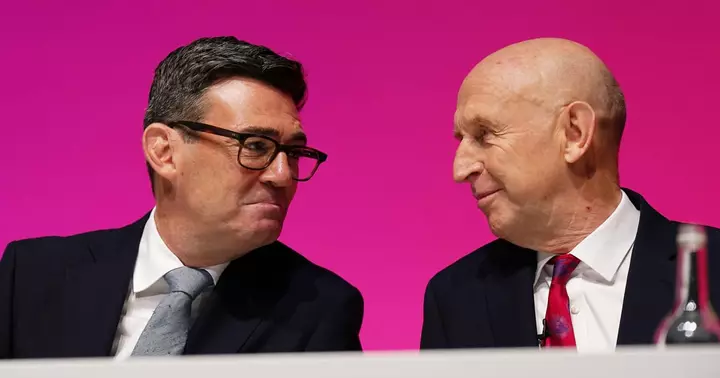
LONDON — Britain’s government runs on numbers — but what if they’re a shot in the dark? From tepid economic growth to squeezed household incomes, this week’s budget from Chancellor John Healey was packed with grim figures about the state of play in the U.K. — and a host of costly measures to try and turn things around. Yet it’s almost certain that the budget forecasts Healey relied upon Wednesday will be revised by the time the next fiscal event rolls around.
In this week’s episode of the Westminster Insider podcast, POLITICO unpacked the numbers that govern the U.K. — and found out just how many doubts there are about the information the country relies on. Few issues divide Brits like immigration — but grappling with hard data on the issue has proven to be a repeated challenge to governments of all stripes. For decades, immigration into the U.K. was calculated by the International Passenger Survey (IPS) — essentially people with clipboards at airports, train stations and ports asking people about their intention to stay in the U.K.
But between 2012 and 2020, the number of European Union nationals coming into the country was off by 76% — or 93,000 people a year. The Office for National Statistics (ONS) only discovered this error after trialing a new approach to counting immigration that focused less heavily on the IPS, which was dropped altogether in 2025. The ONS now uses this new measurement — relying on a combination of Home Office data, information from the Department for Work and Pensions and tax receipts.
But this was again wrong in the year to June 2023 — by 234,000 people. The original numbers published by the ONS in November 2023 said net migration to the U.K. was 672,000. A year later, the ONS admitted there had been a mistake and said it was in fact 906,000.
Laura Gilbert, who ran data science in No. 10 Downing Street until last year, told POLITICO that net migration numbers are often incredibly misleading — and even the way we calculate those numbers is “highly spurious.” Gilbert says the quality of the numbers on immigration normally improves months later, sometimes by “quite a lot.” But she warned, “if politicians are making a decision based on exact numbers, often they are using the first number that comes out, which is the worst one.” Healey and Prime Minister Andy Burnham have vowed to get welfare spending down “but in a Labour way.” Much of this will rest on getting young people into work, the subject of a 217-page report by Tony Blair-era minister Alan Milburn. But Britain’s workforce — and the number of young people out of work — is counted by the Labour Force Survey (LFS), an ONS measurement beset with issues. For example, between 2019 and 2024, the LFS missed 1 million workers because people with full-time jobs are less likely to answer the phone to surveyors during the week, according to the Resolution Foundation think tank.
The Office for Budget Responsibility (OBR) admitted just this week that the survey is too unreliable to measure productivity. Gilbert says Healey’s claim that there are “1 million young people out of work” is unlikely to be accurate. The number of NEETs — people not in education, employment or training — is also based on figures from a subset of the LFS, which is particularly susceptible to inaccuracies.
Extract — continue reading at the source.