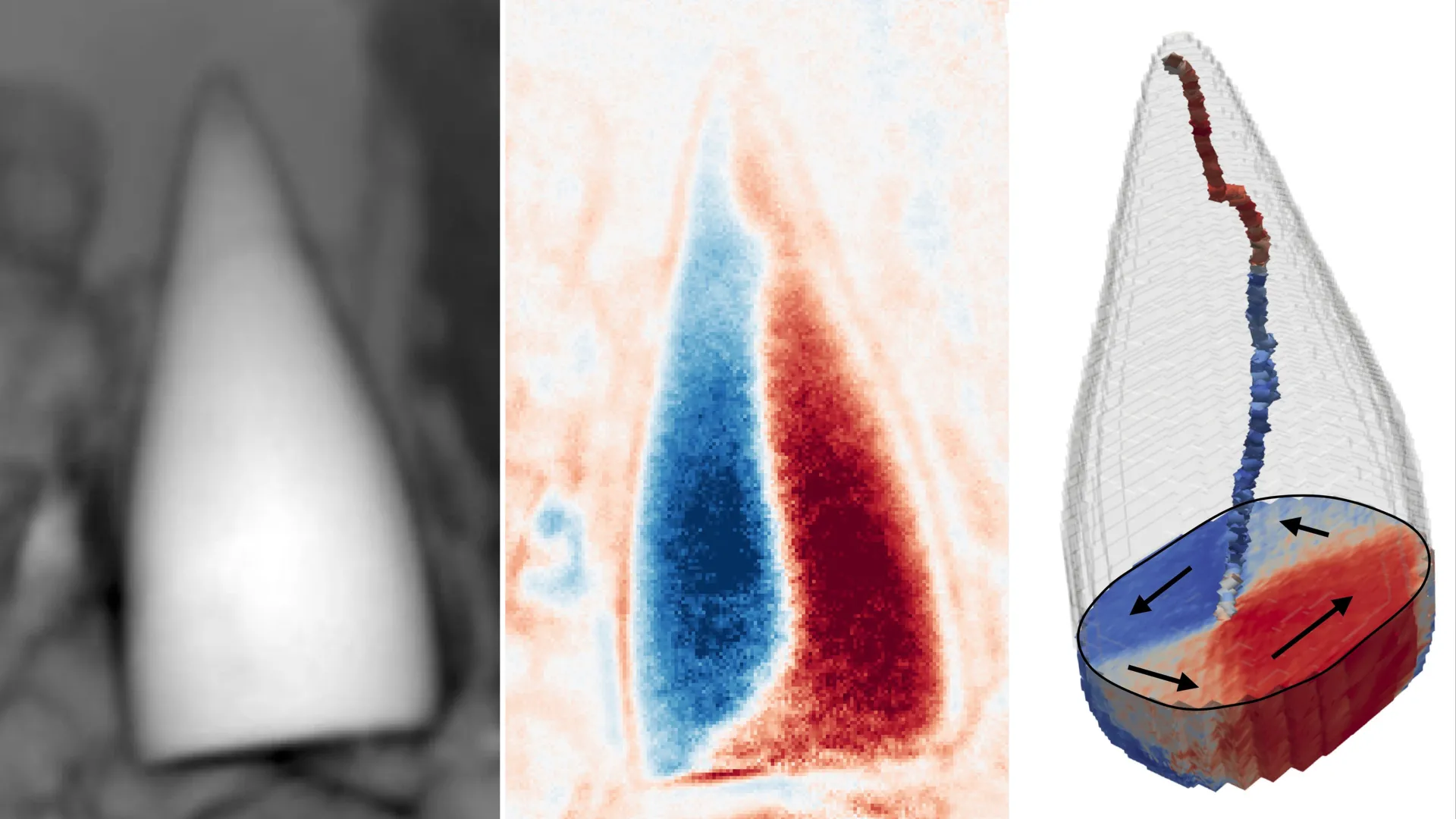
Researchers have identified what may be the earliest known evidence of an internal animal "GPS" system, offering a possible glimpse into how modern birds, fish, and other creatures evolved the ability to navigate using Earth's magnetic field. The evidence comes from tiny magnetic fossils dating back 97 million years. They were preserved in ancient seafloor sediments and appear to have been produced by an organism whose identity remains unknown.
Known as magnetofossils, the microscopic structures come in shapes resembling spearheads, spindles, bullets, and needles. Each is no larger than a bacterial cell. Scientists believe they have a biological origin, although exactly what organism created them and what purpose they served has long remained uncertain.
Now, researchers have uncovered evidence that the structures may have functioned as a sophisticated navigation system, allowing an ancient animal to interpret Earth's magnetic field much like a map. A Magnetic Navigation System From 97 Million Years Ago Scientists from the University of Cambridge and the Helmholtz Zentrum Berlin produced the first 3D images of the magnetic structure inside the fossils. Their analysis revealed features that appear optimized for detecting both the direction and strength of Earth's magnetic field, two types of information that could have helped an animal determine where it was and where it was going.
"Whatever creature made these magnetofossils, we now know it was most likely capable of accurate navigation," said Professor Rich Harrison from Cambridge's Department of Earth Sciences, who co-led the research. The findings provide the first direct evidence that animals were navigating with Earth's magnetic field at least 97 million years ago. They could also help scientists understand how this remarkable sense, known as magnetoreception, evolved.
The results are reported in the journal Communications Earth & Environment. Magnetoreception remains one of the least understood senses found in nature. Birds, fish, and insects can use Earth's magnetic field to travel enormous distances, yet scientists still do not fully understand the biological mechanisms that make this possible.
One leading idea involves magnetite, a magnetic mineral that may form tiny crystals inside an animal's body. These particles could align with Earth's magnetic field and behave like microscopic compass needles. Bacteria Offer a Simpler Magnetic Compass Some bacteria living in lakes and other aquatic environments already use a basic version of this system.
Extract — continue reading at the source.


