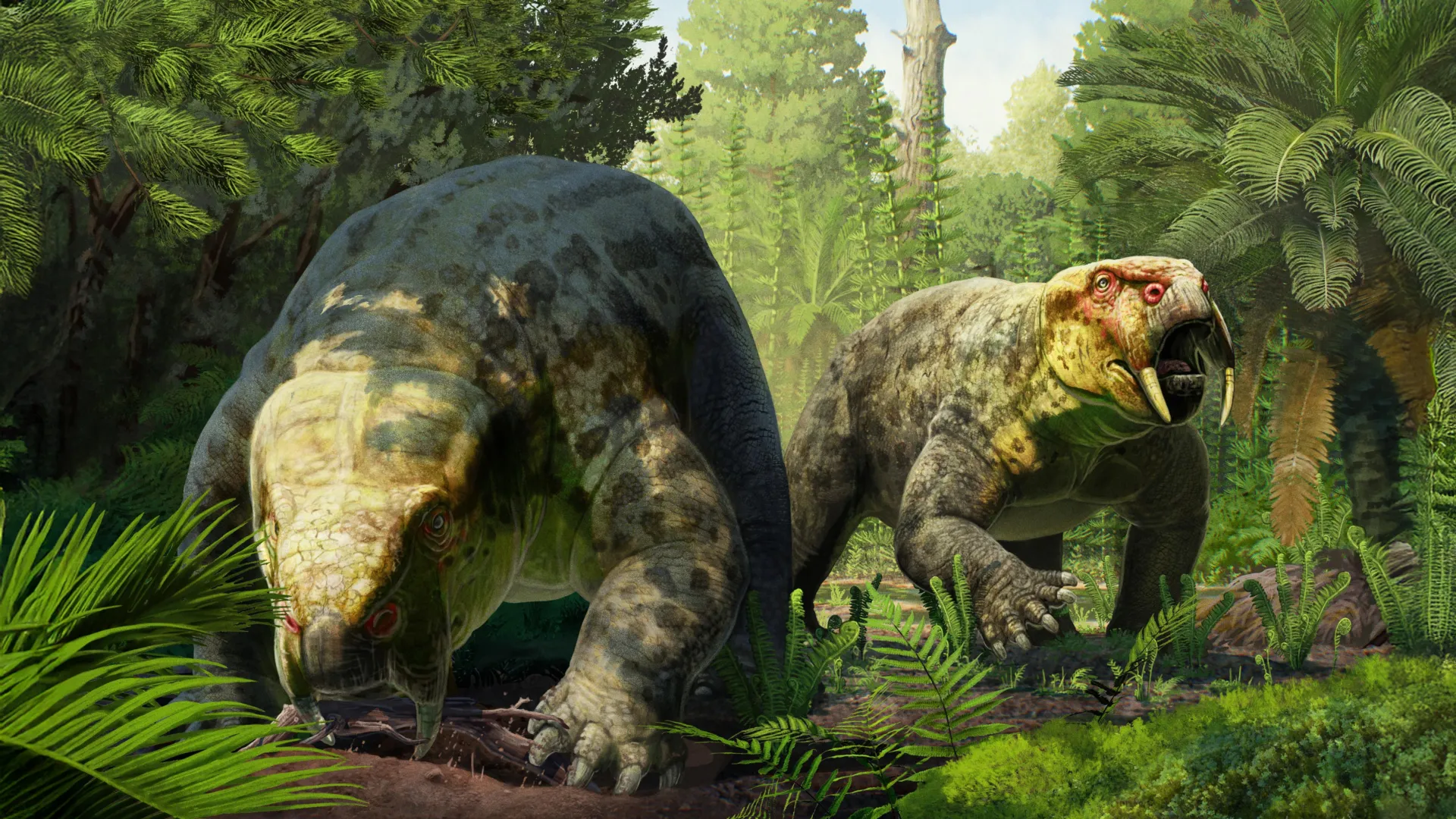
An international research team has identified a previously unknown prehistoric animal that lived in what is now Tanzania roughly 240 million years ago during the Triassic period. The species, named Dinodontosaurus isiyavamanda, could do more than add a new animal to the fossil record. According to researchers led by the University of Bristol, the discovery may help scientists more accurately date one of the world's most important fossil regions and refine the timeline for the earliest stages of dinosaur evolution.
The findings were published September 15 in the Journal of Vertebrate Palaeontology. They suggest that some fossils from Tanzania once considered candidates for the earliest dinosaurs may actually be younger than scientists had thought. The story began in 1963, when a British expedition collected a large number of synapsid fossils from what is now Tanzania.
Synapsids are mammal-lineage vertebrates that were widespread and diverse long before dinosaurs came to dominate terrestrial ecosystems. The fossils were eventually placed in the collections of the Natural History Museum, London. Many were studied, but others remained only partially examined, leaving unanswered questions about what animals they belonged to and what they could reveal about ecosystems that existed approximately 240 million years ago.
Among the material was an undescribed associated skeleton from a plant-eating group of synapsids known as dicynodonts. Researchers examined that specimen along with a fragmentary skull discovered more recently. Their analysis showed that both belonged to the genus Dinodontosaurus.
That was a surprise because, until now, Dinodontosaurus had only been confirmed in South America. A closer anatomical comparison showed that the Tanzanian fossils represented a species unknown to science. The researchers named it Dinodontosaurus isiyavamanda.
The species name refers to the land of the Wamanda people, who live in the region of Tanzania where the fossils were discovered. A New Link Between Africa and South America The identification has broader importance because the rocks containing Dinodontosaurus isiyavamanda are the same geological deposits that have also produced fossils proposed to be among the oldest possible dinosaurs. Scientists had previously linked those Tanzanian rocks with deposits in South Africa because the two regions were thought to contain some of the same fossil genera.
Extract — continue reading at the source.


