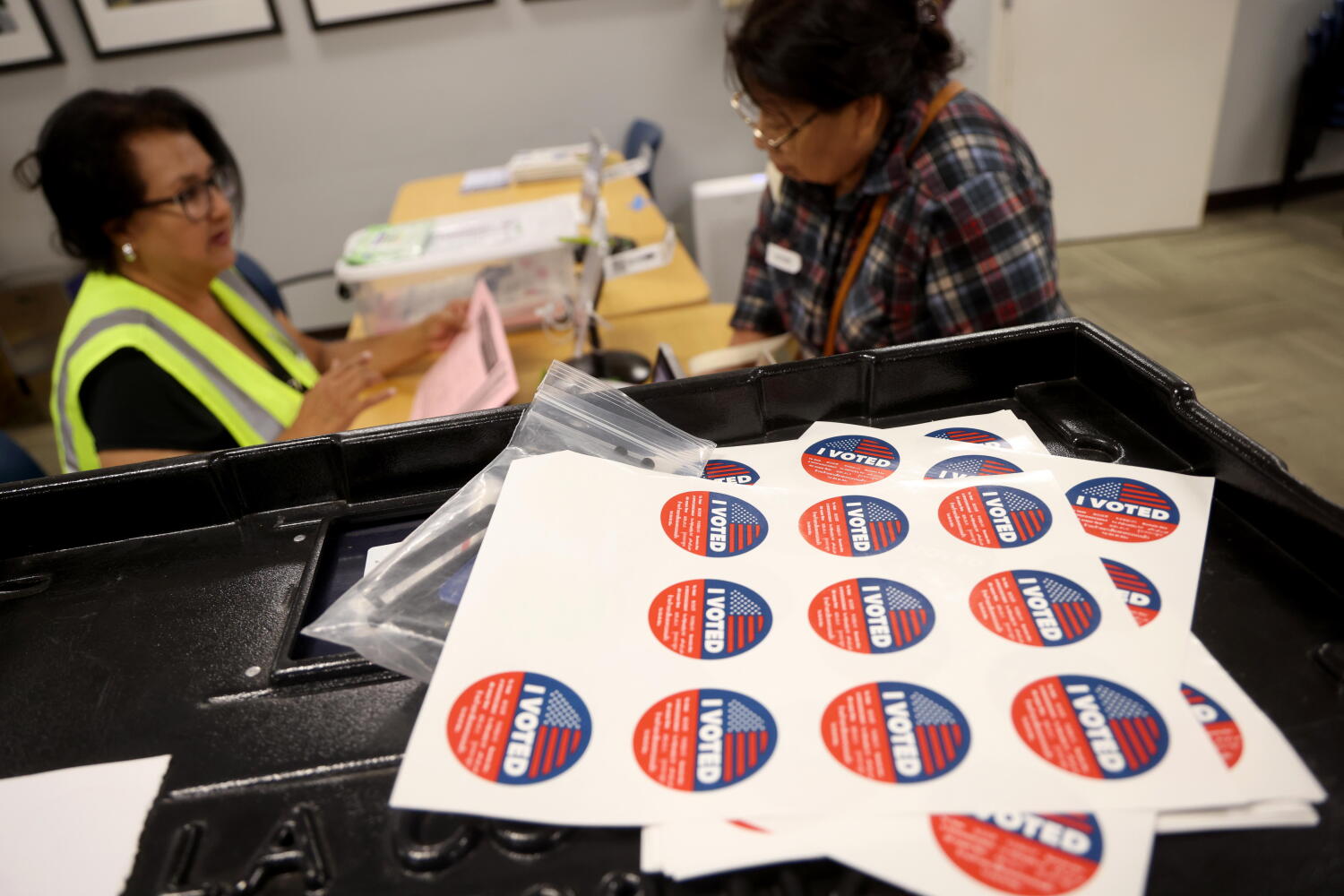
WASHINGTON — An acutely contentious and historically expensive midterm campaign barrels to a finish Monday, on the eve of elections that will set the nation’s course for the remaining half of President Trump’s second term. Republicans are bracing for a backlash from voters as Democrats prepare for gains — but the magnitude of any “blue wave,” and whether it could sweep not only the U.S. House but also the Senate into Democratic control, will be the key question as Americans finish casting ballots Tuesday.
Early voting had already seen strong turnout, including among influence blocs such as Latino and Black voters. Candidates spent the weekend crisscrossing their states and pulling in surrogates to make a final push for voters still on the fence. Capping a turbulent first half of Trump’s second term, the campaign has been defined by affordability and economic issues that have created headwinds for Republicans and spurred a possible turn toward Democrats by voters.
And as Trump has pushed the limits of executive power, the midterms could act as a consequential check on his presidential reach. In recent polls, voters have consistently put Democrats several points ahead on the generic ballot and given a historically low approval rating to Trump. Eyes are now on Senate control, as an unexpected competitiveness by Democrats in a handful of red states has put the majority into play.
It would require a “massive” wave for Democrats, but the fact that it is a possibility at all reflects an “extraordinary situation,” said Thaddeus Kousser, a UC San Diego political science professor. With seven toss-up seats, tough math for Democrats and tough polling for Republicans, the outcome is far from certain. There may not be a large difference between the Democrats eking out enough seats for the majority or Republicans succeeding at holding it, said Charles Franklin, director of the Marquette Law School Poll.
Both parties are closely watching how well Democrats can do in red states, how Republicans perform in Michigan and how far to the left Trump-voting districts swing. The party out of power typically wins House control in midterm elections. This year, fatigue with Trump — fueled by the war in Iran, immigration policy, tariffs and other issues — merged with concern about prices, housing and AI issues to drive that movement toward the minority party, analysts said.
The midterms are designed to function as a potential check on every presidency, said Christopher Warshaw, a Georgetown University public policy professor. Ken Paxton has struggled to gain traction, and in Maine, where Democrat Troy Jackson has labored to confront Republican Sen. Susan Collins’ staying power.
Extract — continue reading at the source.