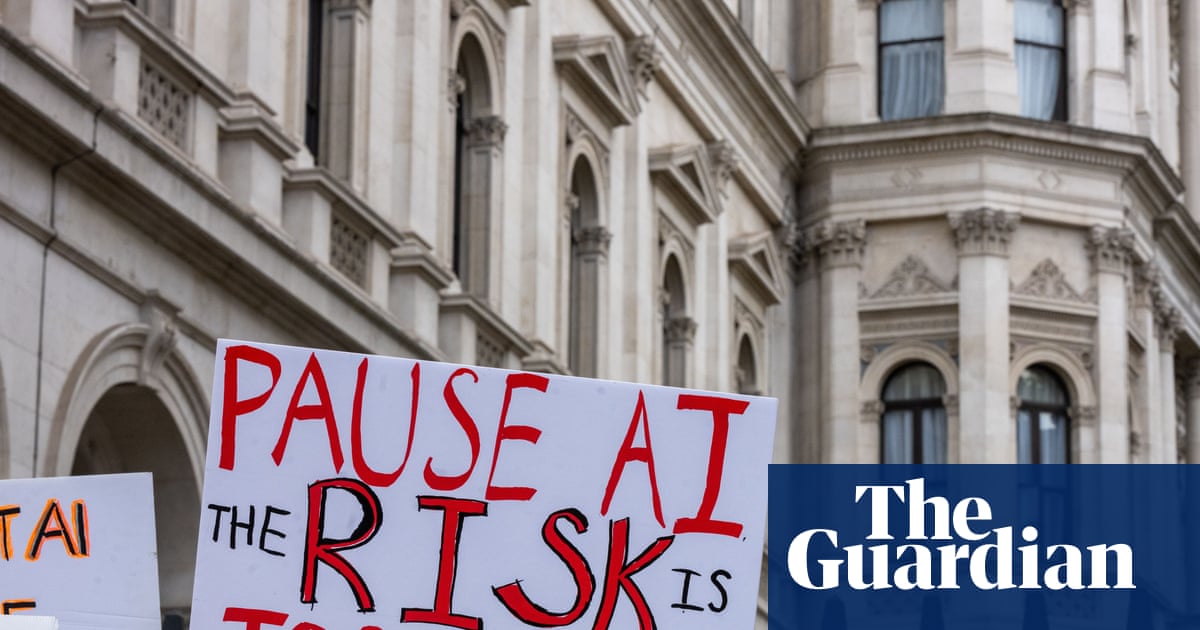
Towards the end of Keir Starmer’s time in office, his senior ministers, alarmed by the latest developments in artificial intelligence, began drawing up plans for a new AI safety law. They ordered a review of existing legislation to see what powers they already had, according to those briefed on the plans, and were exploring whether they could force the world’s most advanced technology companies to submit their products for safety testing before launching them. In the midst of the political chaos that engulfed the former prime minister as he fought to remain in office, however, the plans fell by the wayside.
Now, after two weeks in which the world has been warned there is a greater than 10% chance the technology could “kill all humans”, and King Charles has warned about its potentially destructive capabilities, the government’s attention has turned again to what to do about AI. Andy Burnham, Starmer’s successor in Downing Street, has said relatively little about the technology in the past, and in one of his first acts in office he scrapped the department that had been leading the legislative work. The prime minister’s focus is on more immediate domestic problems.
But as he grapples with balancing his first budget and bringing down the cost of living, some fear the threat posed by AI has dropped off the government’s radar. Amid worries about what super-intelligent tools could do without human involvement, Sunak convened a summit in the UK and persuaded the US, EU, Australia and China to cooperate on AI safety. Starmer was more bullish about AI’s potential “to increase productivity hugely, to do things differently, to provide a better economy that works in a different way in the future”.
The Guardian has learned that in the former technology department, Emran Mian, the lead civil servant, had plans for AI to replace almost every civil servant in the department when they retired or moved on to a new job. But at the same time, some in government were keen to remain focused on the risks posed by the technology. Shortly before Starmer’s departure, Yvette Cooper, then the foreign secretary, told the Guardian she believed AI posed a Hiroshima-style risk to humanity.
Starmer’s government took steps to mitigate the risks Cooper and others had identified. His government allocated £115m in June to fund a response centre to deal with incidents when AI goes rogue and for a new AI biosecurity programme. Officials in the science department also began reviewing what powers ministers had to compel companies to cooperate with the UK safety regime, and what else they could legislate for.
When Burnham took office earlier this summer, one of his first moves was to abolish the Department for Science, Innovation and Technology (DSit). Kanishka Narayan, the junior minister in charge of AI, was given a promotion promoted and placed in the Cabinet Office, where he continues to oversee the technology but without the logistical support of a dedicated department. The move alarmed some in the AI industry.
Extract — continue reading at the source.