With nearly 2 million people behind bars, America is the global leader in incarceration. When you look at it per capita, we have the highest rate of incarceration of any independent democracy and rank fourth overall in the world, just behind El Salvador, Cuba and Turkmenistan. Despite these troubling numbers, mass imprisonment is largely invisible.
They collectively aim to make us examine more closely just what prisons are doing to our society – and how art can prove transformative to those incarcerated. In a major feat, Green’s show collects her work The Last Supper, rarely exhibited in full. This masterpiece took 22 years to complete and comprises nearly 1,000 plates, each depicting the final meal requested by an individual on death row prior to their execution.
Poignantly, many of the plates are simply inscribed with the word “none,” indicating when an inmate opted not to eat a final meal. One imagines it would be hard to find an appetite under such conditions. In centering breaking bread, a practice that’s a cornerstone of our shared humanity, The Last Supper forces audiences to reckon with the contradictions of a system that at once gives the pleasure of consuming a fine meal, yet also dehumanizes and even puts to death those within its grasp.
Additionally, the piece opens space for compassion and understanding by giving us a window into the lives of those who are rarely represented in any meaningful way at all. Death row figures prominently in the life of Gary Tyler, an author and artist, who in 1974 was charged with the murder of a white teenager when Tyler was 16 years old. When he was convicted by an all-white jury and sentenced to death, he became the youngest person on death row in the United States.
The case was marred by police misconduct, and Tyler is now widely considered to have been wrongfully imprisoned. Although Tyler was never formally exonerated, he was freed in 2016 following the supreme court ruling in the 2012 Miller v Alabama case, where the court held that it was unconstitutional to adjudicate mandatory sentences of life imprisonment for juvenile defendants. While serving four decades in the infamous Angola state prison – known as the Alcatraz of the South and currently the largest maximum-security prison in the United States – Tyler began to make quilts to comfort inmates dying in the prison’s hospice.
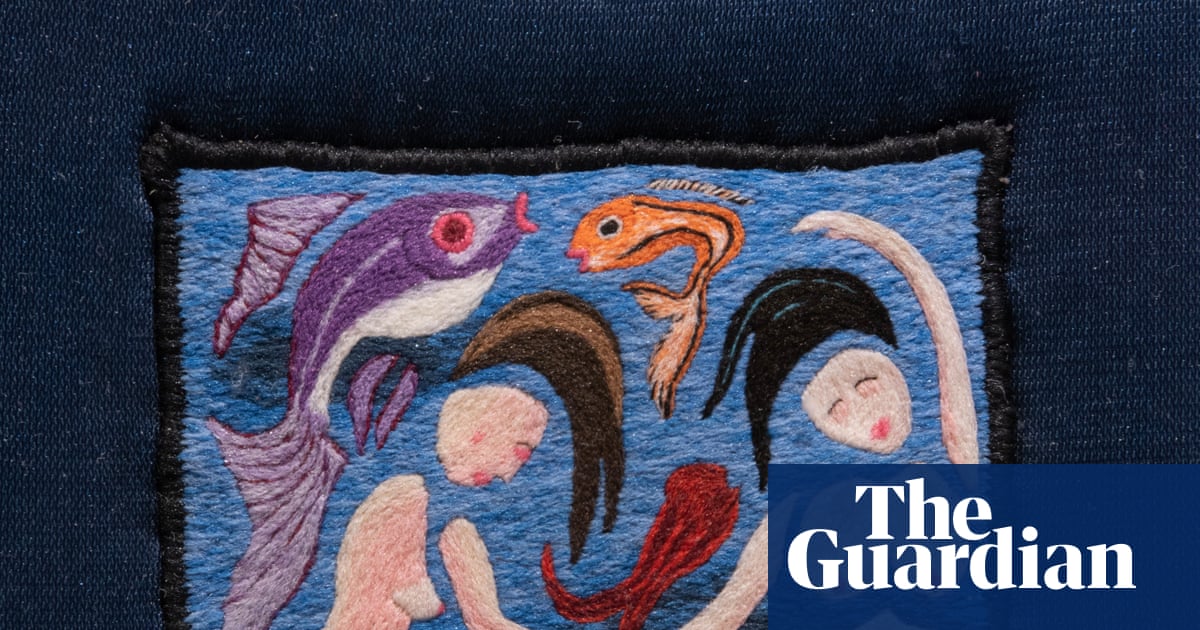
At first reluctant to work with textiles, he soon saw just how valued his creations were. When our patients passed, the quilt was passed into their family, and it was really moving for me.” As Tyler continued making quilts for dying inmates, he developed a perspective that would later inform his transition to making textile art, and that would help him be able to tell his own story through the intricate quilts that he had made for years as an artist. I never would have thought that I had the creative gene in me.” Tyler’s quilts tend to be backgrounded by static colors shot through with rich texture and repeating motifs – flowers in one, abstract, tear-shapes in another.
Extract — continue reading at the source.