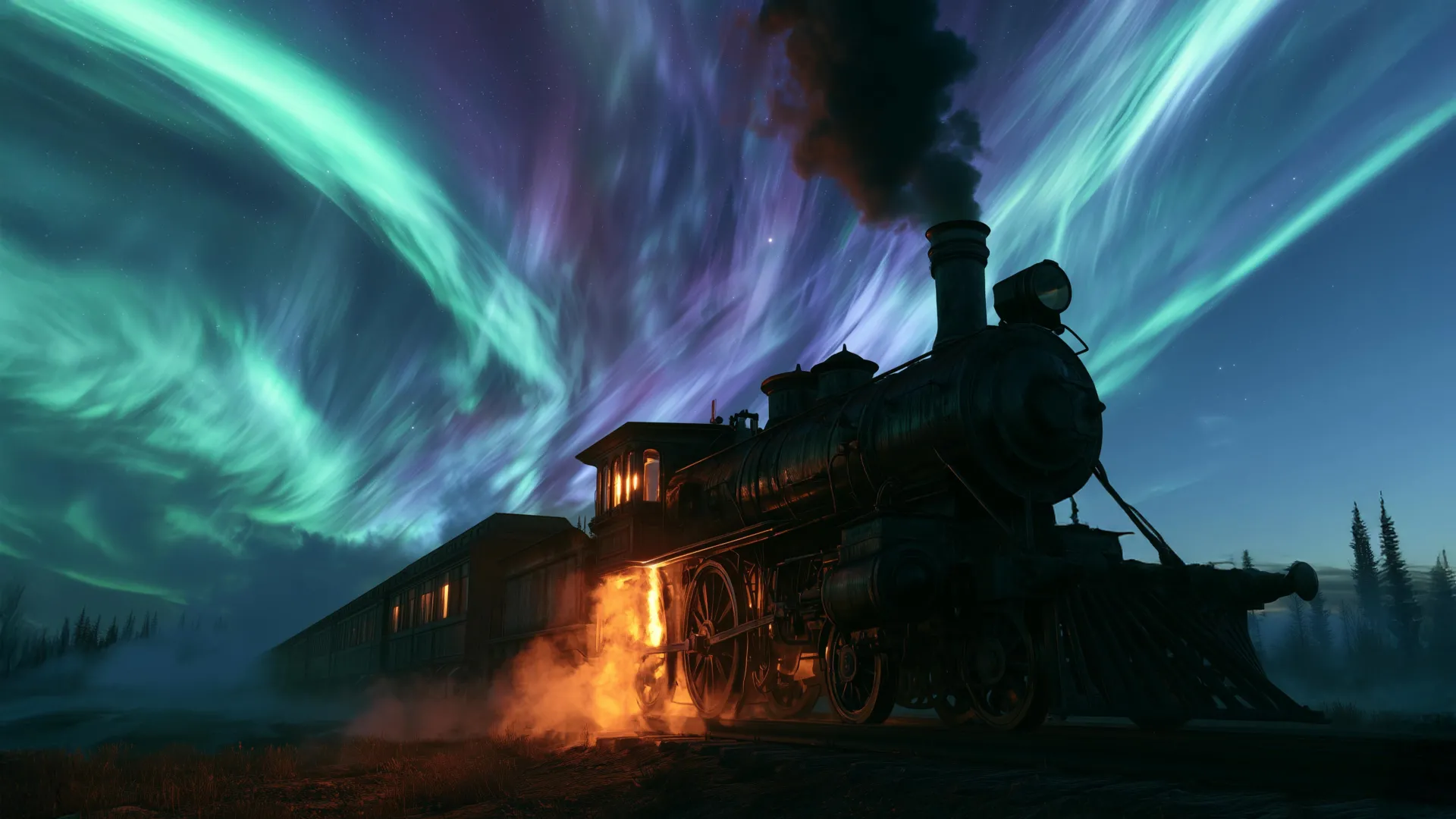
A mysterious train delay nearly 180 years ago has led scientists to uncover a surprising mistake in the history of space weather. An international research team has solved a 178-year-old mystery involving one of the earliest documented cases of solar activity interfering with electrical technology. The incident dates back to the 1840s, when electric telegraph networks were beginning to transform long-distance communication.
As these early systems expanded, operators occasionally encountered strange electrical disturbances that could disrupt their equipment. Scientists now understand that some of these problems were caused by changes in Earth's magnetic field triggered by activity on the Sun. Researchers led by Lancaster University have revisited a historical account of a train delayed in Exeter, England, when solar activity interfered with the railway's telegraph system.
The investigation involved scientists from RMIT University, the British Geological Survey, Natural Resources Canada, Baylor University, and the UK's national space laboratory, RAL Space. By piecing together historical documents and scientific observations, the team uncovered an error that changes the timeline of the earliest known technological disruptions caused by space weather. How Solar Storms First Disrupted Technology One of history's most dramatic examples of space weather affecting technology occurred in 1859.
Known as the Carrington Event, the powerful solar storm involved a massive solar flare and a coronal mass ejection, an enormous eruption of charged particles and magnetic fields from the Sun. The resulting disturbances produced spectacular auroras, commonly known as the northern lights, that appeared as far south as Hawaii and Central America. In some locations, the sky glowed brightly enough for people to read newspapers at night.
The unusual illumination even fooled gold miners into thinking morning had arrived, prompting them to prepare breakfast shortly after midnight. The storm also wreaked havoc on telegraph networks around the world. Electrical surges caused equipment failures, sent sparks flying from wires, shocked operators, and even started fires.
In some cases, the electrical currents generated by the disturbance were so powerful that telegraph systems continued operating without batteries. Although the Carrington Event remains the most famous example from this period, evidence of solar activity interfering with electrical systems stretches back even further. In 1871, an anonymous author published an account in the scientific journal Nature describing a "very intense magnetic disturbance" that supposedly occurred on October 18, 1841.
Extract — continue reading at the source.