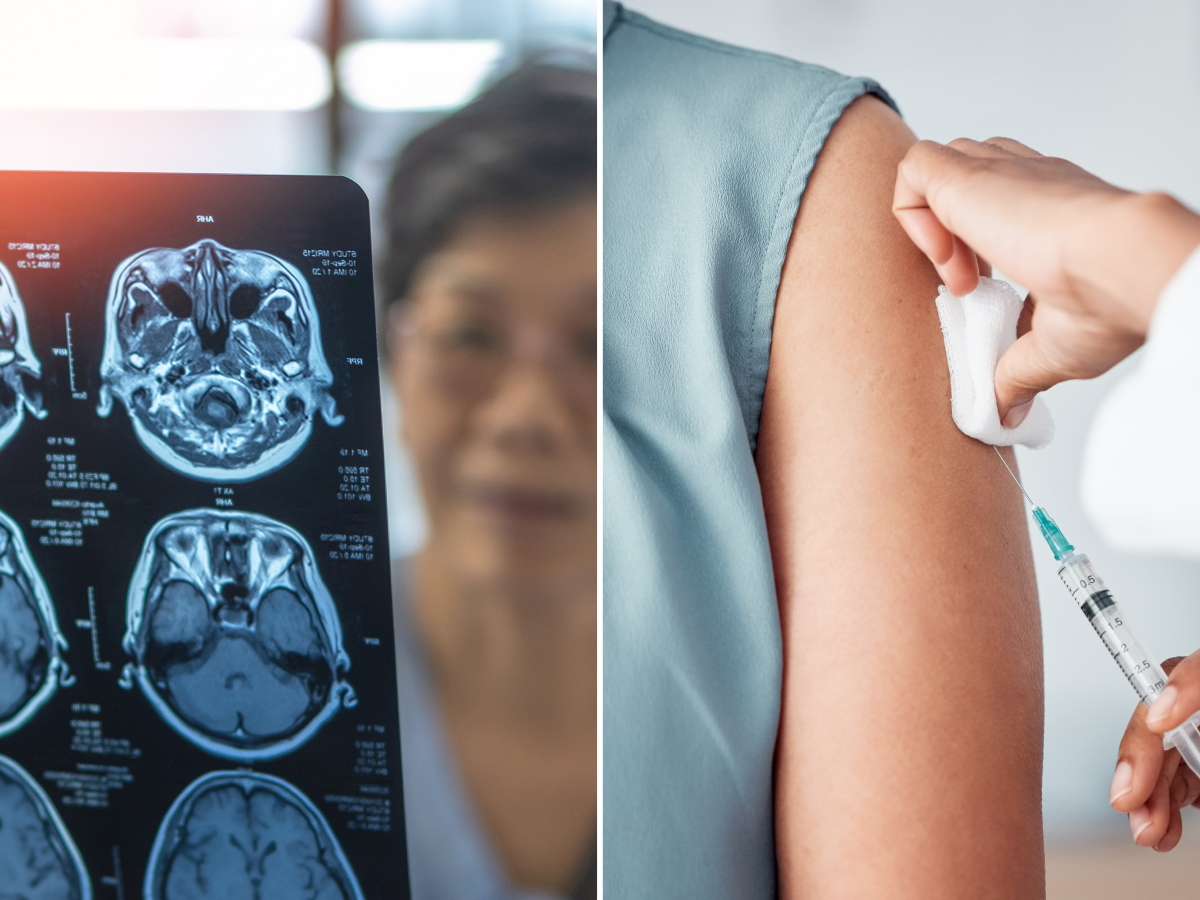
The vast majority of older Americans say they would be interested in having a vaccine that significantly reduces the risk of dementia, new research has found. Experts at the University of Southern California Schaeffer Center for Health Policy and Economics asked more than 1,500 Americans over the age of 50 if they would want to have a low-cost, multi-dose vaccine that could reduce the risk of developing dementia by half for those at high risk. The results were largely positive.
The study was published in the journal JAMA Network Open on September 21. The findings come as the Trump administration has been increasingly changing America's vaccine policies and vaccination rates nationwide have also been decreasing, which experts believe is being driven by growing anti-vaccine sentiment because of concerns about vaccine safety. "When we asked specifically about a future dementia vaccine, willingness was relatively high and outright opposition was low," J.
Felipe Montano-Campos, study lead and postdoctoral researcher at the University of Southern California, told Newsweek. "This suggests that attitudes toward a dementia vaccine may be different from attitudes toward other vaccines and are worth studying on their own." The researchers found that 72 percent of Americans involved in the study said they would likely or definitely receive a vaccine that had the potential to reduce dementia risk by 50 percent. Meanwhile, 21 percent said they weren't sure and 7 percent said they likely or definitely would not.
They also found that intentions changed based on age, sex and race and ethnicity. Americans who were 70 and older were more likely to say they would have the vaccine—35 percent compared to 31 percent of those in their 50s. Women also appeared to be more hesitant than men, with 23 percent saying they would not get a vaccine to reduce dementia risk compared to 19 percent of men, and only 29 percent of women said they would, while 39 percent of men said the same.
Black Americans also had the highest levels of hesitation among racial and ethnic groups at 26 percent and were also nearly half as likely as White Americans to say they would definitely get the vaccine (20 percent compared to 36 percent). Montano-Campos said that what stood out to him was that "uncertainty may be more important than opposition," given the higher proportion of those who said they were unsure about receiving a dementia vaccine compared to those who expressed no willingness. He also said the fact women were less willing than men to receive a future dementia vaccine was "particularly interesting given recent studies suggesting that the association between shingles vaccination and lower dementia risk may be stronger among women." "These are the kinds of differences that will be important to understand if effective dementia vaccines become available in the future," he said.
Jonathan Lovell, a professor of biomedical engineering at the University at Buffalo, told Newsweek: "It is encouraging to see a high-quality survey showing that most respondents would be open to receiving a preventive dementia vaccine for Alzheimer's if they were at high risk, and the vaccine could reduce that risk." "I am not entirely surprised by the finding, given how common and devastating Alzheimer’s disease is for patients and their families," he said. A number of already existing vaccines have been associated with a reduced risk of developing dementia in various studies, prompting further intrigue and investigation around whether vaccines could help to prevent or delay the disease. This includes the shingles vaccine, as researchers at Stanford University analyzed the health records of Welsh adults and discovered that those who received the shingles vaccine were 20 percent less likely to develop dementia over the next seven years than those who did not receive the vaccine.
Extract — continue reading at the source.