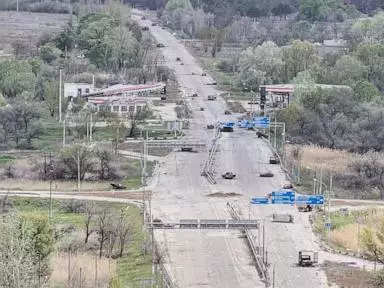
Food and medical supplies have been scarce for months in Oleshky, which sits on the Dnipro River that separates Ukrainian forces from the city’s Russian occupiers One desperate resident watched the front-line city slide further toward a humanitarian crisis as its trapped population dwindled to fewer than 2,000 people. She decided it was time to escape via what's been dubbed “the road of death.” So the 40-year-old former hairdresser walked -- for 20 kilometers (12 miles), along the partially mined road — fearing that “every step could have been my last," she said. Once a city of about 24,000, Oleshky was captured by Moscow’s forces on the first day of their full-scale invasion of Ukraine in 2022.
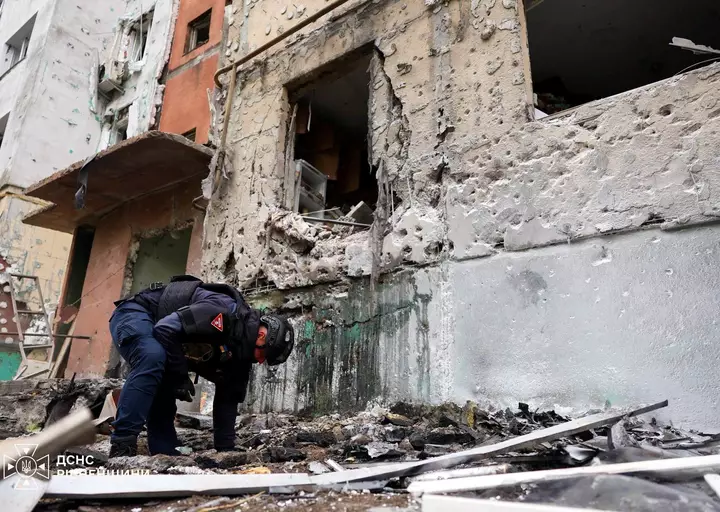
Its buildings were shelled and burned, and its infrastructure damaged. Further calamity struck in June 2023 when floodwaters inundated the city after the Kakhovka Dam collapsed from an explosion that an investigation found was likely caused by the Russian military, killing hundreds of residents. And now those still left in the battered city along Ukraine's southeastern front face death from hunger or disease as another harsh winter looms, with no agreement in sight for even a humanitarian evacuation.
Russia says Ukraine deliberately blocks supplies and evacuations; Kyiv counters that Moscow is effectively holding civilians hostage. Ukraine has appealed repeatedly for a local ceasefire to organize evacuations. Russia, which as the occupying power is obligated by international law to ensure civilians under its control have what they need to survive, has made no commitment.
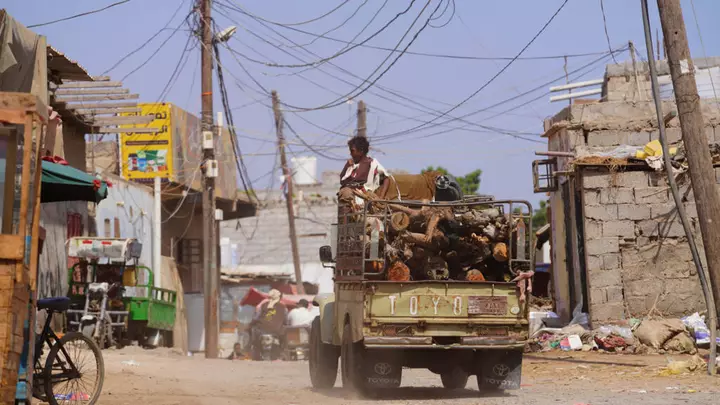
President Volodymyr Zelenskyy mentioned Oleshky’s suffering at the hands of Russia on Oct. 12 at an international forum in Poland, saying the city had been “razed to the ground.” Ukraine is "trying to help these people, but they are under occupation,” he said. The Kremlin said Putin voiced support for the Vatican efforts to help protect the population and secure vital supplies, and voiced readiness to cooperate. Remaining residents reportedly scrounge for food amid destroyed buildings, or try to grow vegetables in garden plots.
Water is drawn from wells. Firewood is used for warmth. Bodies at the city morgue decompose with no electricity.
Another 100 bodies fill the basement of Oleshky's hospital, said Tetiana Hasanenko, the exiled head of the city's Ukrainian military administration. The U.N. human rights office said the last regular food delivery by road was May 26. Oleshky's Russian-installed officials said this month they delivered 2 tons of aid, although they admitted it was hardly enough.
Extract — continue reading at the source.