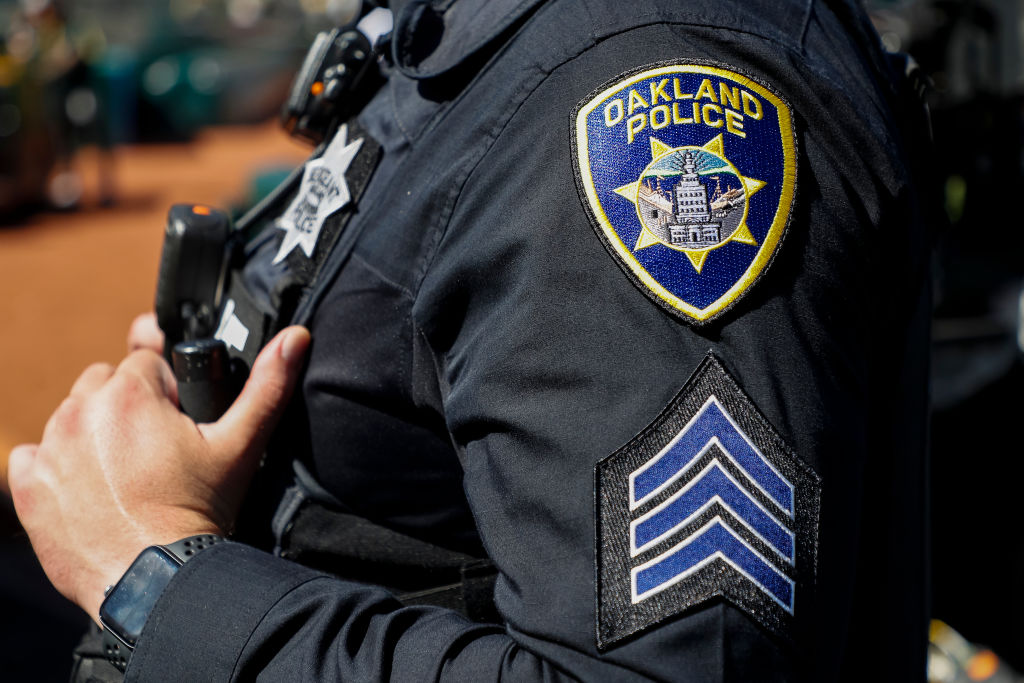
In the spring of 2014, civil rights lawyers John Burris and Jim Chanin invited me to Oakland, California, to serve as a subject matter expert. They represented a group of plaintiffs seeking justice in a city enduring an especially brutal version of a well-known story: a police department that many perceived as a hotbed of illegal tactics, violence, and discrimination directed largely at the Black community. As I heard one Oakland native put it at a public meeting shortly after I arrived: “People are damaged.
People are scared of the same people that’s supposed to protect them.” Since revelations of a pattern of wrongdoing first came to light 23 years ago, the Oakland Police Department (OPD) has been under federal court oversight—the longest for any American city. This week, a federal judge is expected to decide whether that oversight can finally come to an end, after years of progress toward reforms required by the court. Whatever the outcome, Oakland has undergone a substantial transformation over the past two decades.
What changed over those years is a remarkable story about what can happen when we finally have the tools we need to see policing clearly. I’d been summoned to Oakland due to my work as a researcher focused on racial bias and inequality. The plaintiffs’ attorneys wanted to understand what was really happening between officers and civilians that might be contributing to systemic abuses and a breakdown of trust.
The job for me and my team was to parse the data and try to quantify racial disparities. But we were also seeking clues about how those disparities took root, and whether anything could be done to address them. We soon realized there was an all-too-familiar tension that arrest records, crime statistics, and other available data couldn’t solve—a problem of interpretation.
The same disparities that community advocates saw as proof of officer bias were viewed by many police officers as proof of where crime was concentrated. The numbers told us what was happening. They were much less useful for helping us understand why.
If we had any hope of uncovering the causes of those disparities—let alone finding solutions—we were going to need new tools. As it turns out, as far back as 2014, Oakland was sitting on an extraordinary trove of data that contained everything we needed to know—it was just that nobody had thought of it as data before. Oakland had been an early adopter of police body-worn cameras, a rare technological innovation that consistently enjoys about 90% public approval.
Extract — continue reading at the source.