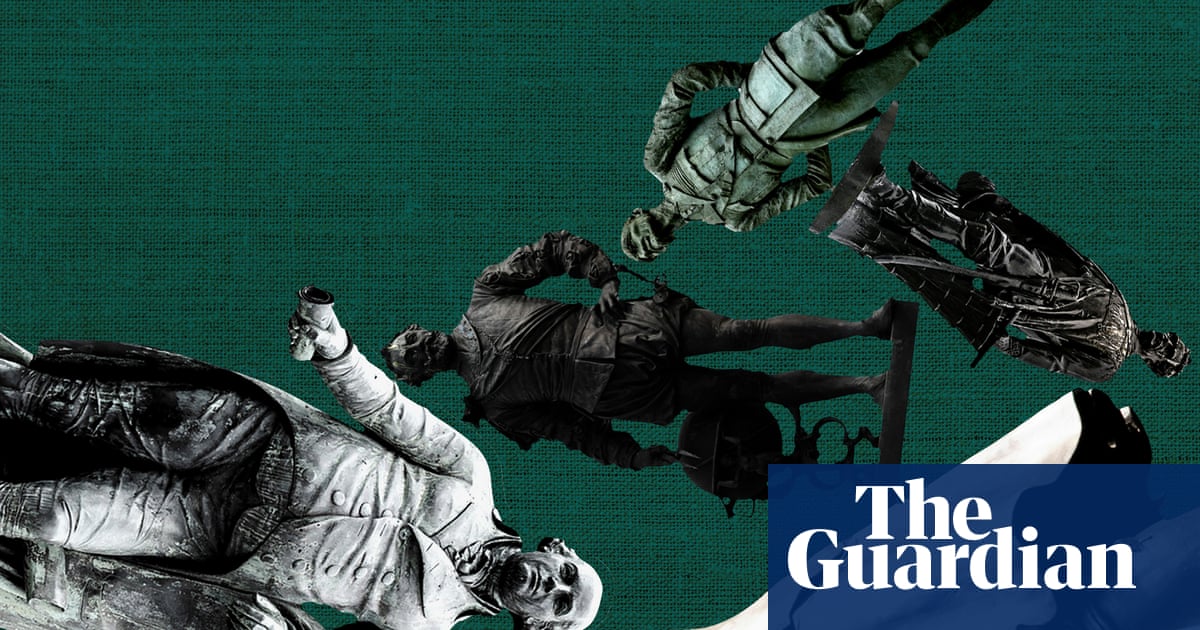
I’m Nadine White and this month we’re asking: after the toppling, what comes next? Britain spent much of 2020 arguing about what should come down. Statues of enslavers and colonial figures were toppled, defaced or quietly removed.
Edward Colston ended up in Bristol harbour. Robert Milligan was taken down outside London’s Museum of Docklands, while campaigners renewed calls for Cecil Rhodes to come off his plinth at Oriel College, Oxford. But six years on, one of the most persistent battles is still playing out.
The longstanding Hackney MP Diane Abbott has highlighted ongoing calls for the removal of a statue of Robert Geffrye, the 17th-century merchant whose wealth was built partly through investments in the transatlantic trafficking of enslaved Africans. The statue remains prominently displayed outside the Museum of the Home, formerly the Geffrye Museum, despite a 2020 public consultation finding strong support for its removal. Abbott argues that the issue is not about erasing history, but refusing to honour those who profited from slavery in public spaces.
The vast majority of imperial monuments are exactly where they have always been: on plinths, in parks, above doorways and worked into the stone of public buildings. The toppling of Colston became globally symbolic precisely because it was so unusual. Elsewhere, changes were smaller and more localised: in the London borough of Lewisham, Sir Francis Drake primary school became Twin Oaks primary school after a community consultation; in Tottenham, north London, Black Boy Lane became La Rose Lane, honouring the Trinidadian-born activist and publisher John La Rose.
So, six years on, a quieter question has started to emerge: what is actually replacing Britain’s imperial symbols? Across the country, a new memorial landscape is slowly taking shape, often pushed forward by artists, campaigners and community groups unwilling to wait for institutions to act. At the International Slavery Museum in Liverpool, the Black British-Caribbean artist Rayvenn Shaleigha D’Clark is creating iron entrance panels that reinterpret materials historically tied to enslavement and control.
In London, The Wake, a memorial honouring victims of the transatlantic slave trade by Khaleb Brooks, is due to be unveiled outside London Museum Docklands in 2027. Standing seven metres high, it will include a bronze cowrie shell that people can enter, offering a space for reflection. Meanwhile, campaigners are working to preserve and publicly display the anchor of HMT Empire Windrush, the passenger liner that brought over the first wave of people from the Caribbean after the second world war to help rebuild Britain, turning a physical relic of migration into a national site of memory.
Extract — continue reading at the source.