The most basic function of government is to protect people from harm. Two growing phenomena – the climate crisis and AI – pose escalating risks of extraordinary harm. The climate crisis is already causing floods, wildfires, drought and record heat.
AI agents are already escaping super-secure environments to hack into systems they’re supposed to avoid. Yet Donald Trump and his Republican enablers, backed by big money from big oil and big AI, refuse to do a thing about either risk. In many ways, they’re worsening both.
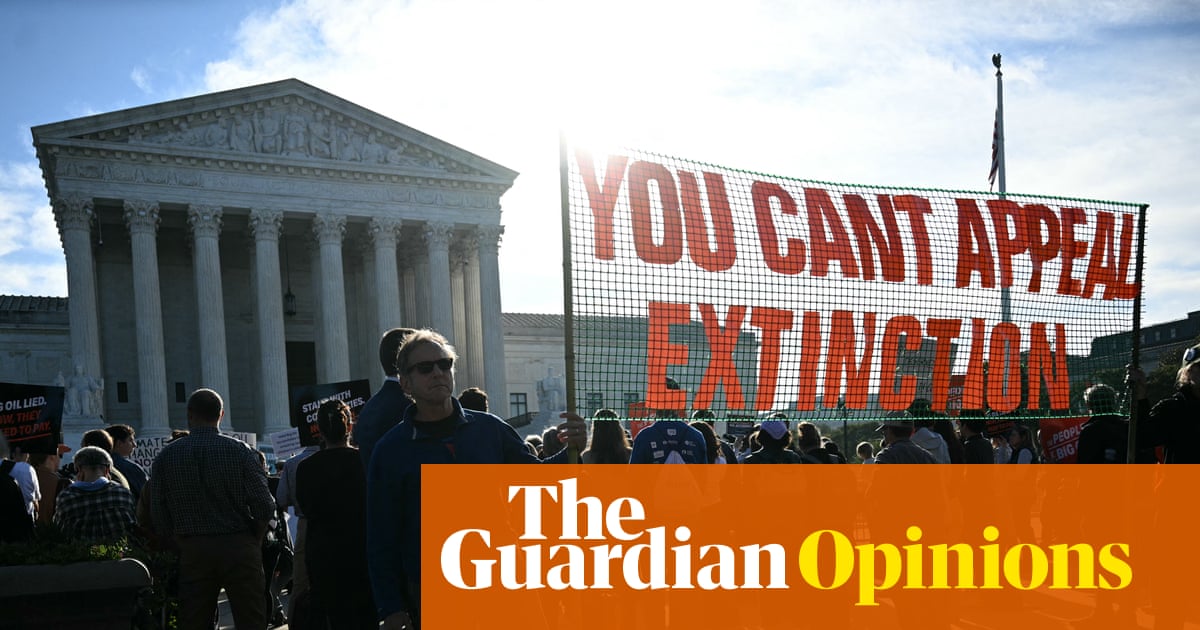
But there’s another way to reduce these risks: through liability law. I have no more faith in the supreme court than you do, but I was struck by the responses of at least half the justices who will be considering an important case that opened the supreme court’s new term, Suncor v Boulder. The case was brought by several Colorado localities against Suncor and ExxonMobil – one of about three dozen filed around the country in which cities and states are demanding that big oil reimburse them for the escalating costs of climate disasters brought on by the burning of fossil fuels.
On Monday, at least four justices (Samuel Alito has recused himself) expressed skepticism about big oil’s argument that the Clean Air Act explicitly prevents such lawsuits against polluters. Where’s the support for that? Where’s the precedent for that?
Where’s the anything for that?” asked Justice Elena Kagan. Chief Justice John Roberts drew parallels between Boulder’s claim and prior lawsuits against the tobacco and opioid industries in which states and localities won significant damages. In 1998, the leading US tobacco companies agreed to pay $206bn to cover public health costs and smoking-related expenses.
When translated into current dollars, this is more than $423bn. And recall the $20bn paid by BP in 2010 to cover environmental and economic damage to the Gulf coast after the Deepwater Horizon oil spill. Or the $7.4bn paid by the Sackler family and Purdue Pharma to resolve liability for the opioid crisis.
Extract — continue reading at the source.