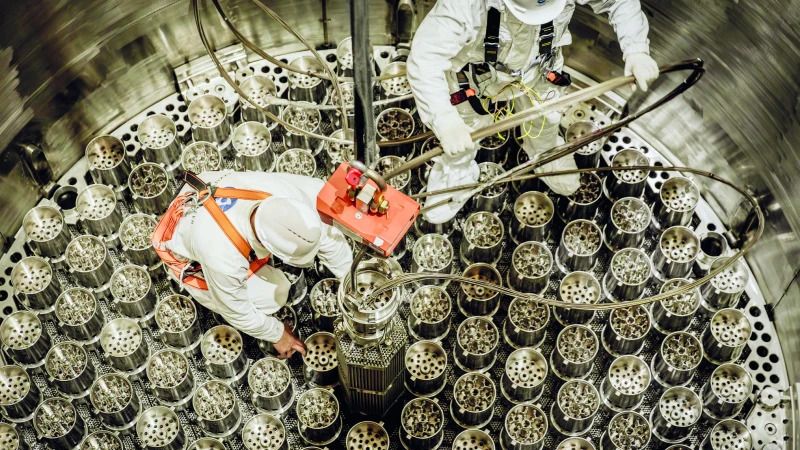
Attention has turned to when Unit 1 of the Akkuyu Nuclear Power Plant, Türkiye’s first nuclear power plant, will begin operating. Following President Recep Tayyip Erdoğan’s statement that “we have entered the completion phase at Akkuyu,” the process leading to the plant’s first electricity generation has once again come into focus. However, the loading of nuclear fuel into the reactor will not mean that electricity will immediately be supplied to the grid.
First, the plant will undergo a series of tests at different stages to verify that it can operate safely. Its power will then be increased gradually. One of the most critical steps remaining before the first electricity is generated at Akkuyu Unit 1 will be the loading of actual nuclear fuel into the reactor.
In June, 163 test fuel assemblies were loaded into the reactor at the plant. The operation was regarded as an important stage in checking the systems and preparing the facility for operation. On August 6, another operation lasting approximately six hours was carried out to determine whether the systems in the electricity generation section could operate together properly.
The next critical step on the way to first electricity will be the loading of actual nuclear fuel into the reactor. Following fuel loading, the plant will not immediately be operated at full power. Instead, different systems will first be tested individually and in combination.
Various tests will be conducted to ensure that the plant is operating safely. The objective will not simply be to “generate electricity.” The plant will also have to demonstrate, step by step, that the energy it produces can be transferred outside the facility safely and under controlled conditions. The process from the loading of actual nuclear fuel to the generation of first electricity is expected to take approximately three months.
Therefore, if fuel loading takes place at the end of September or the beginning of October, it appears possible that Akkuyu could generate its first electricity in the final days of 2026. However, this should not be regarded as a firm timetable. The inspections and tests to be conducted, any deficiencies that may emerge, and the official approvals required could extend the process.
Extract — continue reading at the source.