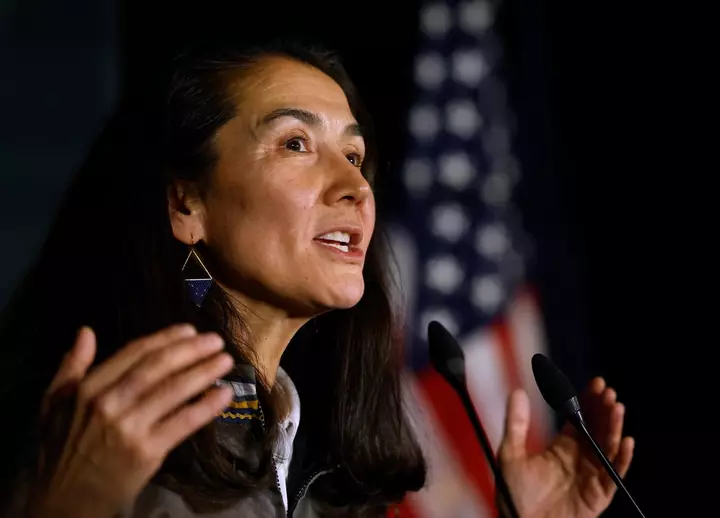
While Alaska’s Senate race still remains undecided days after November 3, Democrat Mary Peltola’s campaign has filed a lawsuit against Alaska election officials Friday, seeking immediate access to information about absentee ballots that have been rejected during the extremely close election. The campaign argues that disclosure is necessary to ensure eligible votes are properly counted and to protect the integrity of the race, which has been repeatedly contested in the weeks leading to Election Day due to the presence of a namesake challenger to the incumbent, Republican Senator Dan Sullivan. The Justice Department sued Alaska election officials last month, seeking to block certification of the race’s result if the incumbent lost and votes cast for Daniel J.
Sullivan Jr. would have helped him win. The lawsuit was dismissed by a state judge on November 1, two days before Election Day. As the race is a real toss-up that remains too close to call, with about 600 votes separating Peltola and Sullivan, the result could depend on a few ballots sent by mail or flown in from remote communities.
Alaska will accept ballots from overseas voters up to November 18. In Mississippi, another U.S. Senate race that remains too close to call, Republican incumbent Cindy Hyde-Smith is similarly laying the groundwork for possible later litigation, demanding that provisional ballots be set aside.
Meanwhile, in California, the Trump administration abandoned a federal lawsuit against the state over approximately 20,000 mail-in ballots cast by people it suspected might be non-US citizens. California Attorney General Rob Bonta announced the withdrawal on Friday, describing it as a victory for the state after a series of court defeats for the federal government. On Friday, Peltola’s campaign group, Alaskans for Mary, sued the Alaska Division of Elections, Lieutenant Governor Nancy Dahlstrom and Director of Elections Carol Beecher over the release of records identifying absentee ballots rejected in the November 3 election.
They are also asking why these votes were rejected. The campaign writes that it had requested the records to each regional office of the Division of Elections on October 27, but did not receive a response to its requests. On November 4, the campaign submitted additional correspondence demanding the requested records by 4:00 p.m. on November 5.
The request to “immediately” provide the records was declined “during a telephonic conferral and subsequent email correspondence” on that same day, the lawsuit reads. Denied access to the records leaves Peltola’s campaign unable to monitor whether ballots are being properly counted, the team argued, and whether votes for the Democrat were improperly rejected. And time is ticking, they said.
Extract — continue reading at the source.