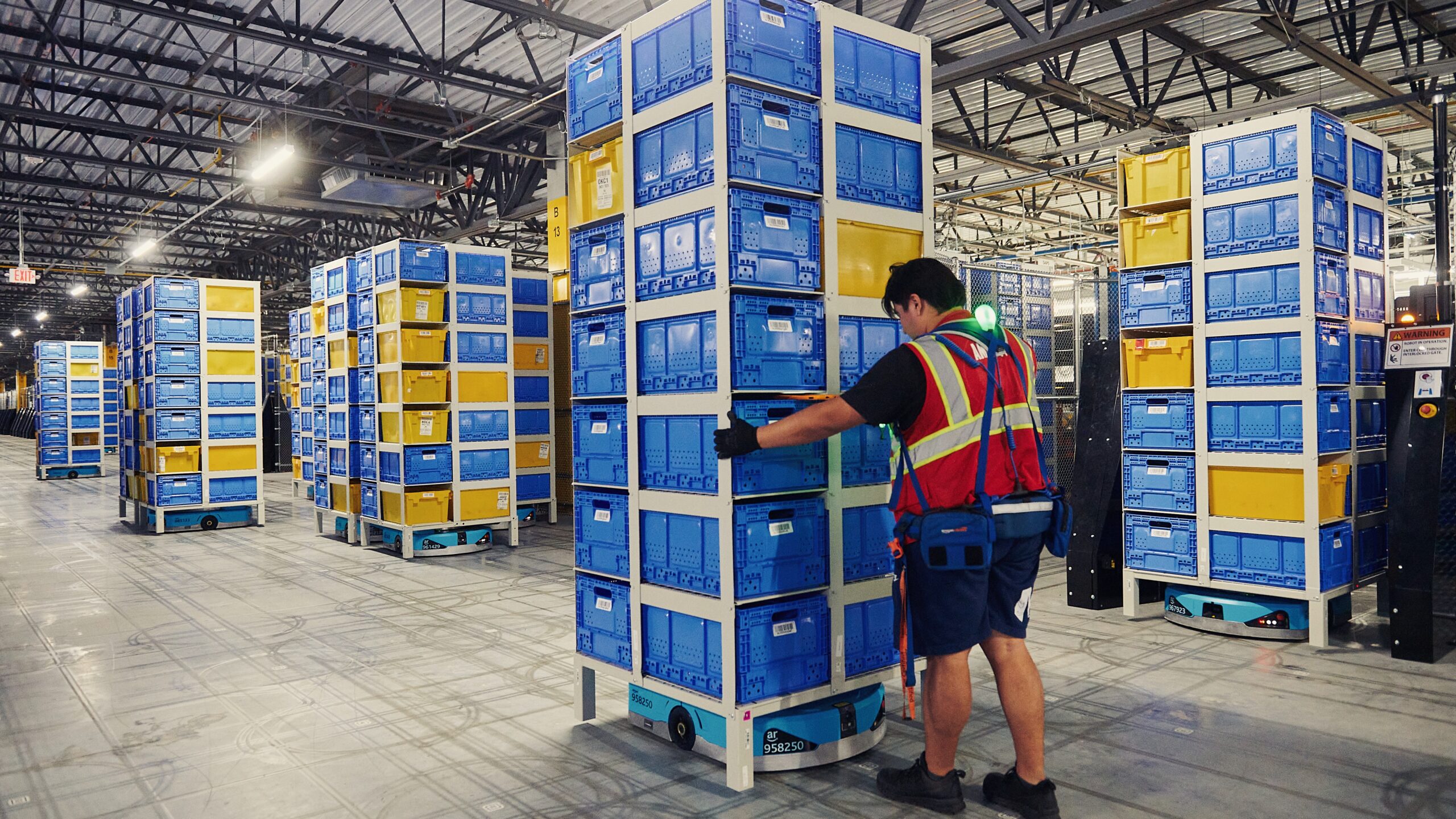
No organization in the world operates more robots than Amazon. The company already has more than 1 million robots working in warehouses around the clock to make tens of millions of same-day and one-day package deliveries happen on a daily basis—and Amazon is poised to significantly grow that robotic fleet in the coming years as it establishes new factories to churn out increasingly more capable robot workers. Despite deploying so many robots, Amazon is also the second-largest corporate employer in the world, with more than 1.5 million full-time and part-time human workers, according to its 2025 annual report.
Amazon executives say that the growing robot fleet has eased the burden on its human workforce by taking on the toughest fulfillment center tasks that carry the greatest risks of physical fatigue and injury. But labor advocacy groups and independent researchers point to evidence suggesting that warehouse automation driven by AI is not all upside for the humans who work alongside robots. Amazon’s promise of speedy deliveries for its 200 million Prime subscribers in particular requires hundreds of thousands of human employees to speedily assemble and ship out customer orders that often combine a dizzying array of products.
Much of the work in fulfillment centers also frequently involves “dull, dirty and dangerous” tasks that people may prefer to hand over to robots. The injury and illness rate for workers in the US warehouse sector has typically been more than double the average across all industries, according to the US Occupational Safety and Health Administration.
Extract — continue reading at the source.