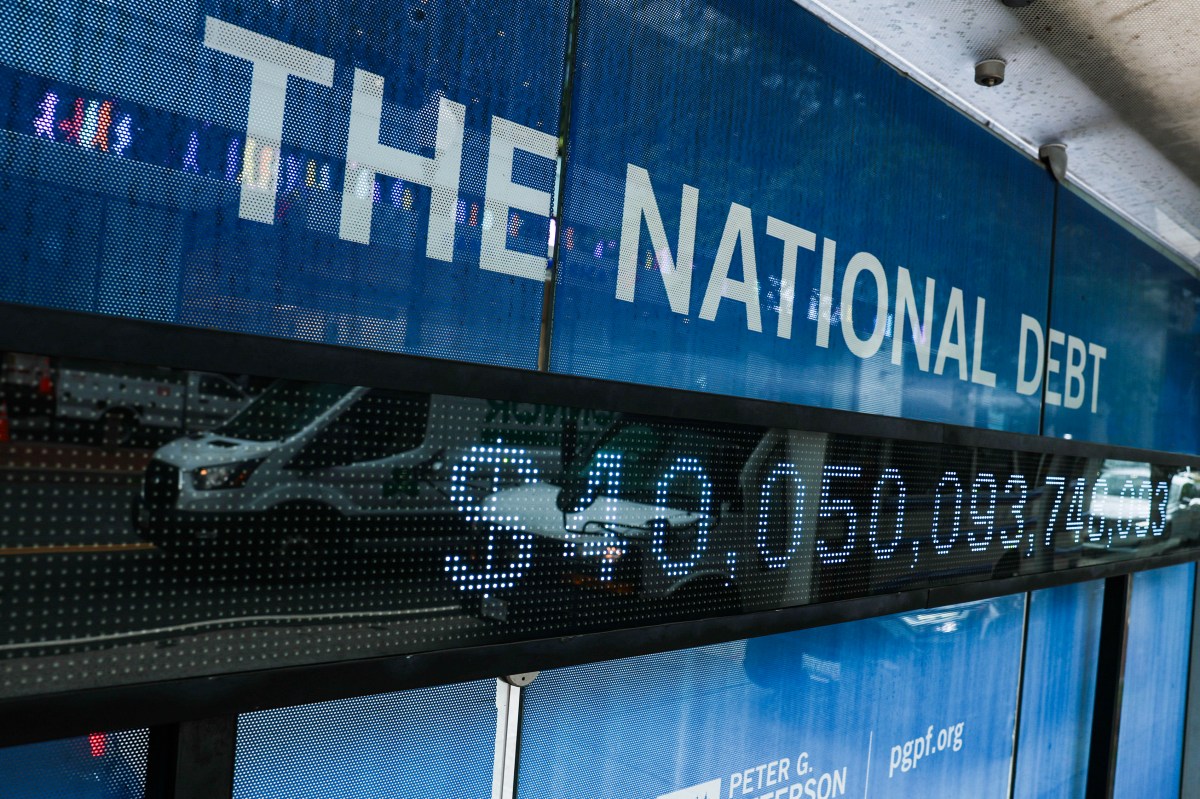
The United States' mounting debt is drawing fresh scrutiny ahead of the November midterm elections, as Americans weigh the major parties' economic promises against the costs of everyday life. Peterson Foundation's August survey found that 83 percent of registered voters said their concern about the debt had grown over the past few years. Some 82 percent wanted it among President Donald Trump's and Congress' top three priorities, while 85 percent wanted them to devote more time to addressing it.
The survey was conducted online among 1,002 registered voters August 17-19. The findings come at the same time the national debt passed $40 trillion on August 18, more than double the $19.5 trillion a decade earlier. The debt—which has risen $11.6 billion in Trump's two terms and increased $8.4 billion under President Joe Biden—is accumulated federal borrowing, largely to cover spending that exceeds revenue, and includes money owed to investors and government accounts such as Social Security's trust funds.
Newsweek has contacted the White House for comment via email. For candidates heading into November, the political question is how that growing balance connects to the bills Americans pay themselves. "They wake up worrying about whether they can afford groceries, housing, gas, healthcare and childcare—and whether their paycheck will last until the end of the month.” James Christopher, a political strategist and founder of James Christopher Communications, also cautioned against assuming that the scale of the debt would determine outcomes at the ballot box.
"The distinction is important: A problem can be enormous without affecting ordinary voters’ lives in a visible way that drives their votes.” The Peterson survey found that 94 percent considered the cost of living and overall affordability important to their vote, including 69 percent who described it as very important. When asked a question introduced with the statement that rising debt can increase inflation and interest rates, 91 percent said they were concerned about its effect on everyday expenses, including groceries, energy and housing. Some 55 percent were very concerned; 89 percent worried about its effect on borrowing costs, including credit cards, car loans and mortgages.
Almost half, 47 percent, indicating they were very concerned. The financial pressures felt by Americans extend beyond perceptions of federal borrowing, with the rising cost of living consistently reported as a big issue. Costs are increasing: consumer prices were 3.4 percent higher in July than a year earlier, according to the Bureau of Labor Statistics.
Grocery prices rose 2.7 percent, shelter costs increased 3.2 percent and energy prices jumped 14.7 percent year-over-year. Although the annual inflation rate eased a touch to 3.4 percent from 3.5 percent in June, that means prices are increasing more slowly, not returning to earlier levels. Meanwhile, average hourly earnings after inflation fell 0.2 percent year-over-year.
Extract — continue reading at the source.