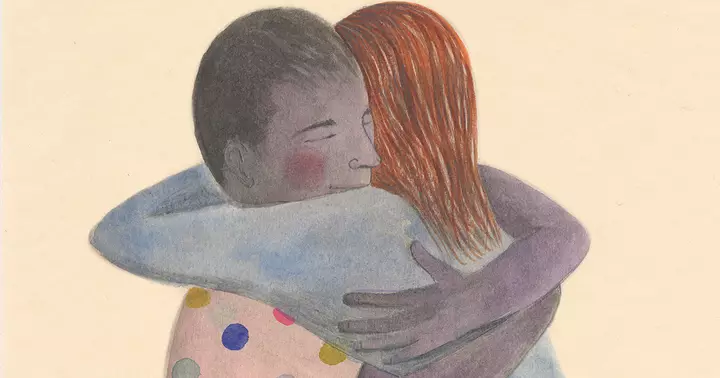
Friendship is the sunshine of life — the quiet radiance that makes our lives not only livable but worth living. (This is why we must use the utmost care in how we wield the word friend.) In my own life, friendship has been the lifeline for my darkest hours of despair, the magnifying lens for my brightest joys, the quiet pulse-beat beneath the daily task of living. You can glean a great deal about a person from the constellation of friends around the gravitational pull of their personhood. Her friend Ralph Waldo Emerson — whom she taught to look through a telescope — believed that all true friendship rests on two pillars.
In his own life, he put the theory into practice in his friendship with his young protégé Henry David Thoreau (July 12, 1817–May 6, 1862) — a solitary and achingly introverted person himself, who thought deeply and passionately about the rewards and challenges of friendship. Like all unusual people, Thoreau had a hard time connecting. In a desponded diary entry from his mid-thirties, found in The Journal of Henry David Thoreau, 1837–1861 (public library), he writes: Why should I speak to my friends? for how rarely is it that I am I; and are they, then, they?
We will meet, then, far away. Several months later, just before the Christmas holidays with their cruel magnifying lens of loneliness for the lonely, he rues his inability to connect openheartedly: My difficulties with my friends are such as no frankness will settle. There is no precept in the New Testament that will assist me.
My nature, it may be, is secret. Others can confess and explain; I cannot. Thoreau finds himself pocked with self-doubt about his ability to connect, his sense of isolation at times swelling into punitive despair: Nothing makes me so dejected as to have met my friends, for they make me doubt if it is possible to have any friends.
Over and over, Thoreau anguishes with the extreme shyness and reticence of his nature, longs for a confidante beyond the diary page, longs for companionship beyond the birds and the trees. On a beautiful spring Sunday, he despairs: I have got to that pass with my friend that our words do not pass with each other for what they are worth. We speak in vain; there is none to hear.
He finds fault with me that I walk alone, when I pine for want of a companion; that I commit my thoughts to a diary even on my walks, instead of seeking to share them generously with a friend; curses my practice even. Awful as it is to contemplate, I pray that, if I am the cold intellectual skeptic whom he rebukes, his curse may take effect, and wither and dry up those sources of my life, and my journal no longer yield me pleasure nor life. Months after publishing Walden, with its lyrical celebration of solitude, his loneliness deepens into a primal scream of longing for connection: What if we feel a yearning to which no breast answers?
Extract — continue reading at the source.