Horror is one of the most underappreciated corners of anime. The medium can certainly muster depraved imagery, as seen in Jujutsu Kaisen and Chainsaw Man. Genuine horror beats, however, often get lost under the industry's fixation on action, fantasy, and sprawling shonen adventures.
There are exceptions, of course; the most striking among them being Satoshi Kon’s Perfect Blue. Other examples include Mononoke, which uses surreal imagery to tell stories about human suffering, and Higurashi: When They Cry, which transforms a seemingly idyllic rural community into a place of unimaginable cruelty. Even the much-derided 2024 Uzumaki series had a terrifyingly bleak first episode.
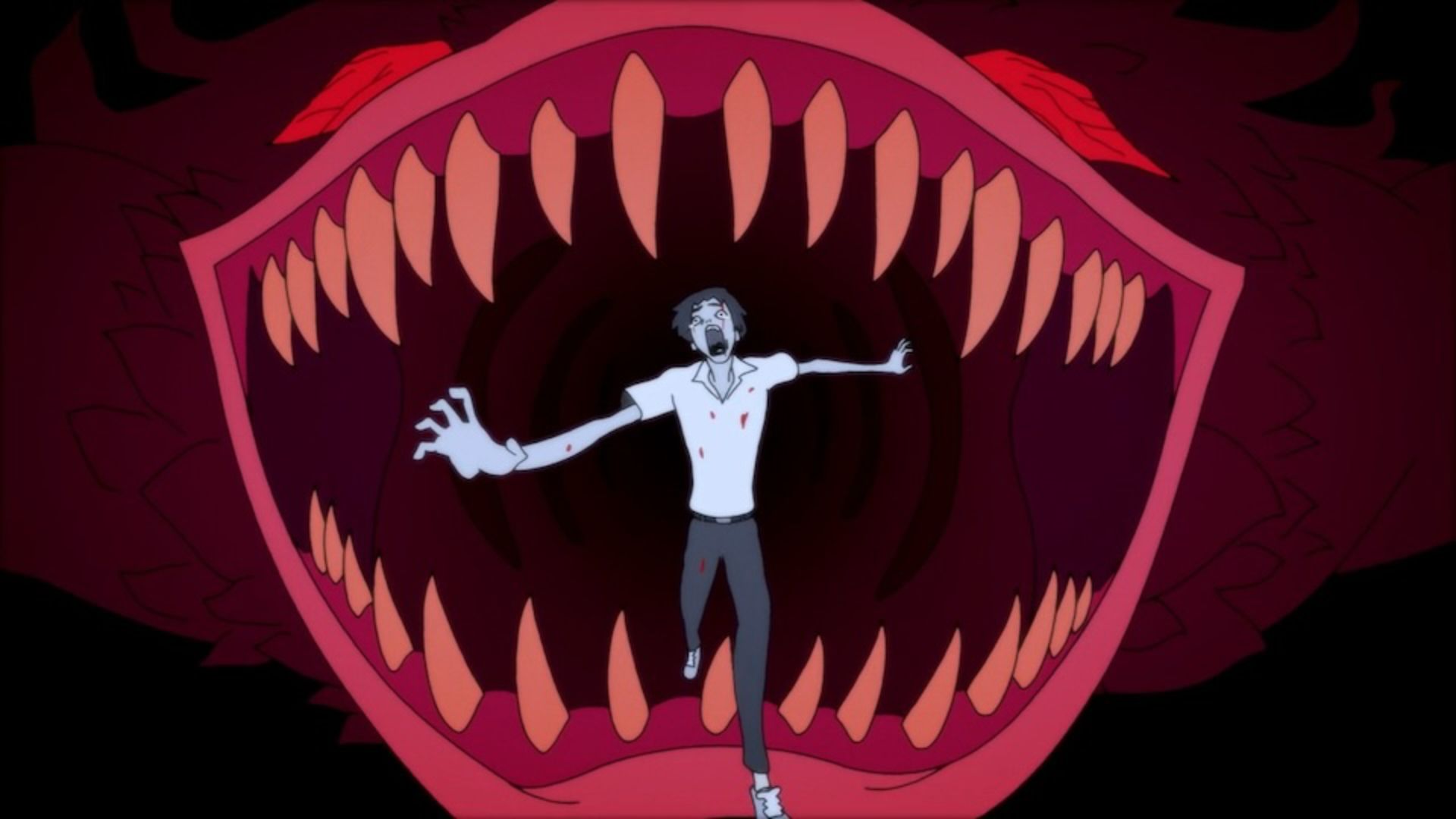
But if you're looking for an anime that understands how horror can be both visually repulsive and emotionally devastating, Devilman Crybaby is the perfect series for you. Released on Netflix in 2018, Masaaki Yuasa's 10-episode adaptation of Go Nagai's Devilman is a spectacularly gruesome descent into the apocalypse. At its center is Akira Fudo, a sensitive young man forced into a horrific union with a demon to defend humankind from an existential threat.
Granted immense power without sacrificing his empathy, Akira becomes a walking paradox: a creature born of unimaginable violence who still weeps for mankind. This core tension that propels the narrative, probing the fragile line between humanity and monstrosity. What makes Crybaby so effective is that its violence is never merely superficial.
To his credit, Yuasa focuses primarily on the devolution of human empathy. As demonic infestation spreads across the globe, humanity collapses under the weight of its own paranoia, turning neighbors against each other in a desperate (and misguided) bid for survival. We watch as neighborhood watch groups turn into armed vigilantes, public broadcasts amplify xenophobic panic, and ordinary citizens begin executing anyone who exhibits "suspicious" behavior.
It’s a thematic lineage shared by works like Naoki Urasawa’s Monster or Andrzej Sapkowski’s The Witcher — stories where literal monsters serve as a mirror, revealing that humanity’s capacity for cruelty is far more terrifying than any beast's predatory instinct. While Nagai’s 1972 manga used demonic violence to explore the horrors of war and self-destruction, Yuasa brilliantly retools that dread for a modern age driven by social media witch hunts, sensationalism, and digital outrage. A perfect example is the tabloid blogger Nagasaki, who weaponizes shock-value footage of demon encounters posted on social media to spark viral mass panic.
Extract — continue reading at the source.