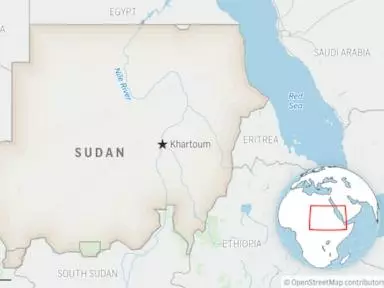
Yemen’s internationally recognised, Saudi-backed government has alleged that the Tehran-backed Houthis have modified Iranian air defence weapons into loitering cruise missiles with the assistance of Iran’s Islamic Revolutionary Guard Corps (IRGC). The Yemeni government has warned that the capability of such missiles – which operate on a heat-tracking system, it alleged – in practice threatens civilian air traffic over Yemen and the crucial Red Sea. Meanwhile, the Houthis have ramped up attacks on Saudi Arabia as they fight Yemeni government forces.
On Thursday, Riyadh said it intercepted six ballistic missiles aimed at Taif in western Saudi Arabia and the Yanbu port area on the Red Sea. The Houthis also said they attacked “a sensitive target” in the Saudi capital, Riyadh, and Saudi Aramco facilities in Yanbu. Houthi military spokesman Yahya Saree said the group used ballistic and cruise missiles as well as drones in the two operations.
The Houthis were in open conflict with Yemen’s government and a Saudi-led coalition of Arab states from 2014 until a United Nations-brokered ceasefire was declared in 2022, but fighting has reignited in recent weeks with the Houthis taking the Red Sea coast of Yemen along with the strategically important city of Mocha and Mayyun Island in the Bab al-Mandeb strait at the southern entrance to the Red Sea. In July, the armed group declared a naval blockade against Saudi Arabia in the Red Sea, essentially opening yet another theatre in the US-Israel war on Iran. Since the closure of the critical Strait of Hormuz during the war, the Red Sea has become a vital alternative export route for the region’s biggest oil player, Saudi Arabia.
Its East-West Pipeline, which carries oil from its eastern oilfields to the western port of Yanbu is only just restarting operations after damage inflicted by a drone attack this month. So what do the Houthis’ latest missile capabilities mean for the region? Brigadier General Majed al-Nazili, spokesperson for the Yemeni government forces, said the Houthis are using Iranian air defence weapons that pose a danger to all aircraft.
Al-Nazili said the weapons have been modified with the assistance of IRGC experts and are being used to strike aircraft and cruise missiles. Al-Nazili noted that aircraft belonging to the United Nations or humanitarian organisations travelling via air routes over Yemen and the region could potentially be in danger. Al-Nazili also said “this dangerous escalation coincides with the threats” by Iranian officials, including Mohsen Rezaei, the secretary of Iran’s Supreme National Security Council, to target aviation services in the region after the US sanctioned Iranian airlines.
Rezaei had initially warned that regional airports could lose flights if they joined US restrictions on Iranian aviation. Two days later, his office later clarified that Tehran was not planning military retaliation over the restrictions although it said nonmilitary countermeasures against specific airports remained possible. Using “Iranian weapons from Yemeni territory poses a direct threat to international air navigation routes and cannot be considered a purely domestic Yemeni issue,” al-Nazili said, calling on international authorities to take “urgent and decisive action”.
Extract — continue reading at the source.