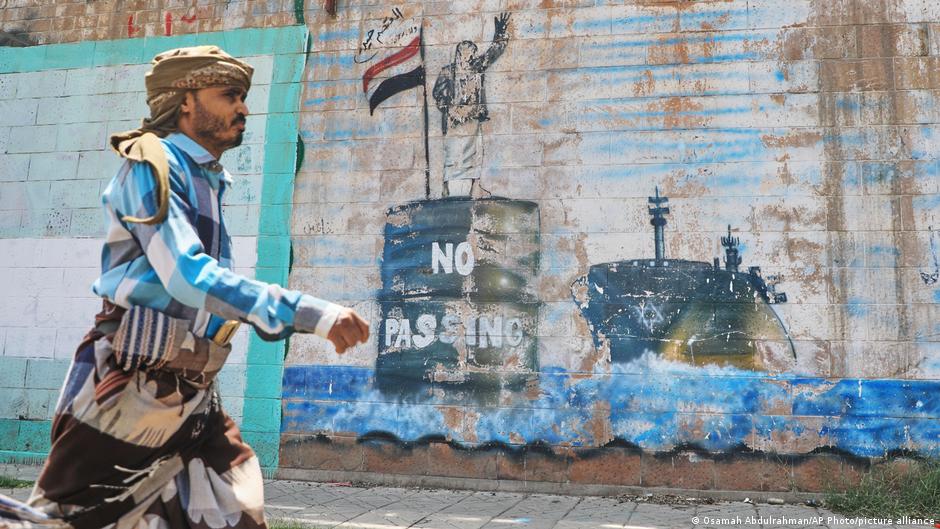
Last week, some students in Saudi Arabia were told they should stay at home and attend classes online, due to continued threats from attacks by the Houthi group in neighboring Yemen. But the very next day, they were given the all-clear and allowed to return to school in person. The conflict between Saudi Arabia and the Houthi militia in Yemen seems to have become part of everyday life in Saudi Arabia.
After a period of comparative calm, the Houthis have been ramping up attacks on the country, starting July, and have fired many missiles and drones over the border. Over recent weeks, the Houthi militia have also pushed further into Yemen, taking more control of the Yemeni coast and several islands in the Red Sea. This means they can oversee maritime traffic in the Bab el-Mandeb Strait.
The waterway connects the Red Sea to the Gulf of Aden. The renewed Houthi attacks endanger Vision 2030, Saudi Arabia's ambitious project to move the kingdom away from its dependence on oil revenues, which was conceived by Saudi leader Crown Prince Mohammed bin Salman. To make Vision 2030 a reality, Saudi Arabia needs stability — but right now, the outlook is moving in the opposite direction.
"The escalation in Yemen is drawing the Saudis deeper into the regional war, a war that Saudi Arabia actually wanted to prevent," said Marcus Schneider, who heads the Friedrich Ebert Foundation's Regional Peace and Security Project in the Middle East. Saudi Arabia's energy infrastructure is particularly vulnerable to Houthi attacks, which have already disrupted the so-called East-West pipeline, which runs for over 1,200 kilometers. It was being used to transport oil after other routes, such as shipping through the Strait of Hormuz, became precarious due to fighting between the United States, Israel and Iran.
Houthi attacks disabled the pipeline although reports from a week ago suggest it is being used again. And thanks to the Houthis, the Bab el-Mandeb Strait — which means "gate of tears" in English — is also coming under pressure. Andrew Leber, a nonresident scholar in the Middle East program of the US think tank, the Carnegie Endowment for International Peace, calls it a "one-two punch of pipeline attacks and Red Sea seizures." In fact, it may send the Saudis back to the Strait of Hormuz to try to ship their oil, even though that route is still heavily restricted.
It is unlikely that Saudi ally, the US, is going to send help. Washington has said it will support the Saudis with intelligence and reconnaissance, but President Donald Trump appears reluctant to get involved in a direct military campaign against the Houthis. According to a US-based think tank, the Center for Strategic and International Studies, this may partially be because the it is feeling the strain of its ongoing campaign against Iran.
Extract — continue reading at the source.


