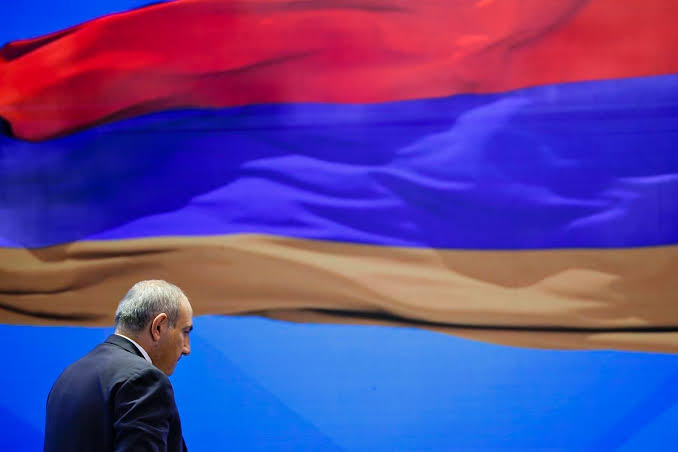
Over the past week, Armenia’s Prime Minister Nikol Pashinyan announced what he described as the country’s new “Fourth Republic,” presenting a new constitution as the institutional foundation of a political era built around peace rather than conflict. The announcement carries particular significance for Armenia’s relations with Azerbaijan. Baku has consistently identified constitutional change as a non-negotiable precondition for signing a final peace treaty, arguing that Armenia’s existing constitutional framework contains latent territorial claims against Azerbaijan through its reference to the 1990 Declaration of Independence, which itself invoked the reunification of Karabakh with Armenia.
Pashinyan, however, has sought to frame the constitutional process not as a concession to Azerbaijan, but as a domestic transformation driven by the Armenian public’s purported rejection of the old conflict-oriented political paradigm. Pashinyan and his government continue to push for a new constitution, arguing it will establish a "Fourth Republic" and fix judicial gaps, while maintaining that the process is a domestic priority rather than a concession to outside pressure. Official Yerevan has not set a specific final date to adopt a new constitution.
Pashinyan's administration plans to put a new draft through a public discussion and eventually a nationwide referendum, but the timeline remains uncertain after the ruling party did not secure a constitutional majority in the June 2026 parliamentary elections. Pashinyan also formally declared the establishment of Armenia's "Fourth Republic," a new political era built around a "logic of peace" rather than conflict. It follows the country's June 7, 2026 parliamentary elections and is built on the doctrine of "Real Armenia," shifting the nation's core focus from historical conflict to regional peace and sovereign development.
But how reachable is that idea? And what does it say about Armenia's political landscape in broader implications? In his assessment to AzerNEWS, political commentator Levon Ghazaryan, being positive in regard to the initiative, still thinks it is institutionally underspecified.
Breaking the country free from the past ideologies, that includes institutional corruption, external dependency, or any revolutionary chaos, and so on. We can talk for hours about that. The intention as a whole is indeed ambitious, and most probably preparing in some sort of programme, declaring and stating it out loud wants strong political willpower.
However, as much as it is laudable, we need to pinpoint certain issues – given the fact how underspecified it was.” The expert then argues that this is precisely where Armenia’s European trajectory becomes significant: “This whole thing seems like an act of describing a clean-break democratic state with European standards of governance, judicial independence, and economic openness. Now, the Armenian parliament passed the relevant bill in March 2025, beginning the process of accession to the EU. Pashinyan has pledged to make an official application for membership in the near future.
Extract — continue reading at the source.