Armenia is once again facing a question that goes to the heart of its future: does it genuinely intend to close the chapter of conflict with Azerbaijan, or does part of its political establishment still want to preserve the narrative that produced the conflict in the first place? The question has become particularly relevant following remarks by Armenian opposition MP Arega Hovsepyan of the Strong Armenia faction. Speaking to journalists on 19 September at the Yerablur military cemetery, Hovsepyan described the people illegally fighting in Azerbaijan's territories as a “victorious people” rather than a people who had been brought to their knees.
She said that 19 September was a day of mourning for Armenians and paid tribute to those who, in her words, had defended their "homeland" “until the last bullet, believing that there was nowhere left to retreat. She added that Armenians remained indebted to those who had fought, regardless of what “some people” inside or outside the country might say. Her remarks did not stop there.
Hovsepyan also raised the problems facing people who left Azerbaijan's Qarabag of their own volition and are now living in Armenia, arguing that many no longer know which doors to knock on for assistance. She suggested that the Armenian authorities were pursuing a policy that was effectively forcing those Armenians to emigrate because of inadequate state support. She went further by alleging that this was a deliberate state policy: if there are no "artsakh" Armenians, she argued, there is no longer an "artsakh problem".
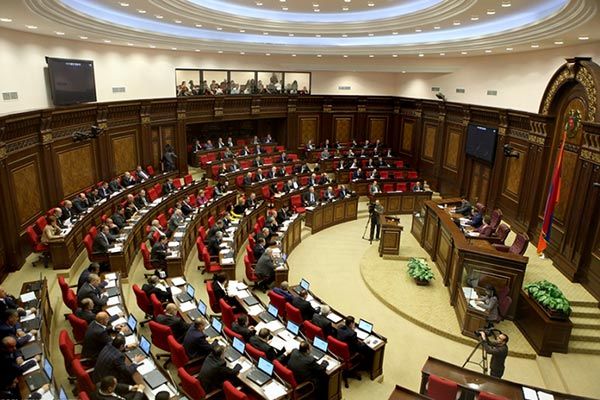
Hovsepyan also said that her parliamentary faction would continue raising these issues in parliamentary committees and proposing measures of support. At the same time, she accused the Armenian authorities of failing to respond adequately to what she described as vandalism by Azerbaijani authorities against Armenian cultural and religious monuments. These are serious political statements.
But they also expose a much wider contradiction. Armenia's government has repeatedly presented peace with Azerbaijan as a central national objective. In August 2025, Armenia and Azerbaijan initialled an Agreement on Establishment of Peace and Inter-State Relations whose first articles recognise each other's sovereignty, territorial integrity and political independence.
The text also states that the sides have no territorial claims against each other and must refrain from acts aimed at impairing the territorial integrity or political unity of the other. The Armenian government has continued to describe peace as a strategic priority. In August 2026, Prime Minister Nikol Pashinyan told the National Assembly that the peace agenda had become a national agenda following the 2026 elections and that maintaining, strengthening and institutionalising peace with Azerbaijan was a priority for his government.
Extract — continue reading at the source.