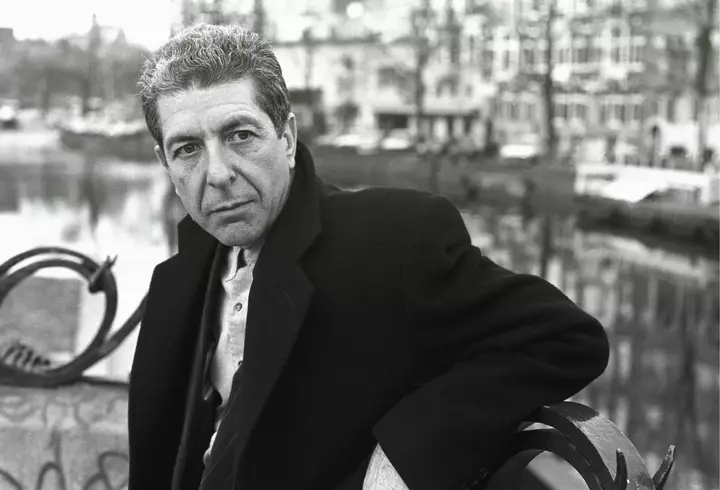
Tonight, at Meridian Hall in Toronto, Adam Cohen will take to the stage to sing Leonard Cohen’s songs, having modestly said, “I happen to have inherited his body type and his voice.” The show, Everybody Knows, recalls a song his father co-wrote in 1988 and it marks exactly ten years since his death. The Canadian troubadour passed in his sleep at his home in Los Angeles on November 7, 2016, after a fall during the night. The next day, Americans elected Donald Trump.
The news of Cohen’s death was not made public until after the vote, so many of his fans (perhaps “fellow travelers” is a better phrase, however indelicate) took in the two events in the same week. Cohen never spoke publicly about Trump. He didn’t have the chance, but perhaps he never would have taken it anyway.
His final album, You Want It Darker, was released just three weeks before his death. That autumn he told The New Yorker, “I am ready to die. I hope it’s not too uncomfortable.” A few days later, at the Canadian consulate in Los Angeles, he took it back: “I’ve always been into self-dramatization.
I intend to live forever.” Even when discussing his own mortality, that was typical of the man. He had spent decades declining to be pinned down—personally, sensually, religiously—and once said he had tried to “define a political position that no one can decipher.” What he left more indelibly were songs, some of them written 30 years before his death, about walls coming down, plagues arriving, and the base human hunger for extremes. Over the decade that began the morning after he died, the Trump era kept handing those songs back to his listeners and the America that emerged.
Cohen had a phrase not dissimilar to Trump’s inauguration lament about the “American nightmare” for the condition he thought the world was in. His answer was idiosyncrasy. America’s answer, increasingly, appears to be certainty, not least among the cultural and political voices who’ve come to crowd out everyone else.
Songs do not remain fixed in the time in which they are written but wait for the world, and the people listening, to change around them. Sometimes they become more comforting, sometimes more troubling. Few of Cohen's songs have had to wait so long, ironically, as “The Future.” “The Future,” the swirling, smouldering title song of Cohen’s 1992 album, was written amid the reckoning of the L.A. riots.
Extract — continue reading at the source.