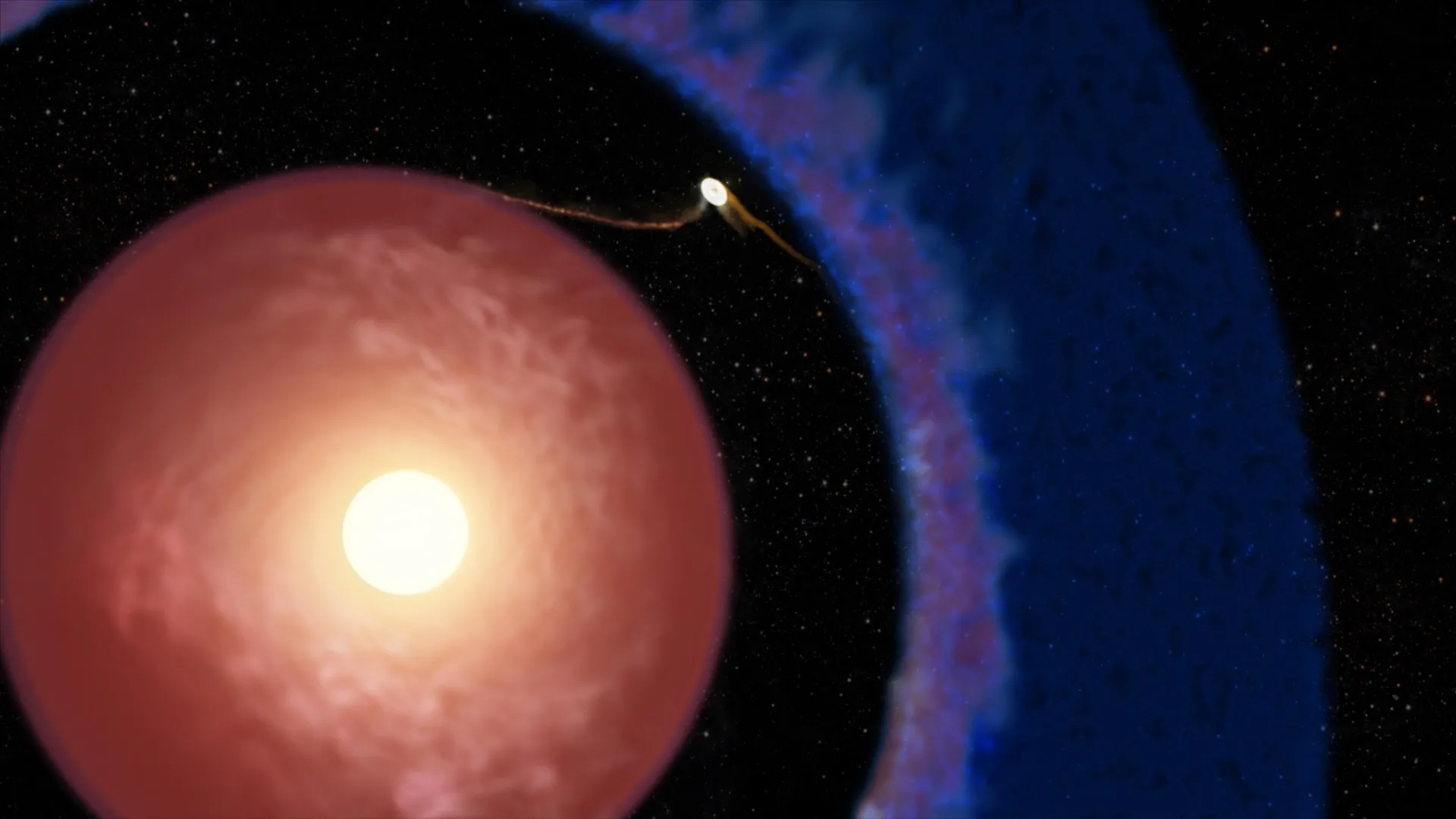
Astronomers have confirmed the youngest known planet yet, a world less than 1 million years old that is still surrounded by the gas and dust from which it formed. The planet, called Elias 2-24 b, was identified using observations preserved in NASA-funded archives. It is still orbiting within its young star's dusty disk, giving scientists a rare opportunity to study planet formation while it is still happening.
"Our planet-formation models already struggled to explain the previous record holders for the youngest known planet -- a four-way tie between two planets orbiting the star PDS 70 and two planets orbiting the star WISPIT 2 -- which are all more than 5 million years old," said Lucas Cieza, a professor at the Instituto de Estudios Astrofísicos in Chile and co-author of a paper detailing the results. "Elias 2-24 b shows us that even our best planet-formation models are still missing some important processes." In a study published September 16 in The Astrophysical Journal Letters, researchers led by Andrea Bernardi, a doctoral candidate at the Universidad Diego Portales in Chile, examined archived observations of seven young stars. Those stars had been observed with the coronagraph at the W.
Keck Observatory in Hawaii, which works with NASA through a cooperative agreement. Each star is surrounded by a debris disk filled with dust, gas, and pieces of ice and rock. Gaps and other structures in those disks can be signs that planets are forming.
A coronagraph blocks much of a star's bright light, making it easier to search for much fainter objects nearby. Using that technique, astronomers looked for planets hidden inside the dusty disks. Planets orbiting stars beyond our solar system are known as exoplanets.
"The planets should be found within the gaps, since they are carving them," Bernardi said. "And that's exactly where we found Elias 2-24 b." Elias 2-24 b is roughly as massive as Jupiter and orbits a star about 450 light-years from Earth. Because the system is so young, studying it gives astronomers a glimpse of what our own solar system may have looked like billions of years ago.
Stars form inside vast clouds of gas and dust. Planets can then grow from material left over around the newborn star, gradually gathering matter and shaping paths through the surrounding disk. But observing planets during these earliest stages is extremely difficult because thick dust can hide them from view.
Extract — continue reading at the source.


