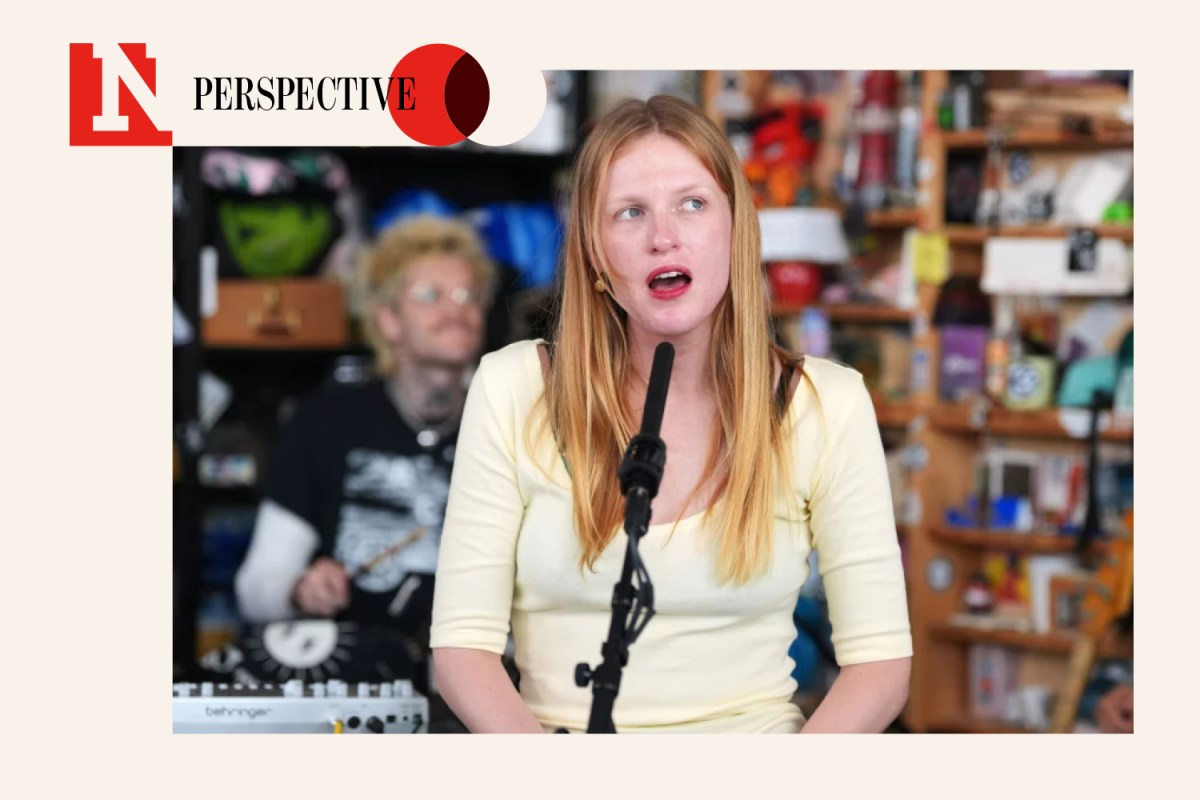
Audrey Hobert arrived at NPR's Tiny Desk and did something dangerous for a young female pop star in the social media age: she looked entirely comfortable being a little embarrassing. And she sounded good while doing it. But, online, a performance is rarely allowed to remain just a performance for long.
The reaction quickly became a kind of brutal referendum on Hobert herself. Commentators largely skipped past the easier question of whether she could sing and moved on to the lyrics and dance moves—both, admittedly, a little cringe—then to her looks and her industry connections: her father is a successful television writer and producer, and childhood friend Gracie Abrams gave Hobert an unusually direct route into professional songwriting. From there, in some corners of social media, came needless speculation about whether she is transgender.
Then followed the backlash to the backlash. Hobert's defenders called the response cruel, misogynistic, or evidence that people had simply failed to understand the act. Hobert's appeal rests on an awkward combination.
She wraps real musical competence in lyrics, movements and mannerisms that seem almost engineered to make part of the audience recoil in some way. So the cringe is not an accidental flaw around the edges of the performance, but almost the very point. And that makes much of the pile-on feel oddly beside it.
Here’s the thing about dismissing Hobert's Tiny Desk as terrible: she can sing. The stripped-down setting makes that hard to avoid as her voice holds up, the melodies are clean and catchy, and she has the kind of pop instincts that helped her cowrite Abrams’ That’s So True before launching her own solo career. It is in lyrics so conversational and hyper-specific that they sound like someone slipped a melody under a voice note ("And I like it the best when I'm losing, baby," she sings in Shooting Star, which is perhaps the most Gen Z possible response to losing—make it part of your personality).
It’s also in the exaggerated expressions, the gangly movements, the little theatrical flourishes and the peculiar earnestness with which she delivers lines another pop singer might bury beneath sex appeal or studied indifference. Hobert dances with the physical abandon of someone who has either forgotten she is being watched or knows perfectly well and has decided to make it uncomfortable. That is all a very different thing from being bad.
Extract — continue reading at the source.