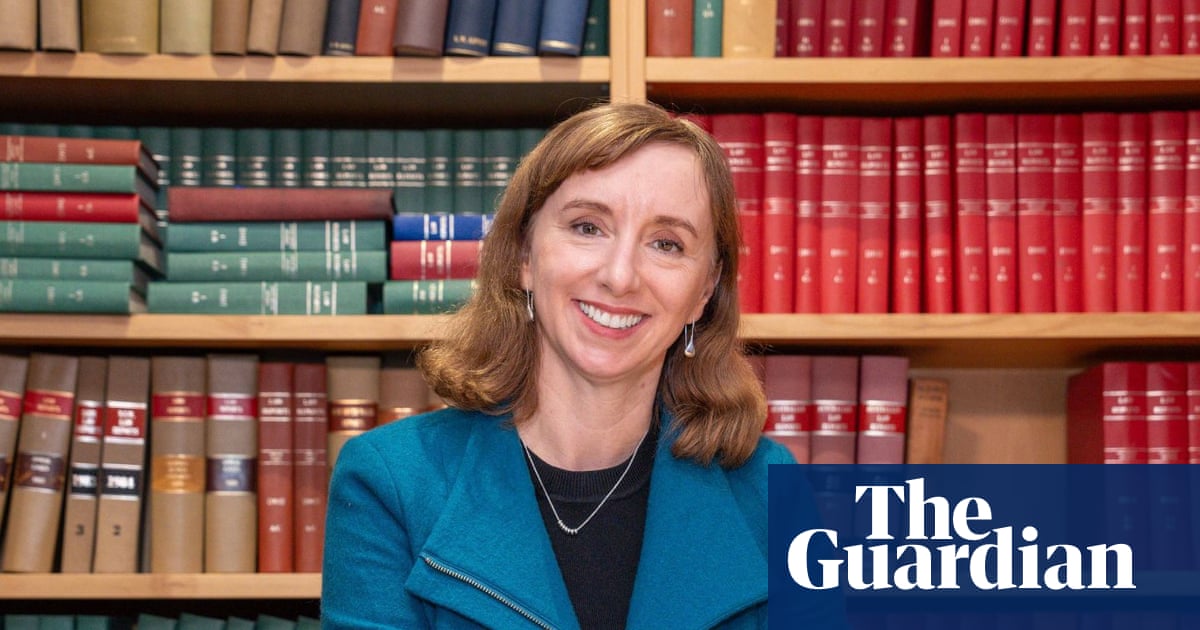
Memory is an imperfect thing: research shows that recollections of single events – a purse being snatched, say – differ to those about repeated or ongoing events, such as incidents of domestic and family violence. Paterson’s work has important implications for victim-survivors of domestic and family violence and how their testimony is received. It’s just they might mix up the episode in which it happened.” Paterson’s work has also found that repeated-event witnesses are perceived to be “less honest, less cognitively competent, and less overall credible than the single-event witnesses – which is pretty concerning that the more repeatedly you are victimised, the less credible you appear to others”.
In recognition of her work in advancing how police and courts understand victim-survivor testimony in such cases, Paterson was awarded a prestigious Eureka prize on Thursday night. Established in 1990, the Australian Museum Eureka prizes recognise the work of Australian scientists and science communicators. Paterson was recognised for excellence in forensic science – one of 19 categories – at an event at Sydney town hall.
She hopes the award will help elevate the voices of victim-survivors. Passed into law in April, the ban will come into effect on 8 October. The legal change will enable scientists to use genomics more effectively to prevent conditions such as cancer and heart disease, Tiller said.
The legal change was a “critical barrier that we needed to remove”. Four other Australians of the Year have previously received Eureka prizes: Prof Tim Flannery, Prof Ian Frazer, Prof Michelle Simmons, and the late Prof Alan Mackay-Sim. Also among Thursday night’s winners were Australia’s marine heatwaves forecasting tool, developed by the CSIRO and Bureau of Meteorology; the Women’s Microbiome Innovation Group, a Melbourne-based research collaboration that discovered that bacterial vaginosis is sexually transmitted between partners; and Prof Yansong Shen at the University of New South Wales, who developed a scalable low-cost process to recover valuable metals and silicon from used solar panels.
Kim McKay, Australian Museum director and chief executive, said: “This year’s winners are tackling some of our greatest challenges: protecting our environment, advancing healthcare, informing public policy and inspiring the next generation of scientists. They are built on years of dedication, collaboration and sustained investment.”
Extract — continue reading at the source.