Kate Mosse’s new book is a love-song to West Sussex, part of a series designed to bring out its authors’ personal connections to a home landscape. It began last year, with Michael Morpurgo welcoming spring in Devon, where he has lived – at the farm that inspired War Horse – for over 50 years; and then Val McDermid celebrating winter in Scotland, where she grew up and still lives. Bernardine Evaristo will explore summer soon – but, meanwhile, we have Mosse, also deeply and endearingly rooted in her chosen patch.
Mosse grew up in the village of Fishbourne. She now lives in Chichester, where she got to know her husband when they revised for A-levels in the shadow of the Bishop’s Palace, and held hands when she turned 17 on the day of the city’s annual Sloe Fair. Twenty-three years later, they celebrated her 40th there, with their children.
Today, they live with his 90-something mother Granny Rosie – also “Sussex to her bones” – who remembers watching cattle herded in fields where a supermarket now stands. In Granny Rosie’s youth, “the link between tradition and the natural world was present in every part of everyday life”, and that connection is the real focus of Mosse’s book. She has spent nearly all of her 65 years in Sussex.
Her Languedoc trilogy was inspired by her time in the Aude city of Carcassonne, but it was Sussex that gave her a taste for the combination of landscape, history and storytelling that drives her books. The county’s folklore and countryside informed her gothic thriller The Taxidermist’s Daughter, and it was the backdrop for her memoir about family care-giving, An Extra Pair of Hands. Autumn gives us more of it.
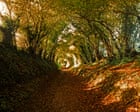
Walking under oak trees, Mosse pictures far off days when oaks were the only road signs. In her garden, she tells us that the Romans called wild cyclamen “earth truffle”, “believing that ill spells were ineffective where they were found”. If there is, at times, a touch of the guide-book in her telling, she wins your heart by the sheer joy she takes in the details.
Mosse sets out what Sussex gave other writers, too. William Blake drafted Jerusalem in Felpham, then threw a drunk soldier out of his garden and was tried in Chichester for sedition (all because the soldier claimed he insulted the king). He was acquitted, but “never set foot in Sussex again”.
Extract — continue reading at the source.