Turkiye’s economy grew by 2.3 percent year-on-year in the second quarter of 2026, a relatively modest figure in an economy still dealing with high inflation and tight monetary policy. One number in the GDP data, however, deserves considerably more attention: information and communication activities expanded by 8.6 percent. The first point to understand is that “information and communication” is broader than the traditional IT sector.
It covers telecommunications, internet infrastructure, software, digital services, data centers and related activities. Turkiye’s sector has now recorded ten consecutive quarters of growth, with annual growth rates in the past four quarters ranging between 8.6 and 9.9 percent. The expansion has been supported by digital transformation, cloud services, data centers, artificial intelligence and major investments related to 5G.
That growth is important for Turkiye itself, but its significance goes beyond the country’s borders. For Azerbaijan and the wider South Caucasus, Turkiye’s expanding digital economy could become another channel of economic integration, alongside energy, transport and trade. This matters because digital infrastructure increasingly determines how efficiently other parts of the economy operate.
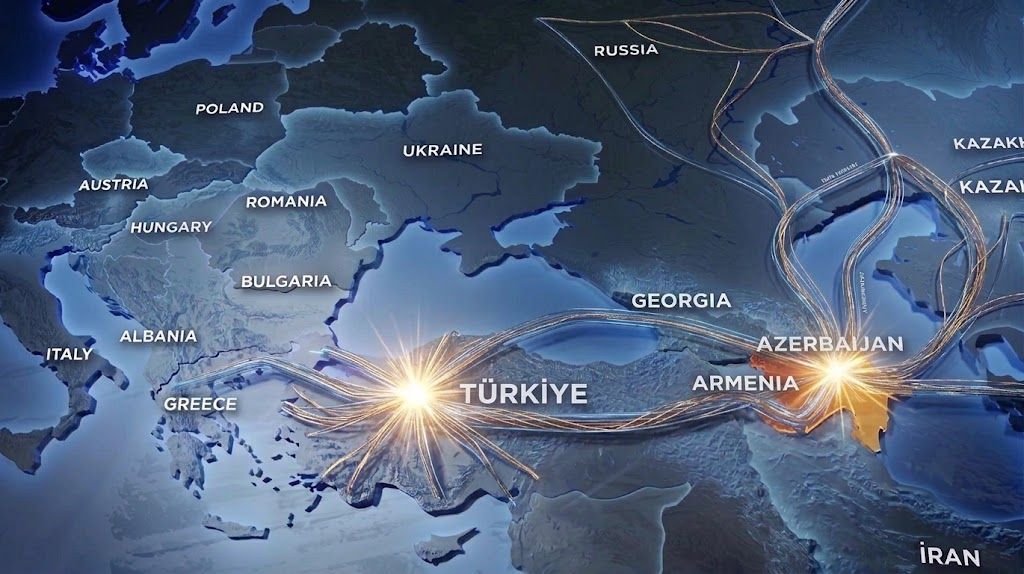
Consider the Middle Corridor. Azerbaijan has spent years positioning itself as a transit country connecting Central Asia with Turkiye and Europe. Traditionally, the discussion has focused on railways, ports, highways and customs infrastructure.
The next stage is likely to be digital. Cargo moving through Azerbaijan and Turkiye generates enormous amounts of information: customs documents, invoices, shipment data, tracking information, insurance records and transport documents. If these systems communicate with each other, the physical movement of goods can become faster and more predictable.
Turkiye and Azerbaijan have already started moving in this direction. In 2026, the two countries launched work on an e-CMR pilot aimed at digitalizing cross-border freight documents. Such projects may sound technical, but their economic consequences can be quite practical.
Extract — continue reading at the source.