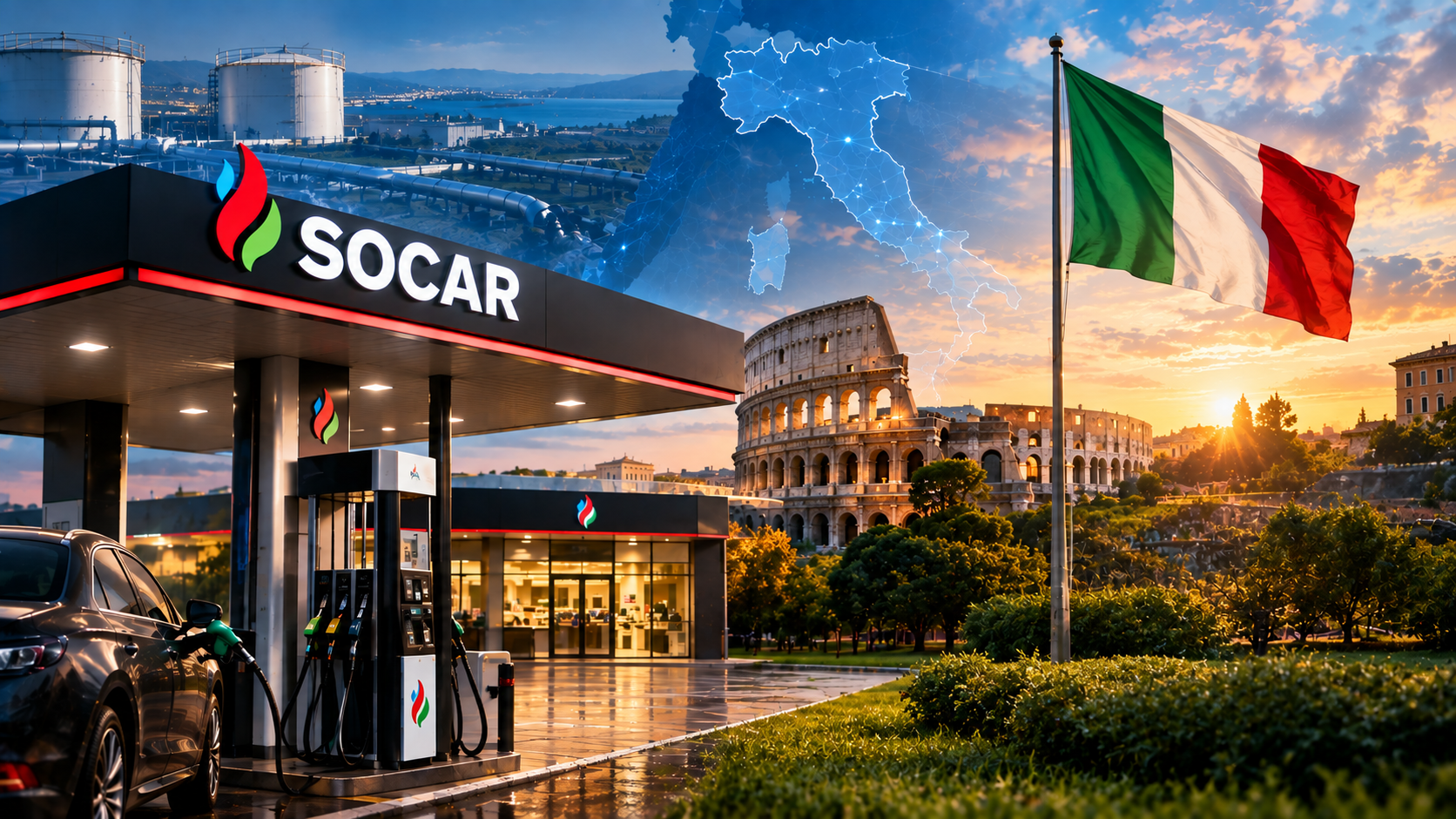
SOCAR is implementing a cap on petrol and diesel prices at stations within the Italiana Petroli (IP) network. The Azerbaijani state energy company, which took control of the Italian group last May, has decided to address the rising fuel costs by imposing a limit on the prices charged by filling stations. The mechanism will be rolled out gradually, starting with the IP-branded network.
For further notice, SOCAR has not yet specified what the maximum price at the pump will be. In a statement released on Sunday, it explained that the level of the cap will be determined by considering various needs and the economic sustainability of the supply chain. On its face, it is a pricing decision by a fuel retailer responding to high costs.
In practice, it hands Giorgia Meloni's government a politically convenient way out of imposing a windfall tax that energy companies have spent months lobbying against. Diesel at Italian highways approaches €2.50 per liter; the self-service fuel price averages were €2.377 for diesel and €2.159 for gasoline on September 27th, and €2.459 for diesel and €2.254 for gasoline on the highways, according to the Fuel Prices Observatory of the Ministry for Business and Made in Italy. It was Eni, Italy’s major energy company, which launched the price cap first.
The Minister for Foreign Affairs Antonio Tajani had called on companies to make this move at the beginning of September. This price cap comes as the second, and in some sense more important, domino piece to fall, important because SOCAR is no longer just a foreign oil supplier for Italy, but since May, the owner of one of the biggest Italian fuel distribution networks. SOCAR acquired 99.82% of Italiana Petroli from API Holding on May 8th for an estimated €3bn (reports claim the enterprise valuation to be closer to $3.27bn), thereby acquiring an asset that was established 90 years ago, comprising some 4,500-4,600 filling stations, two refining facilities with a combined capacity of about 10 million tonnes per year, and a total of 8.5m tonnes of retail and 7.3m tonnes of wholesale fuel sales, as mentioned by Fitch Ratings with Italiana Petroli's adjusted EBITDA being estimated at €616m.
SOCAR triumphed over Switzerland-based Gunvor and UAE-based Bin Butti Group for this asset, with assistance from Intesa Sanpaolo, and the deal received clearance from the European Commission in February, after being deemed non-problematic in terms of competition within the European Economic Area. Now, this is truly a move that reflects a strategic change in direction. SOCAR has been known to be active in the supply sector for the past two decades, supplying crude oil through the Baku-Tbilisi-Ceyhan pipeline as well as natural gas through the Trans-Adriatic Pipeline, the last stage of the Southern Gas Corridor project.
In both capacities, SOCAR has always left the potentially more profitable segment of the supply chain, such as the refining and retail segments, with Western firms. With this acquisition, however, this is going to change drastically. Azerbaijani state oil company is now not only a supplier to the Italian energy infrastructure but also a stakeholder in the prices that Italian consumers pay at the fuel station.
Extract — continue reading at the source.