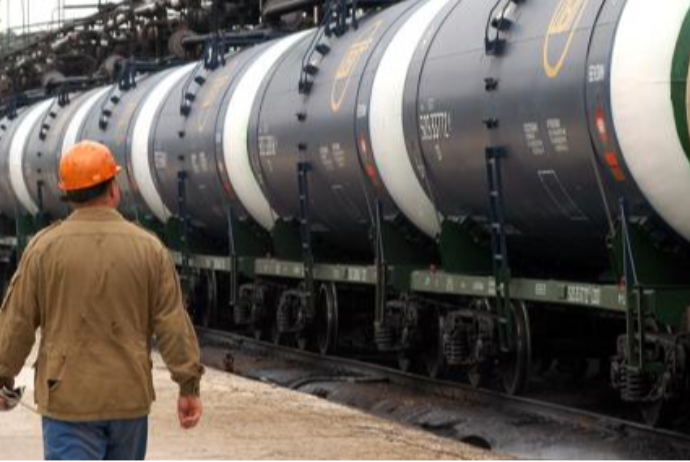
Armenia’s Economy Minister Gevorg Papoyan’s recent statement to journalists vividly demonstrates the net benefits that freeing societies from the economic burden of regional conflicts and establishing trade relations in conditions of peace can bring. According to the minister, as a result of the start of fuel imports from Azerbaijan to Armenia, fuel prices in the country have been kept at a level below the sharp pace of increases in global markets. In economic terms, Azerbaijan has prevented a supply-side inflation shock in Armenia through its energy resources.
Of course, assessing the outcome of this process merely as a reduction in citizens’ daily transportation and commuting costs would be to see only the superficial side of the issue. When viewed from a deeper macroeconomic perspective, the picture becomes clearer. As is known, following the Second Karabakh War (2020) and Azerbaijan’s full restoration of its sovereignty in September 2023, the geopolitical stagnation that had persisted in the South Caucasus for decades was disrupted.
The phase of conflict that began in 1988—before the collapse of the Soviet Union—with Yerevan’s territorial claims against Karabakh and inflicted heavy socioeconomic losses on both sides came to an end. Armenia being compelled toward peace and the post-conflict realities opened the door to limited but strategically significant trade contacts between the sides. The first fruits of these contacts became visible at a time when a global inflationary wave was raging.
After the COVID-19 pandemic, disruptions in supply chains around the world, followed by geopolitical crises, fueled mass inflation. As a rule, the economies of developing countries are more vulnerable to macroeconomic factors and external shocks than those of developed countries. The world has still not fully recovered from the negative effects of the inflationary wave that began with COVID-19.
In economics, inflation is often referred to as an “unfair” or “regressive tax.” This is because it is a mechanism that is not officially regulated but ruthlessly erodes the purchasing power of the population, particularly low- and middle-income groups. In developing countries, food products constitute a large share of the inflation basket. Food inflation, in turn, directly intersects with fuel prices.
Every stage, from planting and harvesting a product in the field to its processing, delivery to supermarket shelves, and arrival on the consumer’s table, is linked to transportation and energy costs. Therefore, although Armenian officials may refrain from openly acknowledging it, fuel imported from Azerbaijan has significantly curbed overall inflationary pressures in Armenia and prevented a sharp jump in food prices. Every specialist familiar with the fundamental laws of economics can confirm that securing fuel from a cheaper and logistically advantageous source reduces production and delivery costs in a country, thereby directly supporting macroeconomic stability.
Extract — continue reading at the source.