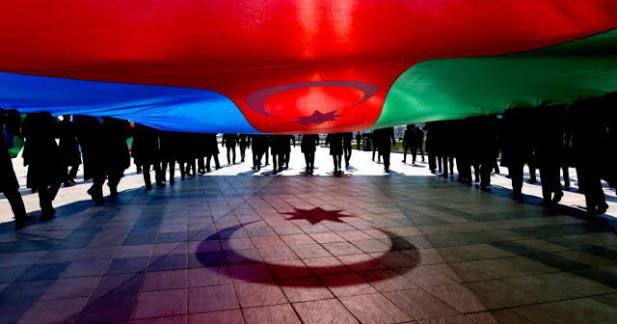
Today, Azerbaijan marks the restoration of its sovereignty and territorial integrity. Such a landmark development became possible following the neutralisation of the Armenian separatist elements in the Qarabagh territories liberated from occupation as a result of the Azerbaijani Army’s military capability, courage and tactical skill during the events of 19–20 September 2023. The event represents a major turning point in the history of the South Caucasus and, at the same time, one of the most consequential victories in recent history, generating considerable geopolitical repercussions.
However, history is not always written in black and white. Its pages can contain different interpretations, competing narratives and divergent analyses. This brings us to the toxic legacy left between Azerbaijan and Armenia from the Soviet period to the present day.
That legacy has not been confined to historical manuscripts and monuments. On the contrary, it has left behind the spark of another war. The issue is that disputes of this nature have emerged elsewhere in history as a result of the intervention of major powers, including in European and Middle Eastern states.
The Iraq-Kuwait war, which ultimately led to the Gulf War, and the territorial disputes that emerged following the break-up of Yugoslavia are two examples with extensive historical and political dimensions. However, when these cases are examined in depth, they cannot simply be equated with Armenia’s claims against Azerbaijan. The reason, from the perspective presented here, is clear.
For many years, Armenian groups grew under the protection and influence of Russia and were subsequently settled in historical territories of Azerbaijan. Over time, Armenian groups were settled in the western parts of Azerbaijan, including areas bordering Turkiye. This policy was taken further and eventually resulted in an ethnic policy being pursued in a number of Azerbaijan’s strategically important locations.
A national minority long known as the Caucasian Albanians was subsequently, in this interpretation of history, appropriated by Armenians, who began to claim and absorb aspects of its historical legacy. They then carried out extensive changes to a number of Christian religious monuments, contributing to what can be described as an effort to obscure and transform the historical record. Naturally, a number of Armenian politicians and intellectuals who looked towards the future understood that the Soviet empire would eventually collapse and that, after its collapse, history itself would become a battlefield.
Extract — continue reading at the source.