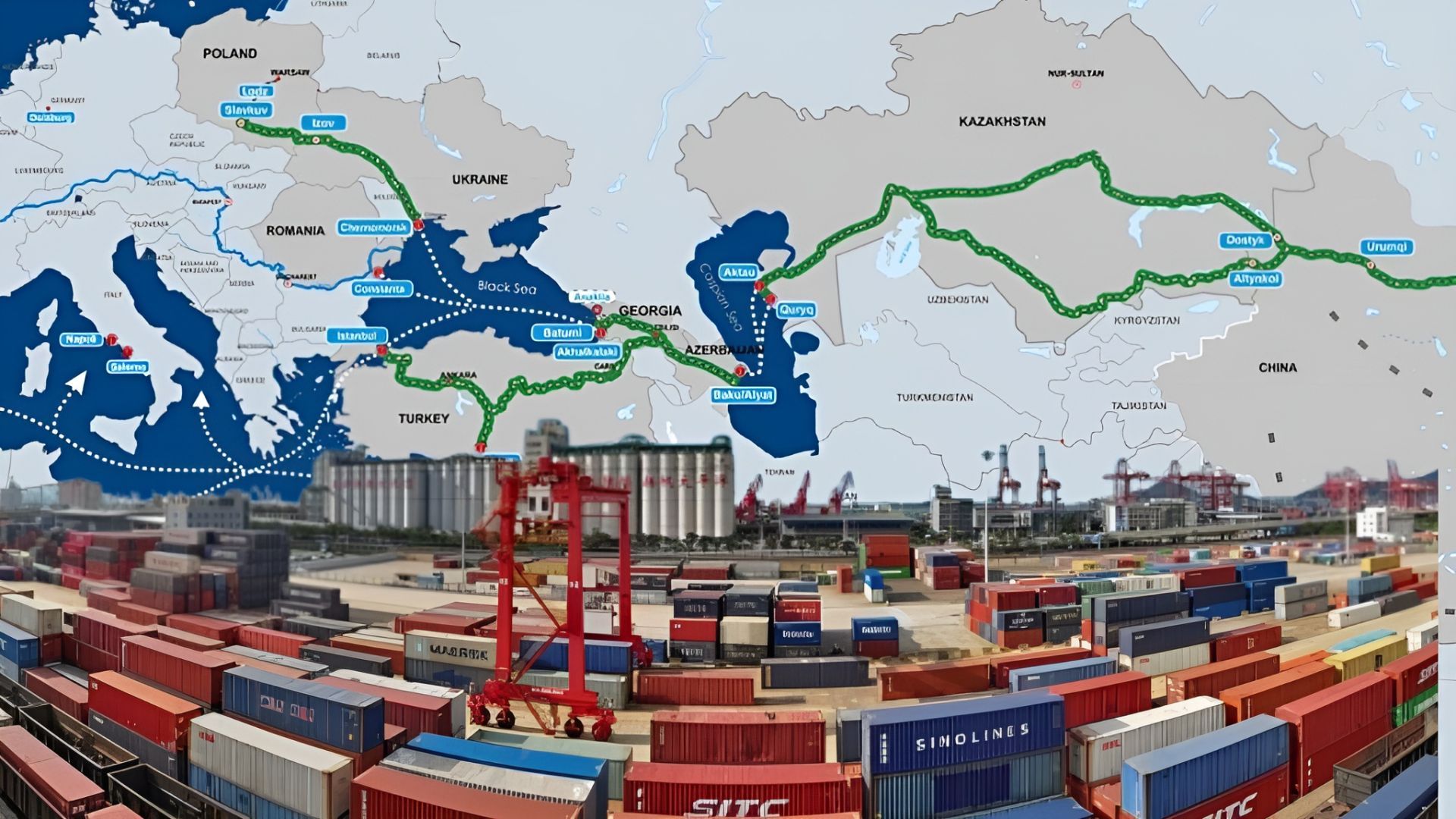
The V International Black Sea-Caspian Transport Forum, titled "Corridors. Investments," was held in Baku, bringing together experts and industry representatives to discuss the development of transport and logistics links across the region. The forum featured several panel discussions focusing on major issues shaping regional connectivity, including "The Black Sea-Caspian Region on the New Map of Global Logistics: The Role of Azerbaijan, Corridors and Freight Flows," "The Middle Corridor: Resilience and Competitiveness," "The Architecture and Services of the Multimodal Route: Ports and Terminals, Digitalization and Insurance," and "Investment in the Region’s Transport and Logistics Infrastructure: Priorities, Instruments and Sources of Capital." During the forum, experts shared their views on the development of regional transport routes and Azerbaijan’s growing role in the logistics network.
According to Orkhan Yolchuyev, Director and Co-Founder of the Baku-based CASPIA Center, Azerbaijan has emerged as a key hub in the evolving Black Sea-Caspian transport architecture. He noted that several major transport corridors and routes intersect in the region, including the North-South Corridor and Black Sea routes, placing Azerbaijan at the center of the emerging logistics network. Azerbaijan has already built important advantages through its railway and port infrastructure, as well as its wider transport and logistics capabilities.
It was also highlighted during the forum that Azerbaijan is connected to more than 33 countries through its transport network, with major routes linking the country to Georgia, Türkiye, Russia and European markets. The development of railway infrastructure and the expansion of the Baku-Tbilisi-Kars railway are aimed at increasing the capacity of regional transport corridors. The Baku-Tbilisi-Kars railway currently has a capacity of around 30,000 tons annually and the line has already been expanded.
The maritime sector is also expected to play an increasingly important role. The Port of Baku currently has significant cargo-handling capacity, which is expected to grow further as infrastructure development continues. According to information presented at the forum, the port currently has an annual handling capacity of around 150,000 tons, with this figure expected to increase to approximately 260,000 tons next year.
At the same time, experts stressed that infrastructure alone will not be enough to ensure the long-term development of regional routes. Coordination between the countries along the Middle Corridor has become essential for the route’s development, Aizhan Beiseyeva said. Head of CPCS Central Asia noted that the Trans-Caspian International Transport Route, also known as the Middle Corridor, has reached a stage where better coordination between the countries involved is necessary.
"In my view, we have already reached the point where both practitioners and experts agree that without coordination, the Middle Corridor cannot develop successfully," she added. The Middle Corridor, or Trans-Caspian International Transport Route, connects Central Asia, the Caspian Sea, the South Caucasus, Türkiye and Europe. In recent years, it has become one of the fastest-growing routes for trade between East and West.
Extract — continue reading at the source.