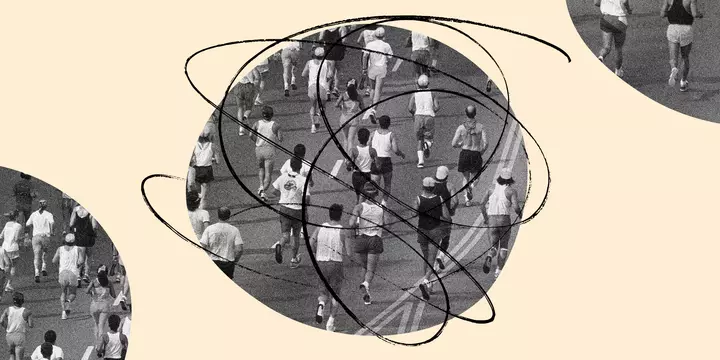
This time of year, after most fall marathons have ended and our feeds have seen weeks of people crossing finish lines at some of the biggest in the world in Berlin, Chicago, and New York, it’s really hard to avoid feeling like you should run a marathon. I personally have posted countless videos of myself on the internet saying, “I’m never doing this again,” and even I’m tempted to go back on my word every November. To be fair, I love the marathon.
I’ve run them very, very fast. And I’ve run them very, very slow. My first one changed my life.
It gave me the courage to move to New York City and try to figure out what to do after graduating college. Six months later, I became one of the first running influencers, and I’ve spent the 12 years since building a global community, Badass Lady Gang, to help thousands of women belong and redefine their relationship with strength, power, and what it means to be a runner. But I also feel complicated feelings about the marathon.
As a running coach, I’ve watched the same conversation happen online for over a decade. Somewhere along the way, newer runners are told, or quietly absorb, that the marathon is the ultimate finish line. Which makes sense, right?
Our brains love order and hierarchy. When you think about what it means to progress in running, it feels logical: going faster and farther are straightforward ways to show you’ve improved. But that’s not how it works.
The marathon isn’t the objective ultimate goal. Or always the most fun one. And, it’s definitely not something that every runner needs to chase.
Extract — continue reading at the source.