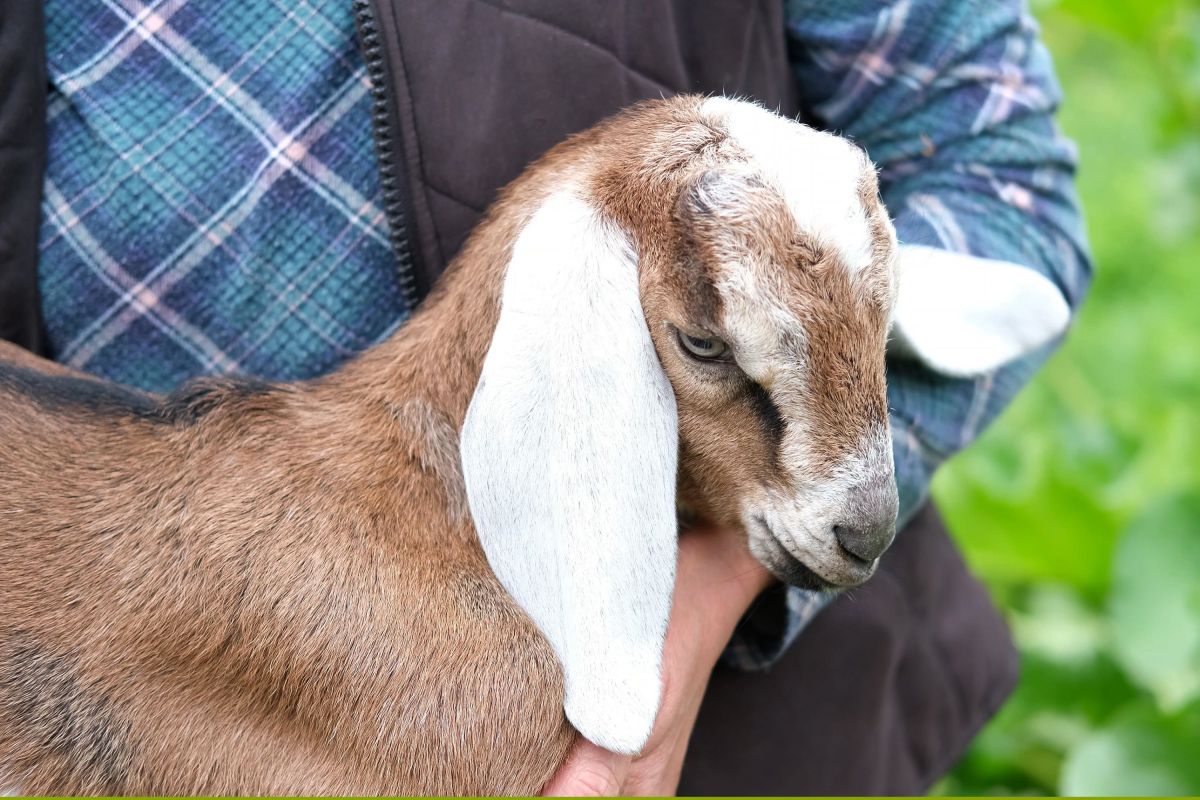
What began as a lighthearted music video shoot involving baby goats has turned into a frightening health scare after North Carolina health officials reported the animals tested positive for rabies a month later. In a video recently posted to Instagram, Daniel Carrai (@danielcarrai) said he recently directed the production for the band SLIDE, incorporating several baby goats into the scenes. Cast and crew members held and interacted with the animals, unaware of any danger until weeks later, when production members learned the goats were infected.
The animals originated from Farm Adventures, based in Harmony, North Carolina, that transported livestock to events across the state during the summer. According to the North Carolina Department of Health and Human Services (NCDHHS), officials believe a skunk entered the animals' pen in late July. In a post on Facebook late last month, Farm Adventures explained that “the baby goats were kept in a separate pen, away from the others, and were too young to receive their vaccinations.” The company added that it “unfortunately encountered a skunk in their pen, which we promptly removed and disposed of.
However, during this process, the skunk was able to bite the goats.” The farm said it had "no clue the goats had gotten bit" since they showed no signs of rabies. By August 29, three of the goats tested positive and were euthanized alongside a fourth presumed case that went untested. State health alerts indicated the animals could have been infectious between July 28 and August 27, having made appearances in at least seven counties.
Public appearances included an assisted living facility in Statesville on July 28, a back-to-school event in Lexington on August 1, another assisted living facility in Statesville on August 6 and the Masonic Picnic Grounds in Mocksville on August 15. The goats also attended private events in Mecklenburg, Watauga, Burke, Durham and Iredell counties, the NCDHHS said. Although transmission from livestock is considered a lower risk than a bite from a wild animal, infected saliva can spread the virus through broken skin or the eyes, nose or mouth.
Carrai stated in his Instagram video that approximately 20 people involved with the video production faced potential exposure, prompting immediate medical concerns. In a comment on the post, Carrai explained that one concern was the possibility that someone could have touched their face after coming into contact with the goats' saliva. Newsweek reached out to Carrai via email for additional information and comment.
Rabies remains a fatal virus that attacks the central nervous system, though human cases are exceedingly rare in the United States. North Carolina has not recorded a human case since 2011, according to the NCDHHS. Centers for Disease Control and Prevention (CDC) reports that about 1.4 million Americans seek medical evaluation for potential exposure annually, with fewer than 10 deaths recorded each year due to robust prevention protocols.
Extract — continue reading at the source.