To trace FromSoftware’s history is to uncover a lineage written in cold sweat. While the studio is celebrated today for unforgiving action RPGs like Dark Souls and Elden Ring, its DNA is deeply rooted in games that feel born of a fever dream. FromSoft’s darker legacy lives in games like Kuon, a masterclass in Japanese folklore and survival horror, and Shadow Tower, a claustrophobic dungeon crawler that turns every dark alcove into a deadly trap.
Even Eternal Ring — not to be confused with its blockbuster sibling Elden Ring — radiates that signature, unsettling aura that makes exploring FromSoftware’s later worlds so intoxicating. Yet, nearly three decades since its debut, one of the developer’s most compelling experiments in terror remains criminally overlooked. Released in 1998 for the original PlayStation, Echo Night was a radical departure for its era.
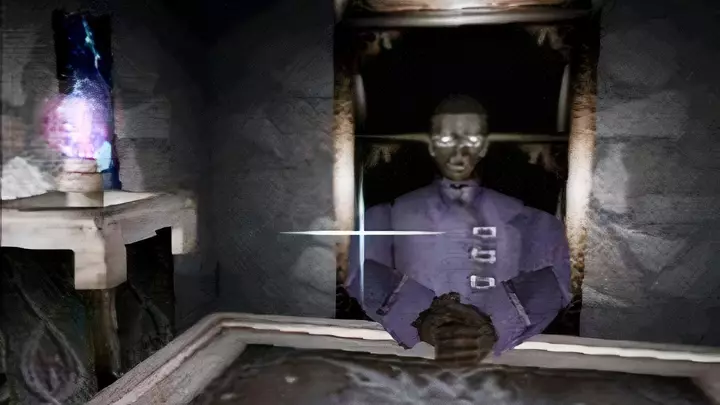
Uninterested in spilt blood or slaughtered gods, the haunting ghost story traded violence for the melancholic task of laying restless souls to rest on an abandoned cruise ship. Players step into the shoes of Richard Osmond, whose search for his missing father leads to an enigmatic painting that transports him onto the Orpheus, a long-lost ocean liner haunted by spirits trapped in their tragic regrets. To escape, Richard must unravel the ship’s dark history and grant its forgotten passengers the closure they so desperately crave.
Written and produced by Toshifumi Nabeshima, Echo Night rejects the combat-heavy and gory framework of typical ‘90s survival horror in favor of something far more intimate. Rather than leaning into the resource scarcity popularized by Resident Evil, Nabeshima crafted a deeply empathetic adventure built around observation and emotional catharsis. In Echo Night, encounters with hostile spirits don't ask you to pull a trigger, but to frantically race through pitch-black rooms in search of a light switch, as illumination is your only defense against their malice.
From there, Nabeshima turns game progression into a series of spectral mercy missions. You might track down a missing ring for a grieving widow or solve a riddle to help a trapped sailor move on, receiving an Astral Piece each time a soul fades into eternal rest. In doing so, Echo Night flips the script on the entire genre: the ghosts aren't obstacles to be destroyed, but victims waiting to be understood.
Although there is an overarching mystery involving Richard’s father and the Orpheus, the game’s true power lies in these more modular tragedies. The Orpheus becomes this vessel of lost lives waiting to be remembered, with one of its most poignant vignettes involving John Cutter. A young crewman trapped in eternal limbo, Cutter endlessly awaits his fiancée, Sistina, who never arrives.
Extract — continue reading at the source.