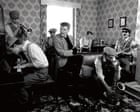
It’s March 1981 and Madness are revisiting the haunts of their recent youth with a film crew in tow. In the 18 months since releasing their debut single, The Prince, the group have become the UK’s most beloved hit-makers, their ascent abetted by inventive music videos that have left viewers of Top of the Pops and Tiswas believing a man could fly – while blowing a sax. But this new project is something else.
Instead of squandering their newfound wealth on fast cars and country piles, the seven-piece have invested in a semi-fictional big-screen telling of their origin story that tempers their trademark “nuttiness” with a kitchen-sink realism suiting their working-class roots. While Take It or Leave It sank into obscurity soon after release, a new 4K restoration has primed the film for rediscovery as a time-capsule of grimy 70s London, and perhaps cinema’s most honest depiction of the challenges involved in trying to get a band together. The movie was the brainchild of Dave Robinson, honcho of Stiff Records.
Back in 1979, Robinson triumphed in the bidding war for Madness, then in their late teens and early 20s. Dave took over the reins for 1980’s My Girl, working even quicker and cheaper. Saxophonist Lee Thompson tested the label-owner’s impressive ability to “make things happen” with 1980’s Baggy Trousers.
The resulting stunt became part of the group’s iconography. When Robinson began work on Take It or Leave It, he says, “people told me it couldn’t be done, that we were mad”. He tapped the band members and manager John “Kelloggs” Kalinowski for £20,000 each (“the price of a fuckin’ two-bedroom in NW5 back then”, says Thompson), covering the rest of the budget himself.
But when Robinson arrived on set the first day he was greeted by “50 guys staring at me, eating bacon sandwiches”. Unlike the videos, the movie was “a unionised shoot”, and Robinson sensed this crew would slow him down. I paid them all off and they never turned up again.” Crew purged, he returned to his “typical smash-and-grab, guerrilla-film-making methods”.
Frontman Graham “Suggs” McPherson remembers tracking shots being filmed “by a cameraman in a trolley or on a bicycle”; overhead shots involved “someone hanging off a stepladder”. Robinson rarely sought permission to shoot locations, guitarist Chris Foreman describing their mindset as “do it quick enough and they can’t tell you to stop. By the time some jobsworth comes along, you’ve already finished.” It was a vibe they’d learned as teenage delinquent graffiti artists.
Extract — continue reading at the source.