Benjamin Franklin's son William was buried in London following his death in 1813, more than three decades after he was forced to leave America LONDON -- In central London, near where tourists and business travelers board Eurostar trains to Paris, lies the burial place of Benjamin Franklin’s eldest son — a man whose life and family relationships were upended by his stance on the American Revolution. William Franklin was buried at the graveyard of St. Pancras Old Church following his death in 1813, more than three decades after he was forced to leave America because of his service to the country his father fought so hard to win independence from.
His burial in the capital of what was then the British Empire is a reminder that the Revolution was as much a civil war as it was the founding act of the United States of America. It is also, historians say, a reminder that the conflict that destroyed friendships and ripped apart families 250 years ago continues today. We are living it, right still to this day,” he said.
It is a messy process that started amid the wreckage of the Revolution. Often simplified as the tale of the plucky patriots who banded together to defeat the mighty British Empire, the revolution was more accurately an eight-year war fought by people who once saw themselves as British against the armies of their former sovereign. As much as one-third of the population remained loyal to King George III and at times during the war loyalist Americans were the biggest contingent of troops in the British forces.
Enslaved Black people fought on both sides of the conflict, as did Indigenous people. People based their allegiances on who they thought was more likely to deliver freedom and justice. That complicated reality played out in the Franklin family.
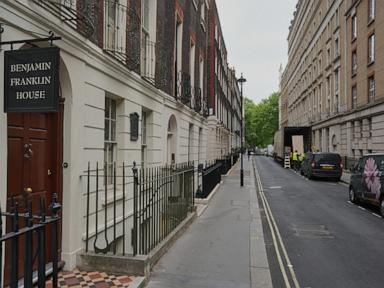
When Ben Franklin flew a kite into a thunderstorm in 1752 to demonstrate that lightning was essentially a massive electrical spark, young William Franklin was by his side. Five years later, father and son traveled to London together after Ben Franklin was sent to the capital of the British Empire to represent Pennsylvania’s colonial government. As Ben Franklin settled into his home at 36 Craven St., which today serves as a museum of the Founding Father’s life in London, William studied law and married.
Both enjoyed London's culture and nightlife. William Franklin returned to America and became governor of New Jersey in 1763, a post he would hold for the next 13 years. But father and son came into increasing conflict when Ben Franklin returned to Philadelphia in 1775.
Extract — continue reading at the source.