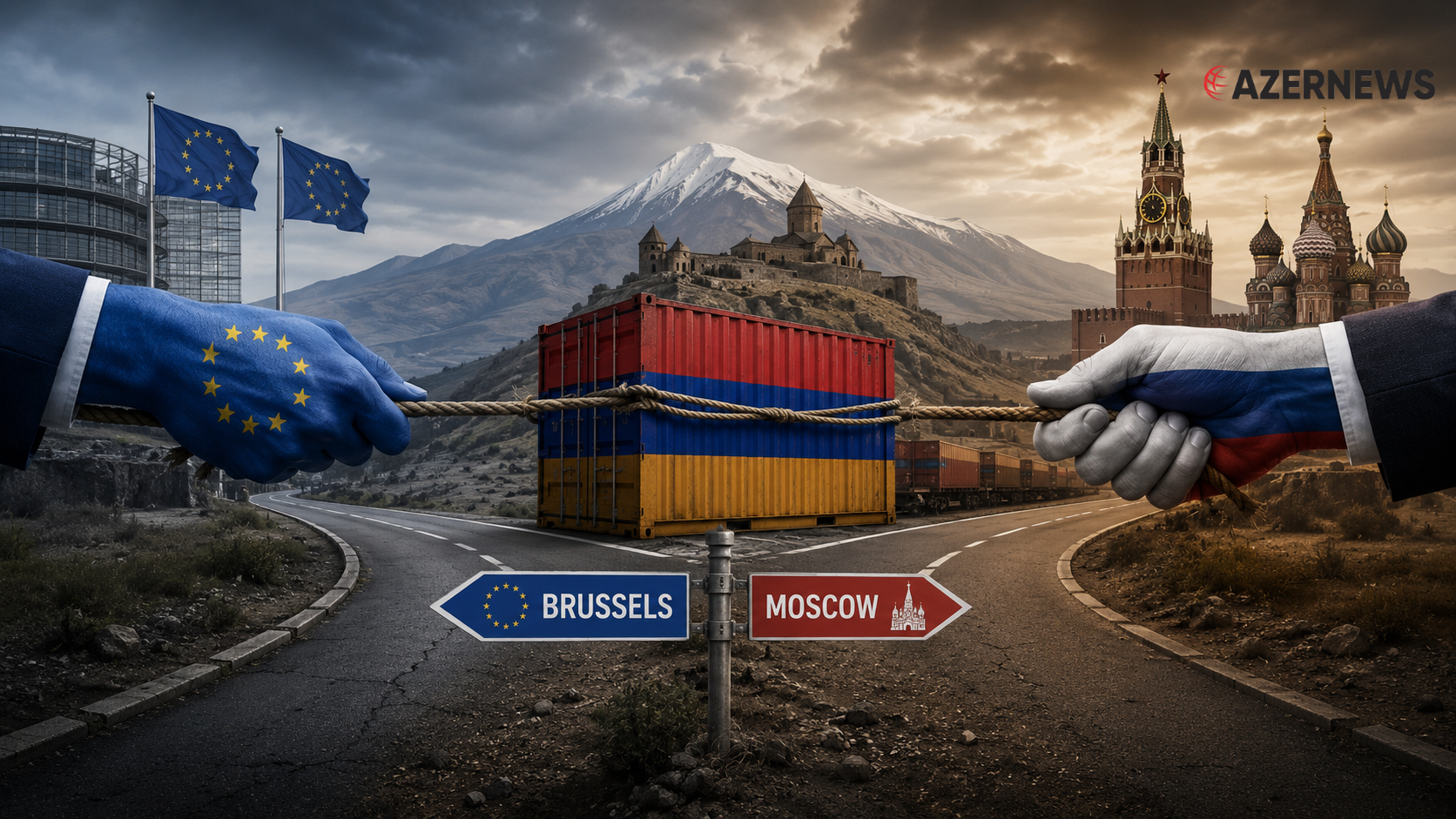
Yesterday, the European Parliament's trade committee waved through, without a single amendment, a plan to scrap tariffs on some 80% of Armenian exports to the European Union for two years. Thirty-five members voted for it, two against, three abstained. Brussels calls this an "economic support measure" for a small Caucasian economy battered by Russian trade restrictions.
It is better understood as something else: a geopolitical instrument dressed up in the language of solidarity. Since May, Russia has banned the import of Armenian brandy, mineral water, fruit, and vegetable products, making their movement through Russia very difficult; this was a response, experts say, to Yerevan's orientation toward Brussels. The European Commission's response is to make duty-free quotas available to Armenia for almost all of its fresh produce, and more than 91% of its beverages and spirits.
Helen McEntee, Ireland's foreign minister, put the matter into military context: "in the face of economic pressure, the EU will respond." It seems quite odd for a trading bloc to say such things. The main message of the World Trade Organisation is that market access must never be conditional upon political allegiance. Over many years, the EU has been preaching to its trading partners about non-discrimination, phytosanitary stringency and the "level playing field." If such rules are discarded instantly by the favoured government, then a natural question arises as to what criteria besides competitiveness could have been at stake?
The reason why Armenia enjoys a favorable customs regime does not lie in the improved competitiveness of Armenian wine and cucumbers. It lies in the fact that the Armenian government opted for a European, rather than Eurasian, foreign policy orientation. In contrast to this, the Brussels authorities adopt a much more practical approach to Azerbaijan, which, through the building of its oil and gas infrastructure, has been making tangible contributions to European interests, without receiving preferential treatment in return.
Nor is the concession nearly as generous as it appears at first sight. The grace period lasts for two years and is contingent upon Armenia’s compliance with conditions regarding origin, administration, and the “essential elements” of the CEP Agreement, such as democracy, the rule of law, and human rights. This is an effective way of chaining rather than bridging.
Clearly, what Brussels wants is not so much convergence as making sure Yerevan remains sufficiently beholden to Europe so that it cannot afford to step out of line. In case it loses favor, or falls, the waiver will be immediately revoked. More fundamentally, tariff relief does nothing to fix what actually ails the Armenian economy: thin productivity, a narrow export base, and enterprises too small and too undercapitalised to meet EU standards even once the duties disappear.
Extract — continue reading at the source.