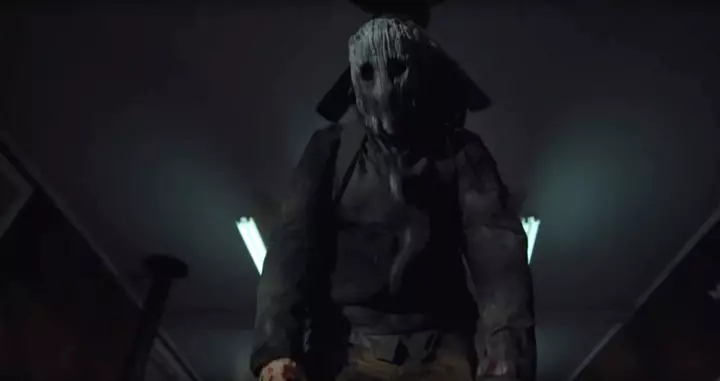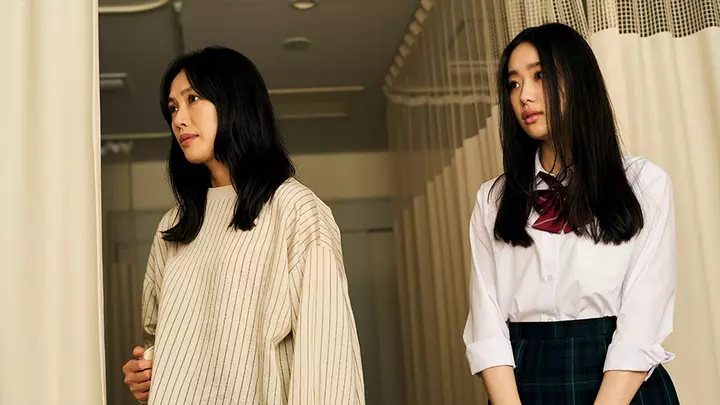
Unspoken emotional wounds linger throughout “Between Us,” Japanese director Matsumura Shingo’s new film playing in the Tokyo International Film Festival’s Nippon Cinema Now section, its strand for Japanese films. The film follows Makoto and Kasumi, childhood best friends who drift apart after an incident on a joint family camping trip and reunite six years later in their high school drama club. Kawashima Ririka, Kurasawa Anna, Kikuchi Akiko, Usuda Asami, Saito Yoichiro and Miura Takahiro star.
The script leaves a lot unsaid, letting patient camerawork absorb the emotional information each character tries to withhold. Matsumura, whose credits include “The Lump in My Heart” (2023), favors very still camera movement and deliberate observation. He has set himself a rule against using handheld camerawork in his films.
That is one of the reasons why. The second reason is that I want to capture the emotion of the actors truthfully, slowly.” There’s a fascinating contrast in how “Between Us” seeks emotional realism but finds it through very measured, precise camerawork, particularly in how it turns the emotional distance between Makoto and Kasumi into literal distance through the blocking of each scene. Even after Makoto joins the club, the two are often shot far apart, but Matsumura shows the mending through a rather simple editing decision: cutting the girls’ separate read-throughs as though they are trading lines, with each cut bringing them closer than ever before, even though they aren’t in the same room.
The intimate story has big-picture beginnings. Matsumura found inspiration in a run of disasters, starting with the 2011 Great East Japan Earthquake. There is the war going on around the world, and [it] was a period in my life when I thought it is impossible for one to connect with others,” he says.
What ties them to the past trauma linking Makoto and Kasumi’s families is that both are “unresolved.” “I think that reflects the current situation where the earthquake, the nuclear power plant, the war, if it’s on the media, we look into it. But once it’s not on the news, we feel that it’s kind of in the past solved, but it’s really not in reality,” he says. With his two leads, “there was no specific direction that I gave them,” Matsumura says.
It was very natural for them to actually perform these two characters, and I just let them freely perform what they felt like.” Matsumura’s visually organized approach, paired with naturalistic performances, makes for a striking result, one that also shows the range of styles across this year’s Nippon Cinema Now lineup. And because of that, there is a limit to what we can portray, the concept that we can portray in one film.” That isn’t always a negative thing, he adds. We’re reaching for all different things, and that is the current Japanese cinema environment.
Extract — continue reading at the source.