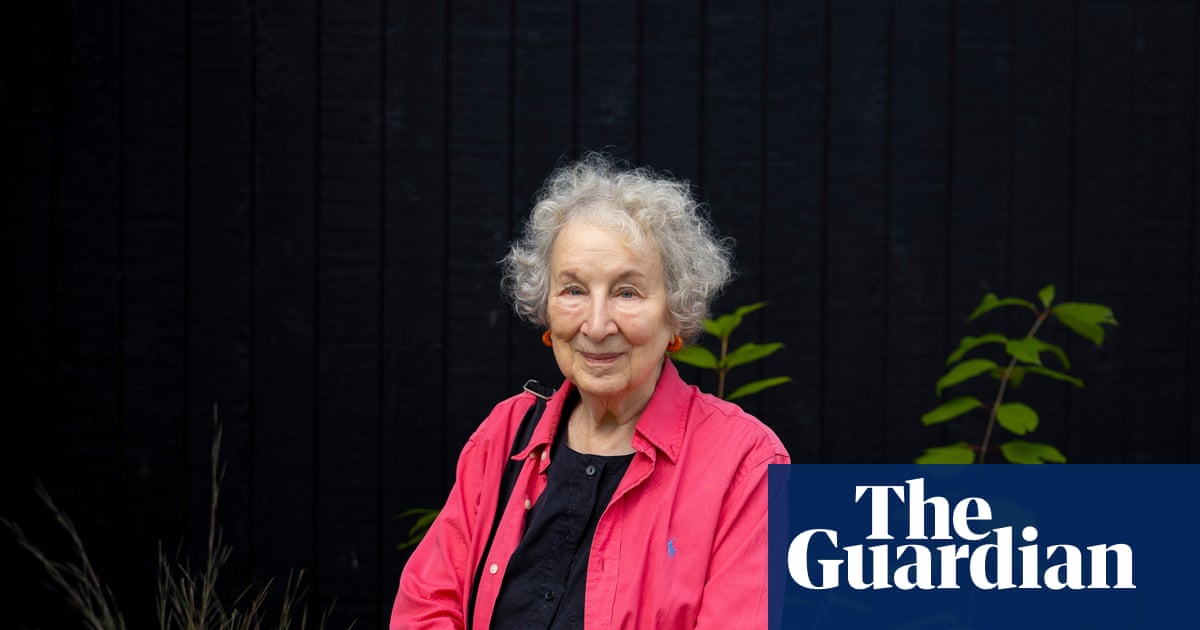
If she could be any bird, Margaret Atwood would transform into a raven. They’re social, playful and just a very successful bird,” she says while seated in a corner of a bird observatory in the Lake Erie Islands archipelago. Pelee sits at the nexus of two important migration routes, making it a destination for birds travelling thousands of kilometres each year.
Ravens are not among its regular visitors – only one was spotted in recent memory, in 2023 – but Atwood likes the old Inuit joke about them. A hunter arrives at a place he has never camped before, and asks a raven where to spend the night. And the raven, as he’s enjoying the feast, says, ‘Works every time.’” The bestselling Canadian author, whose prophetic works of speculative fiction have won countless awards, has blurred the lines that separate humans and birds both in her work and, at times, in her life.
She and Gibson, also a novelist, once dressed up for a party as Odin’s ravens, Thought and Memory. They wore black gloves and fashioned beaks from black construction paper. In his final years, vascular dementia overtook his ability to journal about the birds.
Still, he would watch them daily. On Friday Western University, in London, Ontario, announced that Atwood had donated C$1m (£540,000) to celebrate her late partner’s love of birds. The gift will create the Graeme Gibson chair in avian biology, with the goal of better understanding the fundamental processes that shape how birds move, adapt and behave in an environment undergoing profound transformation.
Atwood has championed many causes, including Indigenous education and human rights, but environmental protection is at the forefront of them. How do birds navigate thousands of kilometres? How do they sense magnetic fields?
How do they know where to go? We know they have these senses. But how they actually work is still a big mystery, and very exciting for people to try to study.” The university has emerged as a global leader in avian research, developing the world’s first hypobaric climatic wind tunnel for bird flight in order to better study how they move through different types of air.
Extract — continue reading at the source.