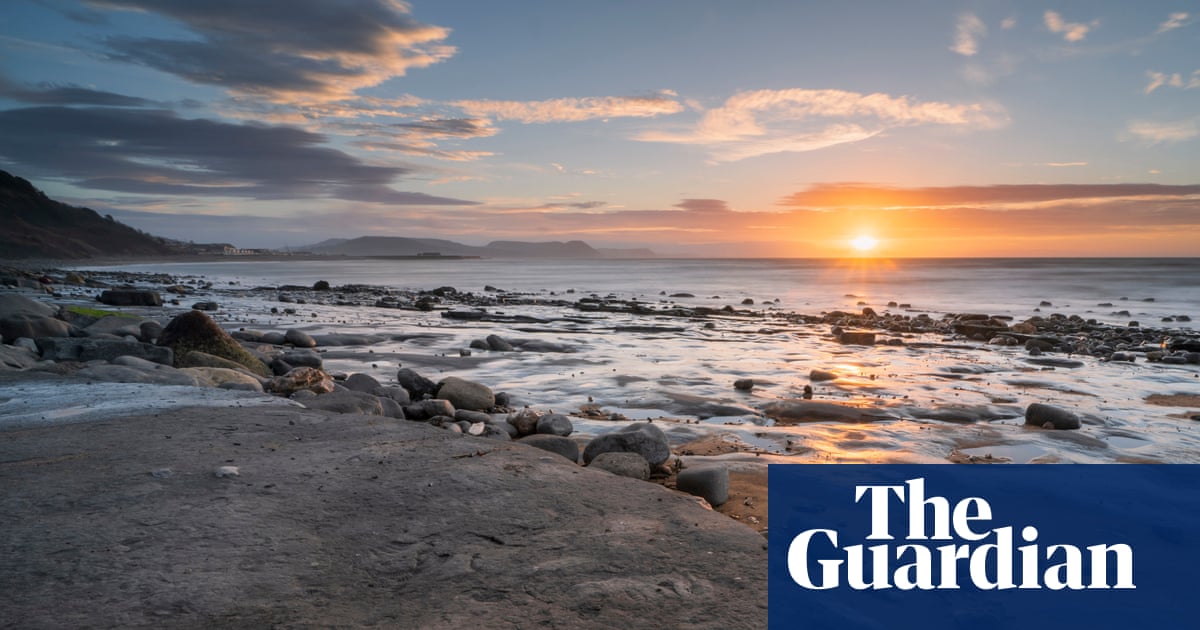
An MP has called on ministers to change export controls so that significant fossils can be classed as national treasures after one of the UK’s best collections, unearthed on Dorset beaches, was sold overseas. Last week, a Guardian investigation revealed that an unparalleled collection of fossils from the UK’s Jurassic Coast, comprising hundreds of specimens including ichthyosaurs, had been sold to the Natural History Museum in Abu Dhabi for what one source described as an “eight-figure sum”. The fossils, which belonged to the Dorset-based private collector Chris Moore, were initially offered to the Natural History Museum (NHM) in London and Amgueddfa Cymru (Museum Wales), but neither institution had the funds to buy them.
Senior figures at Lyme Regis Museum have called on ministers to change the way fossil discoveries are recorded and sold. They said they were not informed of the impending sale of Moore’s collection or given the opportunity to acquire it. A letter from Bridget Houseago, the director of the museum, to Edward Morello, the Liberal Democrat MP for West Dorset, notes that the UK’s cultural goods export controls – intended to give the country an opportunity to retain objects of outstanding national importance – do not cover fossils and other items of natural history because they are not “made”.
This means that “some important and rare fossils can be sold without an export licence,” the letter states. Lyme Regis Museum was aware of Moore’s collection and considered it among the best private collections from the Lower Lias of Dorset, containing several unique specimens. Although the museum understood indirectly that Moore might eventually want to sell some or all of the collection, or have it placed on public display, it was unaware that a sale of the collection was under way at the end of 2025.
Dr Jonathan Evans, the chair of trustees at Lyme Regis (Philpot) Museum trust, said: “The museum was not approached either by Chris Moore, by the NHM or National Museum Cardiff [part of Museum Wales] or by any other government entity to check whether we might be interested in acquiring some or all of the collection.” The earlier Guardian investigation revealed that the NHM in London and Amgueddfa Cymru were required to sign non-disclosure agreements. There is no suggestion the sale of the Moore collection to the Natural History Museum Abu Dhabi broke any rules. Existing codes of conduct stress the importance of fossil collecting.
The West Dorset fossil collecting code of conduct notes: “On the rapidly eroding West Dorset coast, fossil collecting is essential if specimens, some of which may be of great scientific value, are to be saved from damage or destruction by the sea.” But as fossil collectors get older, many more private collections are likely to need new homes. Evans and Houseago want fossils of exceptional scientific or national significance to be covered by the Waverley criteria – three benchmarks used to determine whether an object is classed as a “national treasure”. As Arts Council England notes, if at least one of the criteria is met, a temporary export bar can be imposed, giving UK museums and other organisations time to raise the money needed to acquire an object.
Houseago and colleagues have also called on the government to strengthen existing legislation to ensure all accredited UK museums are informed when significant collections are proposed for sale and given the opportunity to act. Morello has written to Fiona Twycross, the minister for museums, heritage and gambling, setting out a series of questions, including whether the government will “explore options to delay or suspend the export of this collection to allow accredited UK museums a final opportunity to raise funds and submit an acquisition proposal, thereby giving the collection the best possible chance of remaining in the United Kingdom?”. The Natural History Museum in Abu Dhabi previously told the Guardian a large majority of the Chris Moore collection was already on public display.
Extract — continue reading at the source.