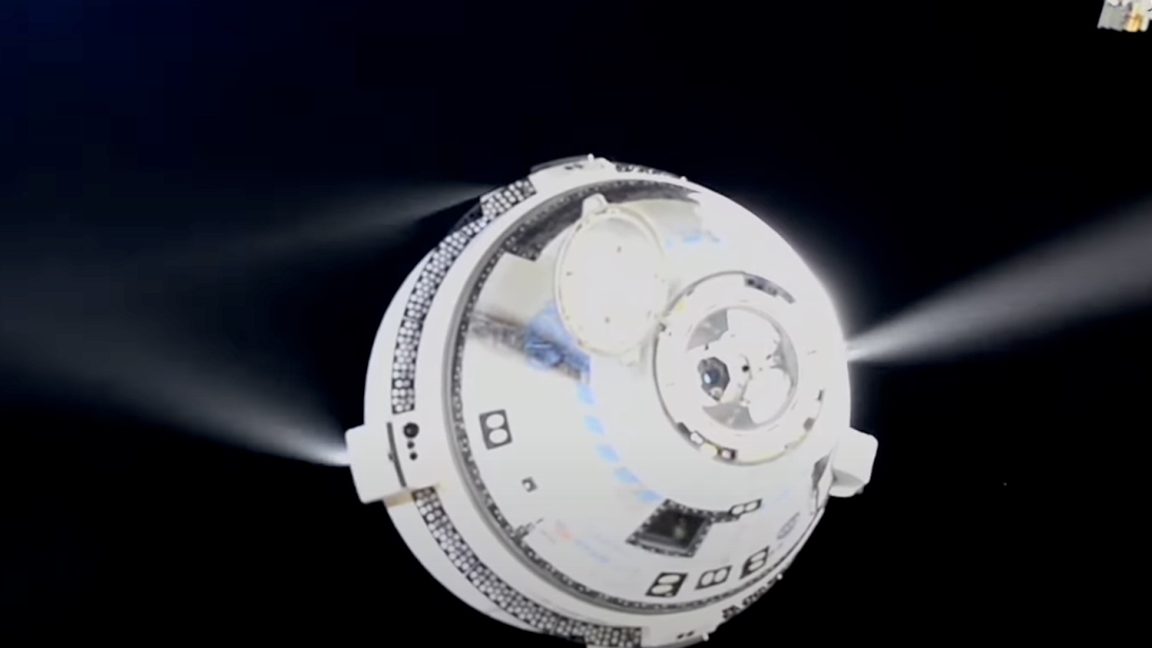
NASA announced on Monday that it will exercise options to purchase two additional flights on Boeing’s Starliner spacecraft, as well as financially support the company in its efforts to return the crewed vehicle to flight and find a new rocket after the Atlas V vehicle retires. The space agency’s announcement confirms reporting by Ars Technica earlier this month on NASA’s plans to maintain access to low-Earth orbit after the impending retirement of SpaceX’s Crew Dragon vehicle. Dragon has successfully been flying NASA astronauts into orbit for more than six years.
Boeing, by contrast, has struggled mightily to bring the Starliner vehicle into service for NASA. Starliner experienced numerous issues on uncrewed test flights in 2019 and 2022; most seriously, thruster issues nearly led to the catastrophic loss of two astronauts during the spacecraft’s first crew test flight in June 2024. There had been some discussion that Boeing would walk away from the Starliner program, which has incurred more than $2 billion in losses for the company.
The fact that NASA—which has already provided $5.1 billion as part of the “fixed price” Commercial Crew program to Boeing—felt obliged to spend additional funding underscores that this was a possibility. During the news conference, Dana Weigel, manager of NASA’s Low Earth Orbit Program, said the space agency would pay $359 million to Boeing to help the company complete a rebuild of the reaction control system thrusters that have overheated in flight, as well as certify United Launch Alliance’s Vulcan rocket for human missions. NASA also said it would exercise options to order two additional crewed missions on Starliner, bringing its total spaceflights on the vehicle to six.
Presently, NASA has manifested an uncrewed demonstration flight on the spacecraft, Starliner-1, which could launch in December 2026 or January 2027. It also has three crewed missions already on contract, the first of which, Starliner-2, could fly in mid-2028. NASA said Monday that veteran astronaut Woody Hoburg would command that mission.
Extract — continue reading at the source.